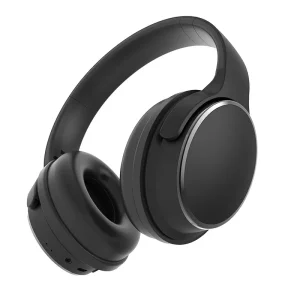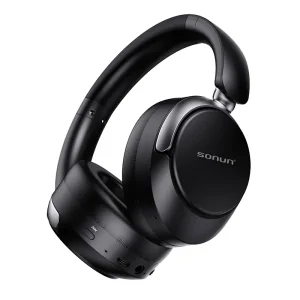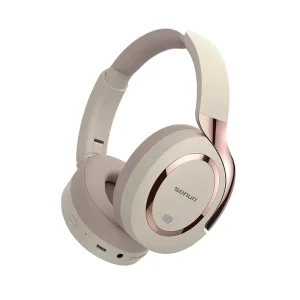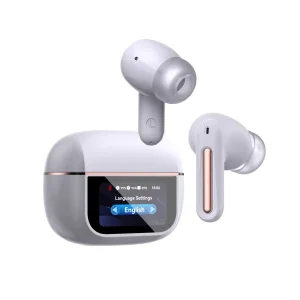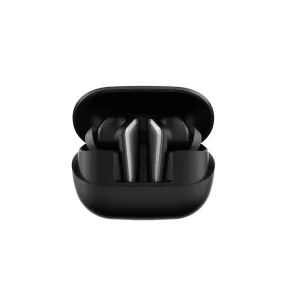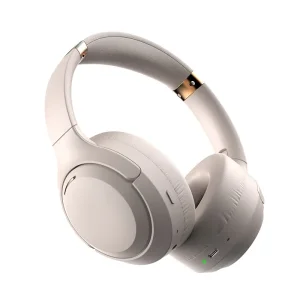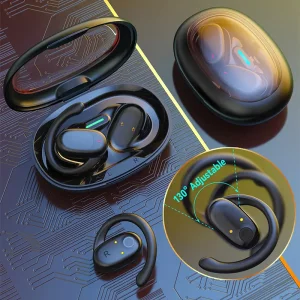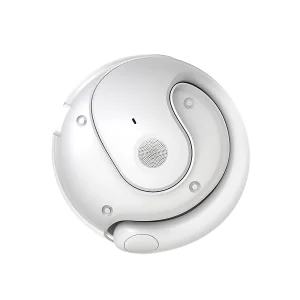
High-Performance Bluetooth & ANC Audio Solutions
Direct factory-engineered models ready for private-label branding, customized sound profiling, and global B2B procurement.
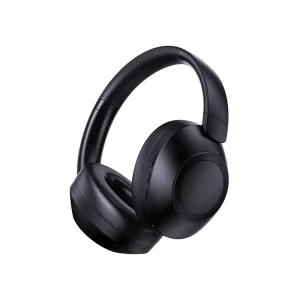
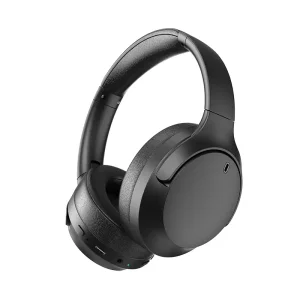
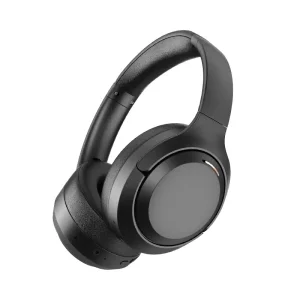
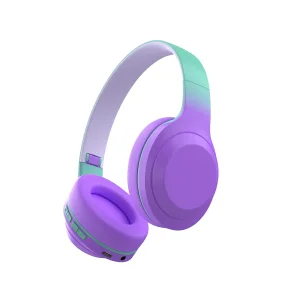
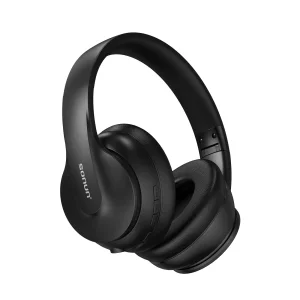
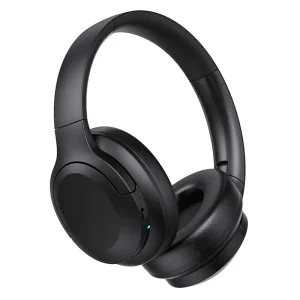
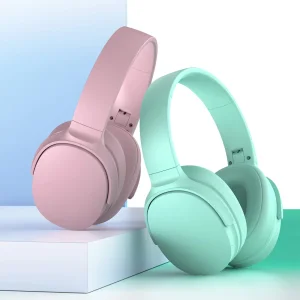
Global Wireless Audio Evolution & Enterprise Procurement Shifts
The global wireless audio market is undergoing a structural paradigm shift. Driven by breakthroughs in silicon SoC efficiency, advanced Bluetooth 5.4 protocols, spatial audio rendering, and AI-driven environmental noise cancellation (ENC), enterprise buyers and consumer audio brands are recalibrating their sourcing strategies. Selecting an experienced Bluetooth headphones manufacturer and factory is no longer merely a transaction focused on unit price—it is a strategic decision that affects brand equity, RMA (Return Merchandise Authorization) rates, and time-to-market speed.
Modern consumers demand seamless multi-point connectivity, latency below 40ms for gaming and video synchronization, hybrid active noise reduction exceeding -45dB, and battery longevity reaching 60+ hours of continuous playback. Meeting these technical benchmarks requires an OEM/ODM partner possessing end-to-end acoustic engineering capabilities, from surface-mount technology (SMT) PCBA assembly to electroacoustic tuning in anechoic chambers.
LE Audio & LC3 Codec Adoption
The transition from legacy SBC/AAC to Bluetooth Low Energy Audio and the LC3 (Low Complexity Communication Codec) delivers superior audio quality at half the data rate, vastly reducing power consumption for next-gen headsets.
Hybrid ANC & AI-ENC Clarity
Enterprise buyers prioritize dual-mic or quad-mic arrays equipped with neural network noise suppression (Deep Neural Network / DNN) to isolate human voice from background noise, enabling professional remote work performance.
High-Density Battery BMS
Advances in lithium polymer battery chemistry combined with low-power microcontrollers allow compact over-ear and in-ear form factors to achieve multi-day playback without adding physical weight.
Acoustic Architecture, SoC Chipsets & Hardware Engineering
Delivering high-fidelity sound requires an integrated hardware and software stack. When auditing a Bluetooth headphones factory, procurement teams must evaluate the technical depth of the manufacturer's R&D department. Acoustic tuning, printed circuit board layout (PCBA), dynamic driver diaphragm material selection, and antenna RF optimization are interdependent variables.
1. System-on-Chip (SoC) Selection Matrix
The core silicon platform governs processing capability, power dissipation, RF stability, and Bluetooth codec compatibility. Qualified factories maintain established supply partnerships with leading semiconductor vendors:
| Silicon Vendor / Platform | Target Bluetooth Standard | Supported Codecs | ANC / DSP Capability | Typical OEM Application |
|---|---|---|---|---|
| Qualcomm (QCC308x / QCC518x) | Bluetooth 5.4 / LE Audio | aptX Lossless, aptX Adaptive, AAC, SBC | Hybrid Active Noise Reduction (-48dB), Snapdragon Sound | Flagship ANC Headphones, Enterprise UC Headsets |
| Airoha (AB1568 / AB1585) | Bluetooth 5.3 / 5.4 | LDAC, AAC, SBC, LC3 | Dual-mic Feedforward/Feedback Hybrid ANC, Hi-Res Certified | Premium Audiophile Wireless Headphones |
| Bestechnic (BES2600 / BES2700) | Bluetooth 5.3 | AAC, SBC, LHDC 5.0 | Ultra-low Latency Mode (<30ms), AI Beamforming ENC | Low-Latency Gaming & Interactive Audio headsets |
| Realtek (RTL8773) | Bluetooth 5.3 | AAC, SBC | Digital ANC processing, integrated battery charger | Mass-market Private-Label Consumer Wireless Headphones |
2. Electroacoustic Driver Tuning & Cavity Design
Hardware acoustics remain the foundation of sound quality. Electronic DSP EQ adjustments cannot fully compensate for a poorly engineered mechanical acoustic chamber. Our production methodology emphasizes mechanical cavity precision:
Diaphragm Material Selection
Engineers utilize composite PET + Titanium plating, Polyether Ether Ketone (PEEK), or bio-cellulose dynamic drivers (ranging from 35mm to 40mm drivers for over-ear units) to deliver tight bass response and distortion-free extended highs (Total Harmonic Distortion THD < 1% at 1kHz).
Independent Acoustic Chambers
Isolating the front dynamic acoustic driver chamber from the rear electronic component cavity prevents battery and PCBA interference, preserving precise frequency response curves (20Hz–20kHz or 40kHz for Hi-Res audio standards).
RF Antenna Matching
Custom FPC or Ceramic antenna structures undergo 3D Anechoic OTA (Over-The-Air) testing to ensure 360-degree signal stability up to 15–20 meters without dropouts in congested RF environments.
China Smart Factory 4.0: Supply Chain Resilience & Speed
Shenzhen and the Pearl River Delta industrial cluster represent the global focal point of wireless audio manufacturing. A modern China Bluetooth headphone factory delivers far more than cost competitiveness: it offers an integrated eco-system of raw material suppliers, injection molders, toolmakers, and packaging providers operating within a 50-kilometer radius.
Rapid NPI Prototyping
New Product Introduction (NPI) cycles are compressed from months to weeks utilizing 3D SLA modeling, high-speed CNC aluminum tooling, and in-house rapid sampling lines.
Automated SMT & Assembly
Precision Surface Mount Technology (SMT) places micro-components with 0201 package accuracy, paired with automated optical inspection (AOI) to eliminate solder defects.
100% AP Audio Testing
Every manufactured headset undergoes computer-controlled Audio Precision (AP) sweep testing, measuring frequency response, THD, channel separation, and phase consistency.
Traceable Component Sourcing
Strategic relationships with original battery vendors, IC distributors, and silicone ear pad manufacturers protect brands against fake components or sudden cost spikes.
Commercial, Educational & Specialized Sourcing Scenarios
Different global sales channels require tailored product configurations. A versatile Bluetooth headphones supplier provides modular OEM solutions adaptable to regulatory, ergonomic, and aesthetic market variations.
1. Educational & Kids Safe Audio
Educational institutions and parents demand strict volume limiter standards (EN71, CPSIA certified max 85dB SPL for children, or 94dB for noise environments). Molds feature flexible, twistable headband plastics (Food-Grade EVA/PP materials) to withstand heavy daily use without breaking.
2. Enterprise & Call Center UC Headsets
Commercial office environments require unified communication (UC) integration, extended 30-hour talk times, multi-device Bluetooth multipoint switching, dedicated mute controls, and noise-canceling booms fine-tuned for voice clarity across Zoom and Microsoft Teams.
3. Open-Ear (OWS) & Sports Audio
Fitness enthusiasts and outdoor workers require spatial situational awareness. Open Wearable Stereo (OWS) and directional air/bone conduction designs leave the ear canal open while targeting sound into the user's ear with minimal acoustic leakage and IPX7 sweatproof ratings.
International Certification, Reliability Testing & QC Protocol
Exporting custom wireless audio equipment to North America, Europe, Japan, and Australia requires full regulatory compliance. Non-compliant consumer electronics risk customs seizures, platform delistings (such as on Amazon), and brand liability. Our factory standard operation protocol incorporates rigorous reliability testing before mass production sign-off:
Environmental & Mechanical Stress
- Drop Test: 1.2m drop onto concrete (6 directions).
- Headband Fatigue: 10,000+ expansion cycles.
- Button Life Test: 100,000 actuation cycles.
- Sweat Chamber: 48h salt spray & humidity aging.
Battery & Electrical Safety
- UN38.3 & MSDS: Lithium battery transport certification.
- IEC 62133 / UL 2054: Overcharge, short-circuit protection.
- Thermal Shock: -20°C to +60°C operating validation.
- ESD Protection: ±8kV contact / ±15kV air discharge.
Global Market Declarations
- CE / RED Directive: European RF & EMC compliance.
- FCC ID: US Federal Communications Commission approval.
- RoHS & REACH: Hazardous substance chemical compliance.
- BQB License: Official Bluetooth SIG qualification.
Frequently Asked Questions for B2B Sourcing & Manufacturing
What is the standard Minimum Order Quantity (MOQ) for custom Bluetooth headphones?
For standard private-label branding (logo printing on existing tooling housings, custom packaging, and custom Bluetooth pairing names), our baseline MOQ starts at 1,000 units per colorway. For fully custom ODM projects requiring unique plastic injection mold tooling, custom PCB layout engineering, or specialized acoustic drivers, the initial order quantity generally starts at 3,000 to 5,000 units, depending on component costs.
What is the typical turnaround timeline from design concept to mass production delivery?
Turnaround times vary by customization level:
- OEM (Existing Molds): Golden Sample approval in 7–10 days; Mass production completed in 25–30 days.
- ODM (New Tooling & Electronics): Industrial design & 3D modeling (2 weeks), Mold creation & tooling (35 days), EVT/DVT testing (2 weeks), Mass Production (30 days). Total lifecycle: 80–90 days.
How do you ensure sound quality consistency across a 50,000-unit mass production run?
We maintain strict acoustic consistency by locking golden samples verified by Audio Precision (AP) sound analyzers. During assembly, 100% of finished units pass through automated AP acoustic testing stations, validating that frequency response curve, total harmonic distortion (THD), and active noise cancellation (ANC) depth match the target curve within a narrow ±1.5dB tolerance.
Does your factory assist with Bluetooth SIG BQB certification and regional compliance?
Yes. As a licensed Bluetooth SIG member manufacturer, we guide your brand through the End Product Listing (EPL) process using our Qualified Design IDs (QDID). We also provide fully certified raw materials and sample units to third-party labs (such as SGS, Intertek, or TÜV) to obtain CE, FCC, RoHS, REACH, and California Prop 65 certifications for your targeted retail markets.
Who owns the intellectual property (IP) and injection molds for ODM custom projects?
For custom ODM projects where the client funds the plastic injection tooling and engineering development fees (NRE), 100% of the intellectual property rights and tooling ownership belong exclusively to the client. We execute legally binding Non-Disclosure Agreements (NDAs) and non-compete covenants prior to reviewing technical drawings.
Explore More Bluetooth Headphones & Wireless Earbuds
Inquire for factory direct quotes, sample requests, and OEM customization capabilities.