
Featured Cycling Helmet & Sport Headsets
Industrial-grade acoustic designs engineered specifically for smart helmets, open-air micro-mobility, and extreme environment endurance.
1. Executive Summary & Macro Industry Overview
Analyzing the paradigm shift in personal micro-mobility, safety mandates, and next-generation acoustic integration for global cycling markets.
The global micro-mobility revolution—propelled by rapid e-bike adoption, urban commuter expansion, and high-performance recreational cycling—has fundamentally transformed consumer expectations for protective headgear. Today's cyclists no longer view helmets strictly as passive safety equipment; they demand seamlessly integrated, high-fidelity, situationally aware communication ecosystems. As a leading Cycling Helmet Headphones Manufacturer and Supplier based in Shenzhen's advanced audio hardware cluster, Sonun Technology stands at the nexus of acoustic engineering, RF wireless innovation, and structural safety integration.
Historically, cyclists relied on aftermarket Bluetooth pucks or standard in-ear buds—both of which introduce severe safety hazards. Traditional earbuds block ambient environmental cues (vehicle horns, sirens, pedestrian traffic), directly violating traffic safety regulations across Europe (e.g., French Code de la Route R412-6-1) and North America. Conversely, bulky external clip-on radios degrade aerodynamic efficiency and compromise helmet structural integrity during impacts. The macro industry imperative is unequivocally clear: brands must adopt fully integrated, open-ear or recessed acoustic architectures engineered specifically for cycling dynamics.
E-Bike Acceleration
Higher average cycling speeds (25–45 km/h) demand advanced DSP wind-noise cancellation and higher acoustic output without total ear canal occlusion.
Regulatory Strictness
Global transport authorities are enforcing strict bans on occlusive earphones for cyclists, making air-conduction and bone-conduction mandatory.
Connected Ecosystems
Modern riders require simultaneous multi-point pairing with GPS units, smartphones, group mesh intercoms, and e-bike telemetry dashboards.
2. Acoustic Architecture & Hardware Engineering
A deep dive into acoustic wave propagation, aerodynamic wind tunnel optimization, and Bluetooth 5.4 SoC integration.
Engineering audio gear for helmet integration requires overcoming complex acoustic and aerodynamic challenges. Unlike quiet indoor environments or stationary outdoor use, a cycling headset operates within a high-speed turbulent boundary layer. Wind noise generated around the helmet shell and straps follows a power spectral density that peaks in the low-frequency range (20 Hz to 1.5 kHz) at sound pressure levels (SPL) exceeding 85–95 dB SPL at 30 km/h. Delivering intelligible voice communications and rich audio reproduction without causing hearing fatigue requires specialized hardware design.
| Acoustic Technology | Situational Awareness | Wind Noise Performance | Bass Frequency Response | Best Fit Application |
|---|---|---|---|---|
| Direct Air Conduction (Directional) | Optimal (100% Open) | Excellent with Wind Deflectors | 70 Hz – 20 kHz (Full Range) | Commuter, Road & E-Bike Helmets |
| Bone Conduction (Temporal Transducer) | Optimal (100% Open) | Moderate (Vibration Damping Needed) | 120 Hz – 16 kHz (Attenuated Bass) | Extreme MTB, Tactical, Heavy Rain Riding |
| Recessed Helmet Cavity Speakers | Good (Partial Isolation) | Superior (Protected Cavity) | 50 Hz – 20 kHz (Hi-Fi Tuned) | Full-Face MTB, Downhill & Snow Sports |
Dual-Microphone Beamforming & AI-ENC Algorithms
Our OEM cycling headphones utilize dual omnidirectional MEMS microphone arrays paired with hardware-accelerated Environmental Noise Cancellation (ENC) DSP chipsets. By placing reference microphones in aerodynamic blind spots along the helmet shell and applying adaptive Kalman filtering, our system isolates human speech frequencies (300 Hz - 3.4 kHz) while attenuating up to 38 dB of turbulent wind shear noise at speeds reaching 60 km/h.
Thermally Stabilized LiPo Power Cell Integration
Operating temperatures on a cycle helmet can range from -20°C in winter downhills to +60°C under direct summer sun. Sonun integrates industrial-grade Lithium Polymer batteries equipped with custom NTC thermal monitoring circuitry, ceramic separators, and anti-punishment micro-BMS modules. Our 33-hour battery design maintains 85% capacity retention even after 500 charge-discharge cycles under harsh ambient thermal stress.
3. Global B2B Procurement & Custom Sourcing Dynamics
Providing international distributors, helmet brands, and Tier-1 audio OEMs with reliable turn-key production workflows.
Sourcing cycling helmet headphones requires balancing electronic system design with helmet safety standards. When importing private-label electronics for protective gear, B2B procurement heads face strict structural and testing hurdles. Adding electronics must not degrade EPS (Expanded Polystyrene) foam impact attenuation during EN 1078 or CPSC 1203 compliance testing.
Phase 1: Tooling & MIPS Co-Design
Collaborative 3D CAD modeling to fit ear pocket recesses and harness channels within EPS foam liners without reducing structural protection zone thickness.
Phase 2: Firmware & RF Tuning
Customizing Bluetooth power output (Class 1 vs Class 2), tuning DSP EQ curves for acoustic air gaps, and integrating custom brand voice prompts.
Phase 3: Scale Production & Yield QA
Automated SMT assembly lines, 100% RF antenna sweep testing in anechoic chambers, and IPX7 water immersion verification for every batch.
4. Macro Industry Solutions & Integration Capabilities
Tailored turnkey solutions across commercial fleets, urban e-biking, and extreme outdoor sport segments.
Commercial Logistics & Delivery Fleets
For last-mile delivery operations (e.g., food delivery, postal couriers), our solutions provide always-on voice assistant integration (Siri/Google Assistant/Custom PTT apps), extra-long 30+ hour operating battery life, and high-durability reinforced cabling designed to survive daily industrial wear and tear.
Group Peloton & Tour Intercom Systems
Integrating low-latency 2.4GHz dynamic mesh network protocols that allow group cyclists to communicate seamlessly across 1.2km distances without cellular connectivity. Featuring auto-reconnect logic when riders re-enter transmission range.
5. Localized Support & International Compliance Guarantee
Ensuring your custom cycling headsets meet stringent global trade, safety, and environmental standards.
Importing wireless consumer electronics into North America, the European Union, and Asia-Pacific markets requires strict adherence to regional regulatory frameworks. Non-compliance can result in customs seizures, heavy fines, or recall liabilities. Sonun Technology provides fully documented compliance packages for every product line shipped from our Shenzhen manufacturing plant.
EU Compliance
CE, RED (2014/53/EU), RoHS, REACH
Full compliance with European Radio Equipment Directive, including EN 300 328 RF testing and hazardous substance restrictions.
North America
FCC ID Part 15C, IC (Industry Canada)
Pre-certified intentional radiator testing ensuring seamless approval for US and Canadian retail markets.
Battery Logistics
UN38.3, MSDS, IEC 62133
Comprehensive transport safety documentation for air and sea freight logistics without custom delays.
Environmental Testing
IPX6 / IPX7 Rain Chamber
Rigorous water jet and immersion testing alongside 48-hour salt spray corrosion testing for sweat resistance.
6. Technology Roadmap & Future Outlook (2025–2030)
Previewing next-generation audio innovation: Bluetooth LE Audio, Auracast™, and V2X urban safety alerts.
Bluetooth LE Audio & LC3 Codec
Transitioning from legacy SBC/AAC to LC3 audio processing provides higher audio quality at half the bit rate, reducing circuit power consumption by up to 40% and unlocking smaller battery form factors.
Auracast™ Broadcast Integration
Enabling group leaders or tour guides to broadcast real-time voice navigation and audio to an unlimited number of nearby smart helmet users without complex pairing procedures.
Spatial Audio & V2X Audio Alerts
Integrating IMU head-tracking sensors to deliver 3D spatialized traffic hazard alerts, giving cyclists directional auditory cues when approaching vehicles are detected by rear radar units.
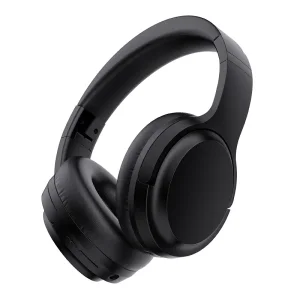
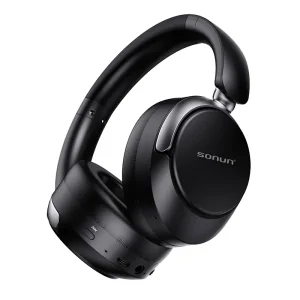
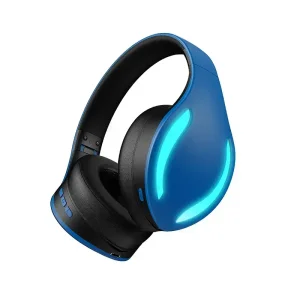
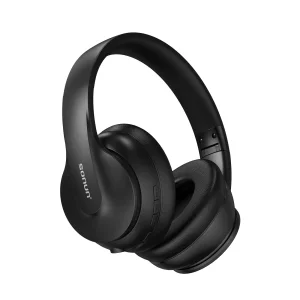
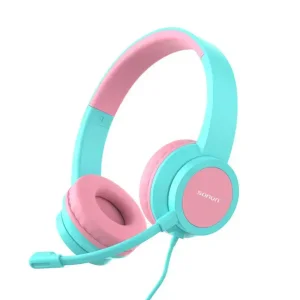
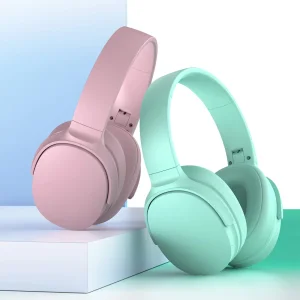
Explore Additional Headset & Audio Form Factors
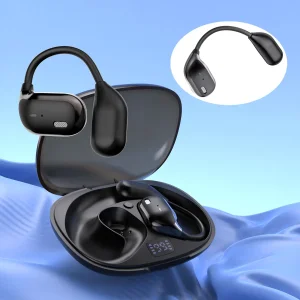
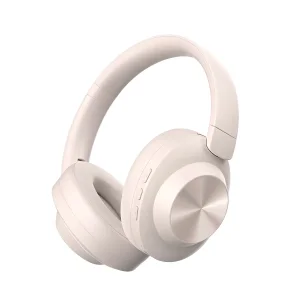
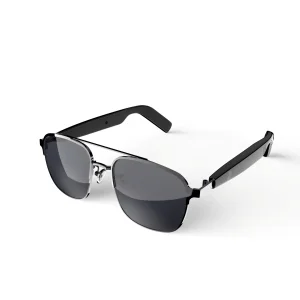
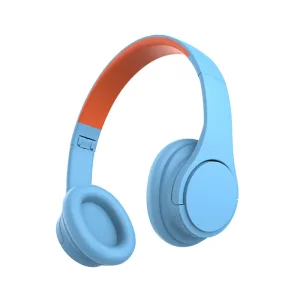
Comprehensive manufacturing capabilities across active noise-cancelling, heavy bass, long-standby, and sport open-ear designs.
7. Deep Procurement Q&A & Technical Advisory
Addressing core engineering, regulatory, and supply chain questions for B2B buyers and brand developers.
Our helmet audio components are engineered with low-profile, flexible TPU housings and ultra-thin ribbon wiring that lay flat against or within molded channels of the helmet’s Expanded Polystyrene (EPS) liner. During an impact, these components flex without creating localized hard stress points that could compromise impact energy dissipation. We collaborate directly with brand engineers during the CAD phase to ensure the audio components do not invalidate safety testing.
Air Conduction uses directional acoustic speakers positioned slightly above or near the ear canal to beam sound waves directly into the ear without touching it, maintaining dynamic bass response and high spatial awareness. Bone Conduction passes vibrations through the temporal cheekbones directly to the inner ear, leaving the ear canal completely free; however, it generally delivers less low-end bass and can transmit mechanical vibrations under heavy sweat or high speeds.
We use a two-pronged solution: physical acoustic wind barriers (specialized high-density acoustic foam over micro-slotted MEMS mic cavities) paired with dynamic dual-microphone DSP beamforming algorithms. The primary mic captures the rider’s voice plus ambient wind noise, while the secondary mic samples environmental turbulence. The DSP subtracts the wind signal in real time, keeping speech crisp up to 60 km/h.
For standard OEM customization (custom brand colors, laser-engraved logos, custom Bluetooth pairing names, and custom packaging), our typical MOQ is 1,000 units per model. For complete ODM custom toolings—where we design custom PCB layouts, private plastic injection tooling, and proprietary acoustic cavities—our standard MOQ is 3,000 to 5,000 units, backed by fully credited tooling fee structures upon volume thresholds.
Yes. Our software engineering team provides custom BLE SDKs that allow your smartphone application to communicate directly with the headset. This enables features such as battery status monitoring, custom graphic EQ adjustments, OTA (Over-The-Air) firmware updates, and programming custom quick-action hardware buttons (e.g., mapping a button to open a walkie-talkie app or trigger SOS alert protocols).