Global Enterprise Sourcing Landscape for ANC Wired Headphones
While wireless audio consumer trends dominate retail headlines, corporate procurement demands, institutional mandates, and mission-critical applications continue to drive an expanding market for high-performance Active Noise Cancellation (ANC) Wired Headphones. Global enterprises, call centers, aviation hubs, financial institutions, and educational authorities increasingly rely on wired ANC architectures to resolve mission-critical operational challenges: absolute zero-latency signal transmission, uncompromised hardware security, zero RF emission interferences, and eliminate battery decay lifecycles.
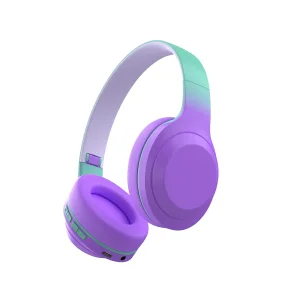
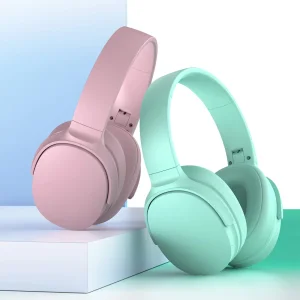
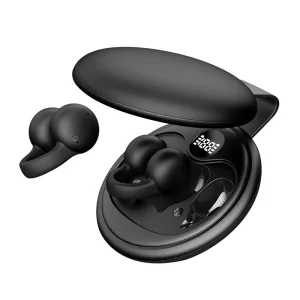
Featured OEM/ODM Solutions (Catalog Section 1)
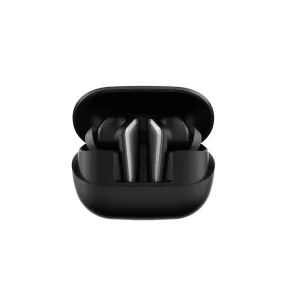
Technical Architecture & Silicon Roadmap
Designing enterprise-grade ANC wired headphones requires a sophisticated convergence of digital signal processing (DSP), precision acoustic chamber design, low-power DAC integrates, and active noise attenuation topologies.
Hybrid ANC Topology
Combines Feedforward (exterior MEMS microphone capturing ambient acoustic profiles) and Feedback (internal microphone monitoring audio reaching the ear canal) processing. Achieves noise reduction bandwidth from 20 Hz to 2.5 kHz with attenuation depths up to -35dB without inducing eardrum pressure fatigue.
- Dual-Microphone array per ear cup
- Real-time phase-inversion algorithms
- Minimal THD distortion (<0.5% at 1kHz)
USB-C & Lightning Integrated DACs
Modern enterprise wired headphones transition from analog 3.5mm jacks to high-resolution Type-C digital architecture. Utilizing specialized SOC chipsets (Realtek, BES, Cirrus Logic), power is drawn directly via the bus while delivering 24-bit/96kHz lossless audio decoding.
- Integrated power-efficient DSP core
- Driverless plug-and-play across OS platforms
- Eliminates external bulky battery boxes
ENC Voice Call Optimization
Environmental Noise Cancellation (ENC) leverages neural network noise suppression (NNNS) and beamforming arrays. Isolates human vocal frequencies from office chatter, keyboard clatter, and HVAC hum, guaranteeing crystal-clear communication for remote and call center operators.
- Omnidirectional + Unidirectional MEMS setups
- Far-field acoustic cancellation
- Wideband HD Voice transmission
Macro-Industry Solutions & Sector Applications
How targeted OEM engineering solves domain-specific audio and communication obstacles across diverse commercial domains.
1. Unified Communications & Contact Centers
In high-density call centers, wireless signals experience packet loss due to 2.4GHz spectrum congestion. Wired USB-C/USB-A ANC headsets provide stable bandwidth, zero latency, inline mute/volume control, and acoustic shock protection (limiting sounds over 118dB per WHO guidelines).
2. Aviation, Rail & Fleet Transportation
Passenger inflight entertainment (IFE) and transport operators require lightweight, highly durable wired headphones with continuous low-frequency active noise reduction to neutralize engine noise (100Hz–800Hz) for enhanced passenger comfort and crew focus.
3. K-12 & Institutional Education Sourcing
Educational institutions require cost-effective, ruggedized wired headphones with built-in volume limiters (85 dB SPL), chew-resistant braided cables, and reinforced strain reliefs capable of passing over 10,000 bending cycles during standardized testing.
4. Government, Financial & Defense Facilities
Facilities handling classified or sensitive data enforce strict zero-wireless policies. Wired ANC headsets eliminate Bluetooth vulnerability vectors and RF sniffing threats while maintaining quiet work environments for trading desks and analytical teams.
China Audio Ecosystem & Manufacturing Economics
Understanding component sourcing, factory integration in Shenzhen and Dongguan, and cost breakdown drivers for bulk enterprise quotes.
Shenzhen / Dongguan Acoustic Hub
The Pearl River Delta manufactures over 80% of the world’s audio hardware. Sourcing directly from verified China suppliers grants enterprise buyers access to an unmatched, vertically integrated ecosystem: precision tooling injection, SMT surface-mount technology, dynamic driver manufacturing, and automated acoustic sweep testing (SoundCheck / Audio Precision APx555).
BOM Cost Breakdown Analysis
Enterprise wholesale quotes for ANC wired headphones are driven by four primary Bill-of-Materials (BOM) components: ANC DSP Controller Chipset (25-30%), Dynamic Drivers & Acoustic Chamber Materials (20%), Cable & Connector DAC Assembly (20%), Housing Molds, Ear Cushions & Accessories (20%), and QA/Certification Allocation (10%).
OEM vs. ODM Procurement Paths
OEM (Original Equipment Manufacturing): Utilize turnkey, pre-certified factory molds and customize private labels, colors, and packaging with low MOQs (500–1,000 units) and fast lead times (25–30 days).
ODM (Original Design Manufacturing): Co-engineer custom acoustic architecture, custom PCB layouts, and proprietary industrial designs for exclusive market launches.
Global Regulatory Compliance & Quality Control Protocols
Navigating global trade compliance requirements and rigorous factory quality gates guarantees frictionless market entry and reliable field performance.
Regulatory Standards
- CE-EMC / LVD: EU Directives compliance
- FCC Part 15B: Unintentional radiators (USA)
- RoHS 2.0 / REACH: Hazardous substance restriction
- California Prop 65: Phthalates & lead testing
Acoustic Safety
- EN 50332-1/2: Maximum sound pressure level limit
- WHO 85dB Limit: Pediatric hearing protection
- Acoustic Shock Protection: Instant suppression above 118dB
- THD Limits: Total harmonic distortion <1%
Reliability Testing
- Cable Flexing Test: >10,000 cycles at 90° flex
- Drop Resistance: 1.5m drop test onto steel
- Salt Spray Test: 48 hours for anti-corrosion
- Thermal Shock: -20°C to +60°C operating cycles
Factory Audit Standards
- ISO 9001:2015: Quality Management System
- ISO 14001: Environmental Management
- BSCI / SA8000: Social Compliance Audits
- AQL 0.65/1.5: Acceptance Quality Limit standard
Audio Architecture Benchmark & Product Solutions
Compare technical metrics across wired and wireless options to choose the right form factor for your procurement requirements.
| Acoustic Metric / Feature | Passive Wired Headset | Analog 3.5mm ANC Wired | Digital Type-C ANC Wired | Wireless Bluetooth ANC |
|---|---|---|---|---|
| Latency (Delay) | 0 ms | 0 ms | 0 ms | 80 ms – 220 ms |
| Noise Attenuation Bandwidth | 1 kHz – 4 kHz (Passive) | 50 Hz – 1.2 kHz (Active) | 20 Hz – 2.5 kHz (Hybrid Active) | 20 Hz – 2.5 kHz (Hybrid Active) |
| Power Dependency | None | Battery Box required | Bus-powered (No Battery) | Internal Li-ion Battery |
| Audio Resolution | Analog Dynamic | Analog Dynamic | 24-bit/96kHz Digital Lossless | Compressed Codec (SBC/AAC) |
| RF Emission / Security | Zero RF / 100% Secure | Zero RF / 100% Secure | Zero RF / 100% Secure | 2.4GHz RF Signal Present |
| Maintenance Lifecycle | 5+ Years | 3-4 Years (Battery aging) | 5+ Years (No battery degradation) | 2-3 Years (Battery lifecycle) |
Comprehensive Audio Catalog (Catalog Section 2)
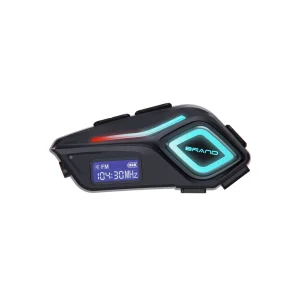
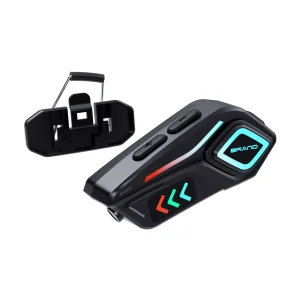
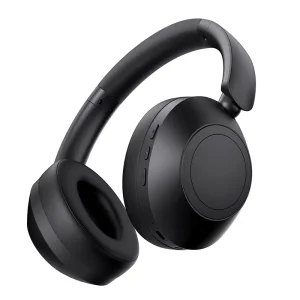
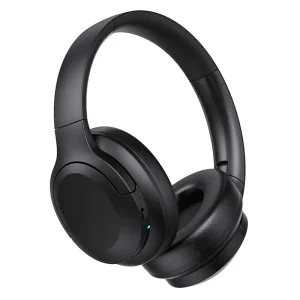
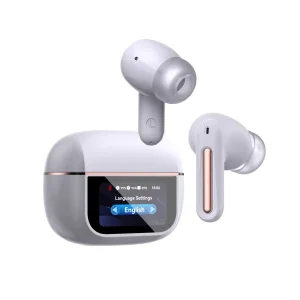
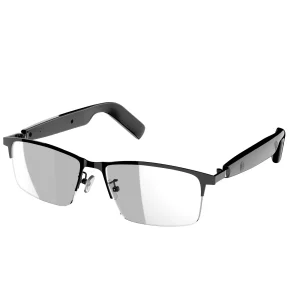
Enterprise Sourcing FAQ & RFQ Procedures
Answers to common technical, financial, and logistical questions raised by enterprise buyers and brand managers during procurement audits.
What is the typical Minimum Order Quantity (MOQ) and lead time for custom OEM ANC wired headphones?
For existing factory models with custom logo branding, housing color adjustments, and branded retail packaging, standard MOQs begin at 1,000 units with production lead times of 25 to 30 days post-sample approval. Fully custom ODM projects requiring dedicated tooling, housing modifications, or proprietary PCB design typically carry an MOQ of 3,000 to 5,000 units, with tooling requiring 35–45 days and initial mass production taking 30 days.
How do digital Type-C ANC headphones draw power without an internal battery?
Digital Type-C ANC wired headphones utilize USB VBUS power delivery directly from the host device (smartphone, laptop, tablet, or UC terminal). Because modern high-efficiency ANC DSP silicon consumes under 15mA to 25mA during active operation, power draw on host batteries is negligible while completely eliminating the weight, bulk, hazard, and maintenance cost of integrated lithium-ion batteries.
Can acoustic sound curves and ANC depth be customized for specific enterprise applications?
Yes. Acoustic engineering teams can calibrate acoustic equalization (EQ) profiles and DSP noise cancellation parameters to match client briefs. For call center and UC headsets, mid-range vocal frequencies (300Hz–3.4kHz) are emphasized while low-frequency rumble is suppressed. For high-fidelity consumer models, flat or bass-enhanced target curves (Harman Target) can be burned into the DSP firmware during factory programming.
What quality assurance steps are taken during bulk manufacturing?
Mass production undergoes 100% online acoustic sweep testing using SoundCheck or Audio Precision analyzers to verify Frequency Response, THD, and ANC attenuation curves on every assembled unit. Physical quality inspections include cable tension testing, button lifecycle actuation, drop tests, and salt spray exposure on metal components. Final shipments are audited under AQL 0.65 Major / 1.5 Minor sampling criteria.
How do enterprise buyers request a formal engineering evaluation and bulk quotation?
Buyers should submit a formal Request for Quotation (RFQ) detailing target order volume, destination market compliance requirements (CE, FCC, RoHS, REACH), preferred connector types (3.5mm, USB-C, USB-A), mic array requirements, and custom branding specifications. Engineering samples are dispatched within 3–7 business days for laboratory and acoustic evaluation.