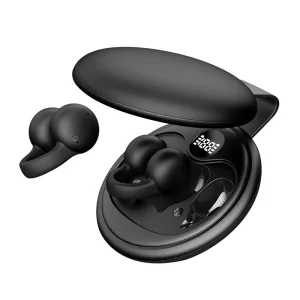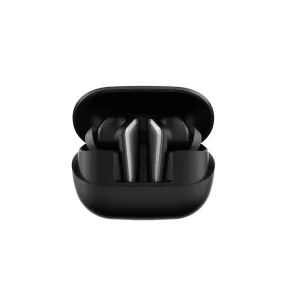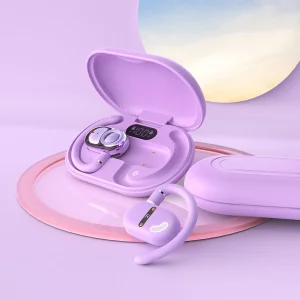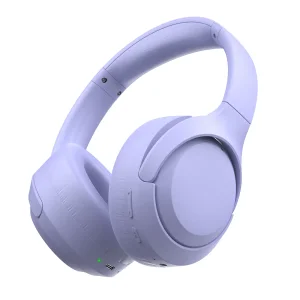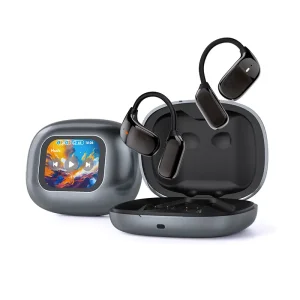
Precision Noise-Control Audio Hardware Solutions
Explore high-performance Active Noise Cancellation (ANC), Environmental Noise Cancellation (ENC), and Open-Ear Wearable (OWS) acoustic architectures direct from certified Shenzhen electro-acoustic facilities.
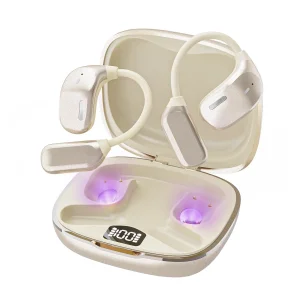
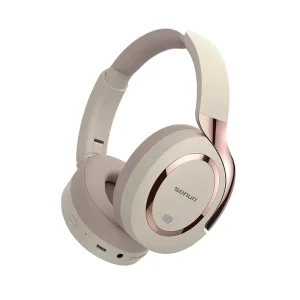
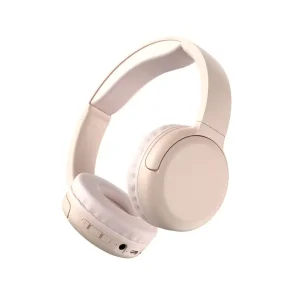
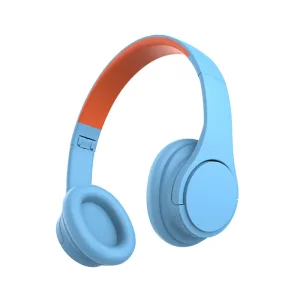
The Shift in Noise Suppression Electro-Acoustic Sourcing
How Chinese acoustic manufacturers transformed from contract assembling to mastering full-stack Digital Signal Processing (DSP), AI Neural Noise Reduction (NNR), and multi-microphone array integration.
Deep Attenuation & Hybrid ANC Paradigms
Modern global buyers no longer evaluate earphone noise performance based purely on single-feedforward microphone designs. The industrial baseline has migrated to Dual-Feedforward + Feedback Hybrid ANC achieving up to -48dB active noise cancellation across ultra-wide bandwidths (20Hz–2,500Hz). Leading Shenzhen facilities utilize custom acoustic chambers to tune Phase-Inversion DSP algorithms, effectively neutralizing low-frequency engine hums, HVAC system rumblings, and cabin pressure fluctuations.
AI-Driven Beamforming ENC Mics
The rapid rise of remote working, call centers, and outdoor mobile communications has positioned Environmental Noise Cancellation (ENC) as a critical commercial metric. By integrating dual MEMS microphone arrays with trained Deep Neural Network (DNN) algorithms, Chinese OEMs isolate vocal frequencies while attenuating up to 95% of background ambient chatter, wind noise (up to 25km/h), and street turbulence.
Acoustic Noise Control Topology Comparison
Understanding the operational mechanics, component bills of materials (BOM), and optimal end-user application scenarios for B2B procurement decisions.
| Noise Control Topology | Hardware Architecture | Acoustic Bandwidth | Typical Attenuation Depth | Primary Commercial Use Cases |
|---|---|---|---|---|
| Feedforward Active ANC | External MEMS Microphone + Digital Signal Processor | 100Hz – 1,000Hz | -20dB to -25dB | Entry-level consumer sports earbuds, basic commuter audio. |
| Feedback Active ANC | Internal Ear-Cavity MEMS Microphone + DSP Loop | 20Hz – 500Hz | -15dB to -20dB | Sleep enhancement earphones, low-frequency hum dampening. |
| Hybrid Dual-Mic ANC | Dual MEMS (Feedforward + Feedback) + Dual-Core Audio SoC | 20Hz – 2,500Hz | -35dB to -48dB | Premium enterprise over-ear, aviation, executive travel headsets. |
| AI Beamforming ENC | Multi-MEMS Array + NPU DNN VPU Noise Model | Vocal band 300Hz–3.4kHz | 35dB Voice-to-Noise Ratio | Unified Communications (UC), call center & gaming headsets. |
| Open-Ear Acoustic Phase Inversion | Directional Sound Dispersion Cavity + Out-of-Phase Driver | Leakage cancellation | -18dB Sound Leakage | OWS, Air Conduction, Sports safety & hearing preservation. |
China Factory 4.0: Supply Chain Resilience & Efficiency Advantages
Why the Shenzhen-Dongguan-Huizhou electro-acoustic cluster remains the world’s most versatile manufacturing hub for private-label headphones.
Anechoic Chamber Sweep Testing
Leading OEM suppliers operate on-site semi-anechoic testing chambers equipped with Audio Precision APx555 analyzers and B&K artificial ear heads to guarantee strict passive sound attenuation curves and frequency responses.
Automated SMT & Chipset Integration
Modern surface-mount technology (SMT) lines rapidly assemble high-density PCBAs housing Bluetooth 5.4 chipsets (Qualcomm, Bestechnic, Realtek, Airoha) with integrated power management units and DSP cores.
Precision Tooling & Mold Verticality
In-house CNC mold-making allows Chinese suppliers to pivot from industrial design to 3D prototype validation within 7 days, significantly slashing time-to-market for private-label brand launches.
End-to-End Quality Assurance Protocols
Export-grade headphone manufacturers operate under rigorous ISO9001, IATF16949, and BSCI management frameworks. Every production lot undergoes multi-stage quality gates to ensure global compliance:
- Acoustic Calibration: 100% online testing for gain matching between left and right ANC microphones to prevent phase imbalance.
- Environmental Stress Testing: Operating temperature sweeps (-20°C to 65°C), thermal shock testing, and salt spray resistance.
- Mechanical Durability: Headband torsion testing (10,000+ flex cycles), button actuation life tests (100,000 presses), drop tests.
- Compliance & Chemical Safety: Fully certified compliant with CE-RED, FCC ID, RoHS 2.0, REACH, CP65, and Anatel standard requirements.
Global Application Scenarios & B2B Procurement Intent
Tailoring earphone noise suppression specifications to specialized industrial, educational, and consumer market channels.
Corporate Unified Communications
Enterprise B2B clients demand Microsoft Teams and Zoom compatible headsets featuring ultra-clear dual-microphone ENC beamforming. Key procurement priority: zero acoustic crosstalk, side-tone implementation, and high battery life (50+ hours).
Education & Safe Youth Audio
Schools and e-learning brands prioritize passive sound isolation coupled with strict 85dB / 94dB WHO-compliant volume limiting circuitry, ultra-durable non-toxic food-grade silicone materials, and tangle-free braided cabling.
Open Wearable Stereo (OWS)
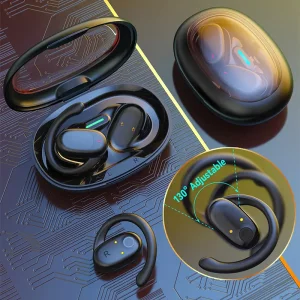
Sports and urban outdoor enthusiasts require environmental awareness without sacrificing privacy. Chinese OWS suppliers incorporate reverse-phase soundwave emission to cancel out directional acoustic leakage while keeping the ear canal completely open.
Step-by-Step B2B Sourcing Protocol for Noise Control Earphones
Follow this field-tested procurement framework created by veteran electro-acoustic growth engineers to mitigate risks during OEM/ODM supplier selection.
1 Initial Technical Brief & Chipset Choice
Define the target price tier and required noise cancellation metrics (e.g., -35dB Hybrid ANC vs. -25dB Feedforward). Specify the Bluetooth SoC platform (Qualcomm QCC vs. Bestechnic vs. Realtek) depending on codec requirements (LDAC, aptX Adaptive, AAC, LC3).
2 Acoustic Sample & Curve Validation
Request golden samples for testing on an artificial ear simulator. Verify frequency response curves both in Passive Mode, ANC ON, and Transparency Mode. Ensure ANC mode does not severely compress bass dynamic range or distort mid-range vocals.
3 Factory Audit & Tooling Inspection
Audit the supplier's production facilities or hire third-party inspectors (e.g., SGS, TÜV Rheinland). Inspect SMT component placement accuracy, automated glue-dispensing robots for housing acoustic seal integrity, and battery safety test benches.
4 Compliance & Pre-Shipment QC
Ensure all certification test reports (CE-RED, FCC, UN38.3 battery shipping safety, MSDS, RoHS) match the precise model schematic. Set AQL 1.0/2.5 inspection criteria prior to final export balance clearance.
Frequently Asked Questions for Sourcing Noise Control Headphones
Detailed technical and commercial answers designed to streamline communications between global purchasing managers and Chinese manufacturing engineering teams.
What is the technical difference between Active Noise Cancellation (ANC) and Environmental Noise Cancellation (ENC)?
How do Chinese headphone suppliers calculate Minimum Order Quantities (MOQ) for OEM branding?
Why is passive noise isolation (PNC) equally critical in an active ANC earphone setup?
Can Chinese OEM factories provide custom smartphone companion apps for EQ adjustment and ANC switching?
How does wind noise reduction work in outdoor noise-canceling headphones?
What compliance documents are mandatory when importing noise-canceling audio gear into the EU and US?
What is the standard production lead time from deposit to shipment for custom OEM orders?
How do factories ensure battery safety and long-term standby quality in high-power ANC headphones?
Additional Private-Label Audio Hardware Series
Explore ultra-light sports models, Hi-Res audio Certified wireless headphones, UV-sterilization cases, and specialized open-ear ergonomic form factors.