
Featured Enterprise Audio Solutions (Batch A)
Explore certified OEM/ODM bluetooth acoustic hardware engineered for low latency, active noise cancellation, and high-fidelity sound transmission.
1. The Global Landscape of Bluetooth Gaming Audio Manufacturing
The global gaming peripheral ecosystem has undergone a paradigm shift, transitioning from tethered analog acoustic equipment to ultra-low-latency wireless ecosystems. As competitive mobile esports (PUBG Mobile, Call of Duty Mobile, Free Fire) and cross-platform gaming achieve unprecedented market penetration, international buyers are re-evaluating their sourcing strategies. China's acoustic hardware manufacturing sector—headquartered predominantly across the Pearl River Delta (Shenzhen, Dongguan, Huizhou)—stands as the engineering nexus producing over 85% of global gaming headsets.
Solving the Latency Paradigm: 2.4GHz Wireless vs. Bluetooth LE Audio
Historical Bluetooth protocols (SBC, AAC) presented severe latency bottlenecks ranging from 120ms to 220ms, making them functionally unviable for real-time tactical gaming where auditory cues (footsteps, gunfire directionality) dictate survival. Modern Chinese headphone exporters lead the integration of dual-mode architectures. By combining dedicated 2.4GHz RF USB-C dongles (utilizing PixArt or Actions SMT chipsets) with native Bluetooth 5.4 LE Audio (LC3 codec), modern gaming headsets achieve sub-20ms latency while preserving backward compatibility with mobile devices.
Information Gain Insight: Procurement directors must distinguish between "Gaming Mode Bluetooth" (which software-compresses SBC codecs down to ~50-60ms at the expense of audio bitrate) and true hardware-level dual-pipe 2.4GHz + BT 5.4 concurrent audio pipelines. Sourcing specs must explicitly detail RF transceiver protocols to ensure professional esports viability.
2. Anatomy of China's Acoustic Manufacturing Ecosystem
Why do top-tier gaming peripheral brands consistently partner with Chinese factories for ODM and OEM contracts? The competitive moat extends far beyond labor arbitrage—it resides in supply chain hyper-clustering and vertical technical integration.
Acoustic Transducer R&D
Chinese factories maintain specialized diaphragm formulation lines. From Titanium-coated PET drivers for crisp highs to 50mm DLC (Diamond-Like Carbon) composite membranes designed for thunderous lower-register spatial resonance, driver engineering happens under one roof.
Precision Tooling & Injection
In-house CNC mold manufacturing allows rapid prototyping of ergonomic ear-cups, headband tension mechanisms, and lightweight chassis configurations, shortening new product introduction (NPI) cycles from 180 days down to 45 days.
Strict Quality Assurance
Tier-1 exporters execute full-chain automated acoustic testing using SoundCheck and Audio Precision (AP) systems, ensuring total harmonic distortion (THD < 1%) and strict frequency response curve matching across every production lot.
3. Technical Specification Matrix: Sourcing Profiles
When evaluating quotes from Chinese exporters, use this standardized technical matrix to align target BOM costs with hardware capabilities.
| Spec Parameter | Entry-Level Retail tier | Mid-Tier Competitive Gaming | Flagship Esports / Audiophile |
|---|---|---|---|
| Wireless Protocol | Bluetooth 5.2 / 5.3 (SBC, AAC) | BT 5.4 + 2.4GHz RF Dongle | BT 5.4 + 2.4GHz Dual-Simultaneous + LC3 |
| Latency Performance | 60ms - 90ms (Software Game Mode) | 25ms - 35ms (2.4G Ultra-Low) | < 15ms - 20ms (Hardware Uncompressed) |
| Driver Configuration | 40mm Dynamic PET Membrane | 50mm Titanium-Plated Diaphragm | 50mm DLC Dynamic / Planar Magnetic |
| Microphone System | Single Omnidirectional Mic | Dual-Mic ENC (Environmental Noise) | AI Deep-Neural-Network (DNN) Beamforming |
| Active Noise Control | Passive Noise Isolation (PNC) | Feedforward ANC (-28dB) | Hybrid Active Noise Cancelling (-45dB) |
| Battery Optimization | 400mAh (up to 20h Playtime) | 800mAh (up to 50h Playtime) | 1200mAh + Fast Charge (up to 100h Playtime) |
| Target FOB Quote Range | $6.50 - $11.50 USD | $14.00 - $22.00 USD | $28.00 - $48.00 USD |
4. Strategic RFQ Execution & Cost Structure Transparency
Securing accurate quotes from a China headphone exporter requires a granular understanding of the Bill of Materials (BOM) decomposition. Naive RFQs (Request for Quotes) stating simply "Quote for gaming Bluetooth headphones" frequently lead to padded margins or mismatched acoustic quality. Experienced procurement officers construct RFQs specifying chipsets, battery safety certifications, and compliance standards upfront.
Anatomy of a Factory Quotation (BOM Breakdown)
When analyzing a factory price sheet for wireless gaming headsets, the cost profile breaks down into five key pillars:
1. Bluetooth/RF Mainboard (30-35% of BOM)
Chipset selection dominates cost. Premium Qualcomm (QCC series) or High-Performance Realtek solutions incur higher unit costs but deliver superior RF stability, lower latency, and advanced audio codecs (aptX Adaptive, LDAC). Alternative mid-tier solutions like JL (Jieli) or Actions reduce unit costs significantly for budget retail lines.
2. Acoustic Transducers & Cavity (15-20% of BOM)
The speaker unit (magnet type, diaphragm diameter, copper voice coil quality) and internal acoustic chamber tuning dictate soundstage clarity. Independent chamber housing design prevents PCB air turbulence from degrading bass response.
3. Power Cell & Battery Protection (10-15% of BOM)
Lithium polymer batteries must integrate NTC thermistors and Seiko protection ICs. Exporters supplying North American and European markets must budget for UN38.3, MSDS, and IEC62133 battery transportation compliance documentation.
5. Localized Application Scenarios & Market Compliance
Consumer preferences for Bluetooth gaming audio devices vary significantly across geographical regions. Successful global audio exporters engineer customized stock keeping units (SKUs) tailored to regional usage scenarios and statutory compliance mandates.
North America & Europe
Market demands focus heavily on hybrid work-and-play functionality. Headsets must feature flip-to-mute boom microphones, seamless multipoint switching between office laptops and gaming consoles, and compliance with CE, FCC, RoHS, REACH, and California Proposition 65 standards.
Latin America & Southeast Asia
Driven by rapid mobile esports growth, demand centers on high-value, vibrant visual styling. Key preferences include customizable RGB dynamic light arrays, high-gain bass tuning optimized for mobile shooter titles, and competitive pricing tiers.
Specialized Applications
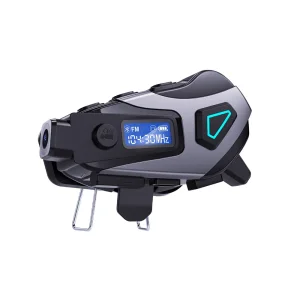
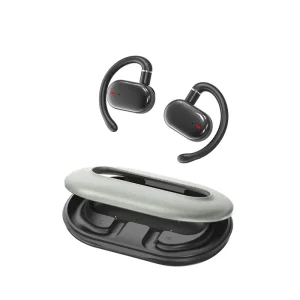
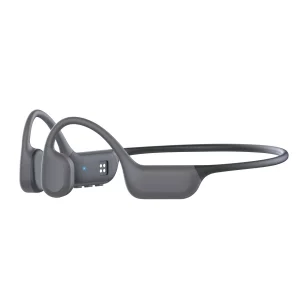
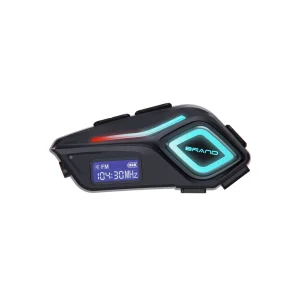
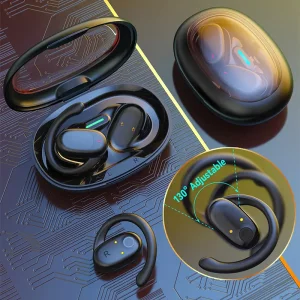
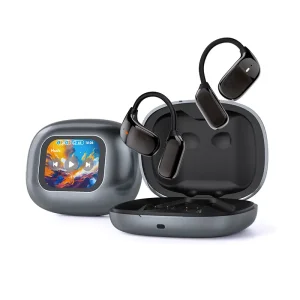
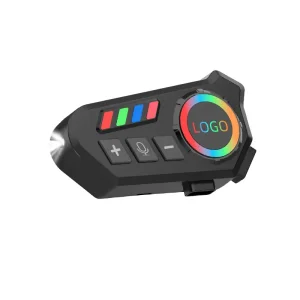
Cross-category innovations include Bluetooth helmet headsets engineered for motorcycle riders requiring high-speed wind-noise suppression (ENC), sports ear-hook designs for active users, and bone-conduction headsets for open-ear situational awareness.
Featured Enterprise Audio Solutions (Batch B)
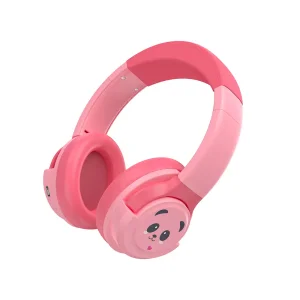
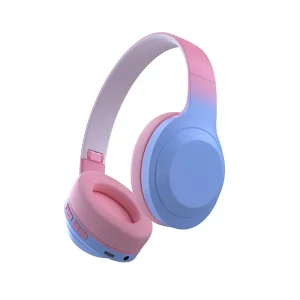
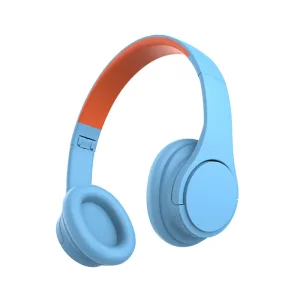
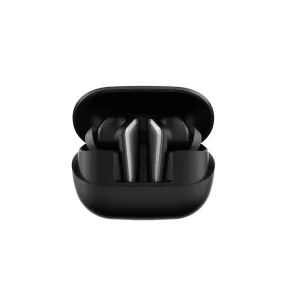
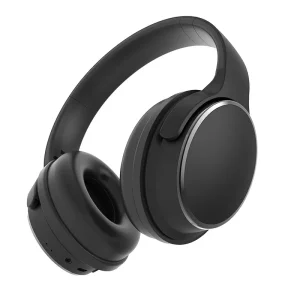
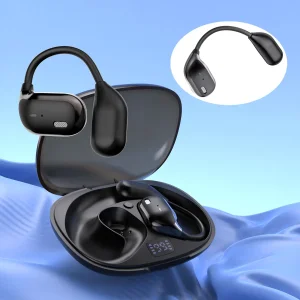
Discover niche acoustic hardware including open-ear sports earbuds, specialized kids headphones, and ultra-long battery life headsets.
6. Macro Trends Reshaping Gaming Audio Manufacturing
The next half-decade will redefine headphone engineering across Chinese export hubs. Forward-thinking procurement teams align their product development roadmaps with three dominant structural shifts:
Edge AI Audio & Spatial DSP
On-chip Deep Neural Network (DNN) processors are replacing traditional passive noise-suppression circuits. Future gaming headsets integrate real-time spatial head-tracking algorithms, delivering 360-degree object-based 3D soundscapes without requiring high-end PC soundcard overhead.
Eco-Materials & Modular Repairability
With European Right-to-Repair mandates and ESG directives taking effect, tier-1 Chinese factories are transitioning toward post-consumer recycled (PCR) plastics, ocean-bound plastic headbands, magnetic quick-replace ear cushions, and solderless battery assemblies.
Universal Cross-Platform Convergence
Single-protocol headsets are becoming obsolete. Next-generation OEM solutions leverage unified Bluetooth 5.4 + Dual USB-C/A 2.4G transceivers capable of simultaneous connection to PlayStation 5, Xbox Series X, Nintendo Switch, PC, and mobile devices.
Frequently Asked Questions (Global Sourcing FAQ)
Technical and commercial clarifications for international brand managers, buyers, and sourcing agencies.
What is the typical Minimum Order Quantity (MOQ) for custom OEM gaming headphones from China?
Standard MOQs for custom-branded OEM headphones utilizing existing factory tooling typically range from 1,000 to 2,000 units per colorway. For full ODM projects requiring custom plastic injection molds, custom acoustic chambers, or proprietary PCB designs, initial MOQs generally start at 3,000 to 5,000 units, accompanied by NRE (Non-Recurring Engineering) tooling amortization agreements.
How do Chinese exporters guarantee sub-20ms wireless latency for gaming applications?
Sub-20ms latency is achieved by bypassing standard OS audio stack processing. The headset pairs with a dedicated 2.4GHz RF USB-C dongle equipped with specialized audio ICs (such as PixArt or Actions SMT chipsets). Utilizing lightweight proprietary transmission protocols or Bluetooth LE Audio LC3 codec compression, audio data is transmitted via uncompressed high-speed radio frequency pipelines.
What certifications are mandatory before importing Bluetooth gaming headsets into North America and Europe?
For the European Union, products require CE-RED (Radio Equipment Directive), RoHS (Restriction of Hazardous Substances), and REACH compliance. For North America, FCC ID certification for intentional radiators (Bluetooth/2.4G RF) is legally mandatory, along with UL/IEC 62133 battery safety testing, UN38.3 lithium battery transport certification, and California Proposition 65 chemical compliance.
What is the standard production lead time for bulk OEM headphone orders?
Following Golden Sample approval and deposit confirmation, initial OEM repeat orders take approximately 30 to 40 days. First-time OEM orders require 45 days to accommodate custom packaging printing, silk-screening, and pre-production component inspection. ODM projects involving new tooling require 60 to 90 days for T1 sample approval prior to mass assembly.
Can Chinese factories assist with custom sound EQ tuning and localized voice prompts?
Yes. Experienced acoustic engineers provide factory-level DSP flashing. You can specify target frequency response curves (e.g., Harman Target Curve, Bass-Boosted Esports Profile) and provide localized WAV audio files for voice prompts ("Power On", "Gaming Mode Active", "Low Battery") in any target language, which are burned directly into the Bluetooth IC flash memory during production.
How are shipping costs and battery transport regulations handled for global exports?
Because wireless headsets contain integrated lithium polymer batteries, shipments are classified under UN3481 (Lithium ion batteries contained in equipment). Certified exporters provide complete MSDS, UN38.3 test reports, and sea/air transport safety certificates, allowing seamless FOB, CIF, or DDP shipping coordination through specialized dangerous goods (DG) freight forwarders.