

Executive Industry Report: The Evolution of Global TWS & Noise Suppression Ecosystems
The global True Wireless Stereo (TWS) market has undergone a fundamental architectural transformation. What was once viewed as a convenience-driven consumer accessory has morphed into a high-performance acoustic computer. Modern enterprise procurement teams, consumer audio brand directors, and private-label distributors no longer assess China Noise TWS Earbuds Manufacturers & Factories purely on unit cost. Instead, purchasing decisions are driven by sophisticated parameters: active noise cancellation (ANC) filter depth, environmental noise cancellation (ENC) signal-to-noise ratios (SNR), spatial audio digital signal processing (DSP), supply chain traceability, and long-term firmware update support.
According to macroeconomic audio sector analytics, the global market for ANC and ENC-enabled TWS earbuds is projected to surpass $45 Billion USD by 2028, reflecting a compound annual growth rate (CAGR) exceeding 12.8%. This growth is accelerated by hybrid work environments, industrial communications demand, mobile gaming low-latency requirements, and the integration of biometrics and AI voice assistants directly at the ear-canal level.
In this rapidly innovating environment, Chinese manufacturing hubs—specifically concentrated within Shenzhen, Dongguan, and the broader Pearl River Delta—have transitioned from assembly-focused work centers into high-precision acoustic R&D ecosystems. Leading OEM/ODM partners like Shenzhen Sonun Technology Co., Ltd. (established in 2006) represent the vanguard of this shift, offering full-stack production capabilities spanning industrial ID design, micro-acoustic cavity simulation, customized Bluetooth 5.4 PCB layout, automated SMT surface mounting, and rigorous electroacoustic laboratory validation.
Deep-Dive Acoustic Engineering: Feedforward, Feedback & Hybrid ANC Paradigms
Achieving meaningful noise attenuation within an ultra-compact earbud housing requires a tight harmony between acoustics, electronics, and digital signal processing. To correctly specify OEM/ODM orders, global buyers must understand the core structural topologies deployed by top Chinese factories:
Feedforward ANC Topology
Utilizes an external-facing MEMS microphone placed on the outer shell of the earbud to capture environmental noise before it reaches the listener's ear canal. The DSP calculates an inverted anti-noise wave in real time.
- Optimal Bandwidth: 50 Hz to 2 kHz broad ambient attenuation.
- Key Advantage: Excellent for wind-noise management and early ambient suppression.
- Design Challenge: Vulnerable to acoustic turbulence without proper mechanical mic-mesh protection.
Feedback ANC Topology
Positioned inside the ear tip cavity behind the speaker driver, the feedback microphone monitors the exact sound profile entering the auditory canal, correcting residual errors that feedforward misses.
- Optimal Bandwidth: 20 Hz to 800 Hz deep low-frequency suppression.
- Key Advantage: Self-correcting loop; adjusts to varying ear-tip seal dynamic fits.
- Design Challenge: Risk of acoustic feedback squeal if internal cavity resonance is uncalibrated.
Hybrid ANC & Adaptive AI DSP
Combines dual Feedforward and Feedback MEMS microphones per earbud alongside high-MIPS DSP microcontrollers (Qualcomm, BES, Airoha, or high-tier Realtek chipsets).
- Optimal Bandwidth: Up to 45–48 dB depth across 20 Hz – 4 kHz.
- Key Advantage: Dynamic environment switching (Office, Flight, Urban Street, Transparency Mode).
- Design Challenge: Demands sophisticated power management and precise dual-mic phase matching.
Technical Insight: Micro-Acoustic Venting & Passive Isolation
Active cancellation is only as effective as the passive seal surrounding it. Premium Chinese OEM factories utilize specialized finite element analysis (FEA) soft-ware to engineer front and back cavity pressure-relief vents. This prevents occlusion effects (the heavy "thumping" sensation of one's own voice or footsteps) while maintaining seal integrity for deep sub-bass reproduction (20 Hz - 100 Hz).
China Industry 4.0: Supply Chain Resilience, Automation & Cost Superiority
Why do global electronics brands continuously centralize their TWS manufacturing strategies within Shenzhen and modern Chinese factory clusters? The commercial logic extends far beyond labor arbitrage; it centers on unmatched industrial density, tooling speed, and Industry 4.0 smart manufacturing infrastructure.
Sub-Tier Supply Chain Density
Within a 30-kilometer radius in Longhua District, Shenzhen, top factories maintain direct access to specialized suppliers for dynamic driver diaphragms (Titanium, DLC, PU+PEEK composites), precision MEMS mics, high-density LIR coin-cell batteries, and fast-turnaround injection tooling shops.
Automated Acoustic QA Chambers
Leading factories replace manual listening checks with automated Audio Precision (APx555) or SoundCheck acoustic test rigs. Every TWS earbud off the assembly line undergoes automated sweep tests for Frequency Response, Total Harmonic Distortion (THD < 1%), Phase Linearity, and ANC curve matching.
Agile OEM/ODM Prototyping
Where Western or localized assembly operations may require 12 to 16 weeks to execute custom plastic injection modifications, Shenzhen's rapid tooling infrastructure allows brand partners to move from 3D CAD renders to functional acoustic samples within 14 to 21 working days.
Furthermore, modern supply chain management at facilities like Sonun Technology incorporates full ERP trackability. From raw PCB surface mount solder pastes to final battery aging cycles (preventing lithium degradation during international ocean freight), China's advanced audio manufacturing ecosystem minimizes field failure rates to less than 0.3%.
B2B Sourcing Specification Matrix: Evaluating Factory Technical Standards
When evaluating product quotes and factory proposals for private-label or ODM Noise TWS Earbuds, procurement officers should benchmark key technical parameters against industry standard thresholds. The table below outlines critical procurement specs for mid-tier to flagship audio products:
| Feature Parameter | Entry-Level OEM Spec | Mid-Tier Commercial Spec | Flagship / Enterprise Spec |
|---|---|---|---|
| Bluetooth System-on-Chip (SoC) | JL (Jieli) / AB (Bluexrum) 5.3 | Realtek 8773 / Airoha 1562 | Qualcomm QCC3084 / BES2600 Series |
| Noise Cancellation Architecture | Software ENC (2-Mic Call Noise reduction) | Single Feedforward ANC (-25dB to -30dB) | Dual Hybrid ANC (-40dB to -48dB) + Adaptive AI |
| Audio Codec Support | SBC, AAC | SBC, AAC, aptX HD | LDAC, LHDC 5.0, aptX Lossless, LE Audio (LC3) |
| Microphone Array Configuration | 1 ECM or MEMS per earbud | 2 MEMS (1 Talk, 1 ANC) per side | 3 MEMS + Bone Conduction Sensor per earbud |
| Latency Performance | 100ms - 150ms | 60ms - 80ms Gaming Mode | < 30ms - 38ms Ultra-Low Latency |
| Battery Longevity (ANC On) | 3 - 4 Hours | 6 - 8 Hours | 10 - 12 Hours (Optimized PMU) |
| International Compliance | Basic CE, FCC, RoHS | CE, FCC, RoHS, REACH, WEEE | CE, FCC, RoHS, REACH, KC, TELEC, BQB, MFi |
Collaborating with an established factory guarantees that your targeted specifications are verified through official BQB (Bluetooth SIG) licensing and international laboratory test reports, eliminating risks of customs detention or patent infringement disputes in destination markets.
Global Vertical Markets & Specialized TWS Deployment Scenarios
Noise cancellation technology in modern earwear has expanded far beyond simple music listening. Forward-thinking brands leverage specialized Chinese OEM designs to target high-margin niche verticals:
Aviation, Logistics & Industrial Call Clarity
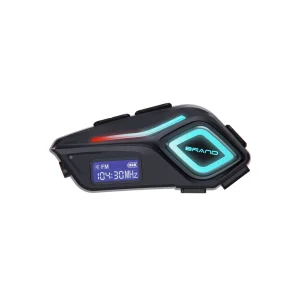
Workers in high-decibel distribution centers or airfield ground crews require dedicated Environmental Noise Cancellation (ENC) powered by deep neural network (DNN) algorithms. These models filter out heavy machine hums, isolated sirens, and wind roar while keeping voice transmissions crisp for push-to-talk enterprise software.
Open Wearable Stereo (OWS) & Sports Wearables
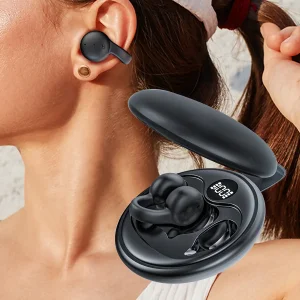
The rapid rise of open-ear air-conduction and bone-conduction earbuds caters to athletes and outdoor commuters who demand situational awareness. Factories utilize reverse-phase directional acoustic sound beams to prevent audio leakage into ambient space while cancelling surrounding wind turbulence.
Kids & Educational Hearing Protection
Educational channels require customized volume-limiting algorithms (safe 85dB SPL ceiling according to WHO guidelines) paired with passive background noise isolation. This keeps young learners focused during remote classes or language lab sessions without exposing sensitive eardrums to high sound pressure levels.
Frequently Asked Questions: B2B Procurement & Manufacturing Intelligence
Direct insights from our senior acoustic engineering and global trade compliance teams to help streamline your OEM/ODM sourcing project.
Why choose a direct Shenzhen TWS factory over a trading company?
What is the minimum order quantity (MOQ) for custom private-label Noise TWS Earbuds?
- Standard OEM (Logo printing, custom packaging, custom Bluetooth pairing name): Typically starts at 1,000 to 2,000 units per colorway on existing tooling.
- Custom Firmware / Sound Tuning (EQ Curves, Voice Prompts, App Integration): Usually requires 3,000 units.
- Full ODM (New plastic injection mold, customized structural layout, custom PCB): Typically starts at 5,000 to 10,000 units to amortize tooling costs efficiently.
How do Chinese manufacturers guarantee ANC stability across large mass-production runs?
What is the standard lead time for OEM/ODM orders from contract sign-off to shipment?
Which international safety and radio frequency certifications are necessary for global markets?
- United States: FCC ID (RF Compliance), UN38.3 & MSDS (Lithium Battery Transport), Prop 65.
- European Union: CE-RED (Radio Equipment Directive), RoHS, REACH, EN62368-1 (Safety).
- Japan: TELEC (MIC Radio Certification), PSE (Battery Safety).
- Global: Bluetooth SIG BQB Qualification (Essential to avoid trademark infringement fines).
Can your factory support custom mobile software applications (iOS & Android) for EQ and ANC control?
Whitepaper Compiled by Engineering & Technical B2B Sourcing Directorate | Shenzhen Sonun Technology Co., Ltd. (Est. 2006)
Specialists in Micro-Acoustic Engineering, Hybrid Active Noise Cancellation Topologies, and OEM/ODM Global Supply Operations.