
Top Engineered TWS & Acoustic Solutions
Direct factory-gate solutions customizable for brand owners, importers, and global retail platforms. Built with low latency, ENC mic arrays, and high-efficiency power management.
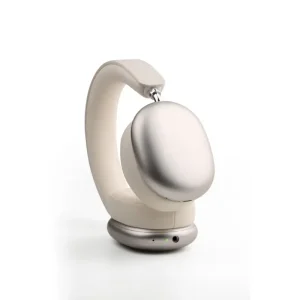
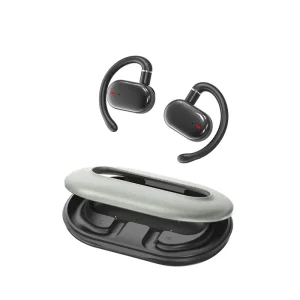
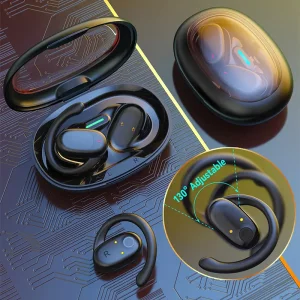
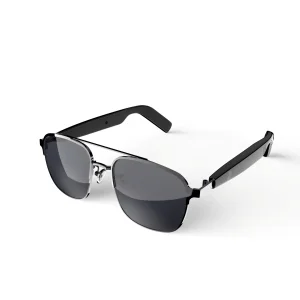
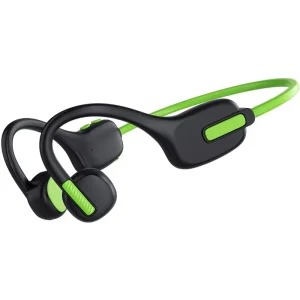
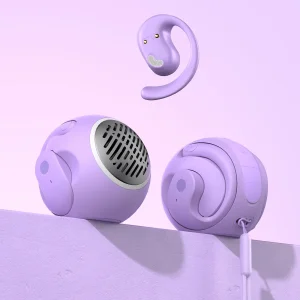
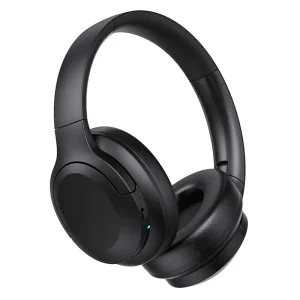
Global TWS Market State & OEM Procurement Shifts
The True Wireless Stereo (TWS) market has evolved from a consumer luxury segment into a highly fragmented, necessity-driven audio utility. As global consumer demand shifts toward specialized acoustic profiles—ranging from high-fidelity active noise-canceling (ANC) buds to open-ear wearable stereo (OWS) and safety-focused bone conduction devices—the strategic reliance on specialized Chinese manufacturing ecosystems has reached an all-time high.
Today, over 92% of world-wide true wireless earphones originate from China's Greater Bay Area (Shenzhen-Dongguan acoustic hub). Procurement managers, consumer electronics brand directors, and private-label distributors face a dual challenge: navigating shifting component costs while securing supply chain resiliency that guarantees low latency, long battery lifespan, and strict global compliance (CE, FCC, RoHS, REACH).
Enterprise Communications
High demand for Dual-Microphone Environmental Noise Cancellation (ENC) with neural network beamforming algorithms to isolate human speech during remote calls.
Sports & OWS Expansion
Rapid shift toward non-in-ear directional audio (Air Conduction & OWS), enabling situational awareness, IPX7 waterproofing, and secure ear-hook ergonomics.
Hi-Res Lossless Audio
Widespread consumer adoption of Bluetooth 5.4, LC3 codecs, and spatial audio with dynamic head tracking at competitive factory price points.
China TWS Supply Chain Resilience & Cost Efficiency
The unfair competitive advantage of Chinese top-tier TWS suppliers like Sonun lies in hyper-clustered supply chain density. Within a 30-kilometer radius in Shenzhen and Dongguan, a manufacturer can source precision tooling components, custom-molded silicone, lithium-ion button cells, PCB assemblies (PCBA), and acoustic driver diaphragms with zero logisitical lag.
This localized density drastically compresses the time-to-market (TTM) for private label projects, reducing typical development cycles from 6 months down to under 30 days for OEM logo customization, or 60 days for complete ODM structural tooling.
Manufacturing Capability Comparison Matrix
| Production Dimension | Standard Sourcing (Tier 2/3 Factories) | Sonun & Top Tier OEM Factories | Procurement Strategic Impact |
|---|---|---|---|
| SMT Line Precision | Manual / Semi-automated placement | High-speed Fuji / Panasonic SMT lines | Minimizes RF signal instability & component failure |
| Acoustic Curve Tolerance | ±3.0 dB variability across batches | ±1.0 dB to ±1.5 dB rigid limit | Ensures consistent bass response and ANC symmetry |
| ANC Calibration | Single-frequency static test | Full Anechoic Chamber Soundcheck | Eliminates wind-noise artifacts & hiss static |
| Battery Safety QC | Basic spot checks | 100% Aging chamber cyclic testing | Prevents battery swelling & extends lifetime cycles |
| Lead Time (OEM / ODM) | 25-35 Days / 90+ Days | 12-18 Days / 45-60 Days | Fast capital turnover & stock replenishment |
TWS Technology Roadmap (2025–2030)
Electro-acoustic technology is experiencing a convergence of wireless chip innovation, micro-battery density improvements, and AI-driven signal processing algorithms. Sourcing managers must align with factories actively developing products on this technology curve.
Adoption of LC3 audio codec as the standard substitute for SBC. Multi-device seamless multipoint switching, sub-20ms ultra-low latency modes for mobile gaming, and hybrid feedforward/feedback active noise cancellation reaching -45dB depth.
Integration of low-power NPU (Neural Processing Unit) blocks inside Bluetooth SoCs. Real-time acoustic environment classification, adaptive noise suppression based on ear canal geometry, and real-time voice translation assistance.
Widespread integration of PPG heart-rate sensors, core temperature monitoring, and accelerometer-based head tracking for spatial audio. Complete consumer movement toward open-ear ergonomic designs to prevent ear canal fatigue.
Localized Application Scenarios & Engineering Optimization
A single generic TWS architecture no longer satisfies regional market demands. Factories must customize physical structures, acoustic drivers, and firmware presets to suit distinct localized usage patterns.
Remote Work & Office UC
Challenge: Background noise in open offices or home environments during video conference calls.
Engineering Solution: 4-Mic array configured with ENC DSP filtering, USB-C dongle connection for low-latency PC pairing, and dedicated physical mute buttons.
Extreme Sports & Athletics
Challenge: Earbud displacement caused by intense motion and sweat ingress.
Engineering Solution: Soft medical-grade silicone ear-hooks, liquid-silicone rubber (LSR) speaker membranes, and nano-coated IPX7 waterproof PCB protection.
Child Education & Safety
Challenge: Hearing damage caused by uncontrolled volume peaks in young listeners.
Engineering Solution: Hardware-level volume limiters restricted strictly to 85dB/94dB SPL according to EN71 safety standards, using anti-choking food-grade plastics.
Deconstructing the TWS Factory Quote (BOM Breakdown)
Understanding the exact Bill of Materials (BOM) cost structure enables buyers to negotiate fair unit pricing while avoiding suspicious low-ball offers that compromise component safety or performance reliability.
1. Wireless SoC (Chipset)
The primary cost driver. Standard JL (Jieli) chips suit entry-level audio, while Realtek, Airoha, Bestechnic (BES), and Qualcomm enable ANC, low-power dissipation, and HD codecs.
2. Battery & Power Circuit
Pure cobalt button cell batteries cost significantly more than ternary lithium polymer cells, but offer twice the charge-cycle lifespan and eliminate leakage risks.
3. Acoustic Driver & Housing
Composite titanium or Graphene dynamic drivers paired with injection-molded ABS/PC plastic housings, UV coating, and magnetic latching mechanisms.
4. Assembly, Testing & Margin
SMT placement, manual assembly labor, automated RF test station checks, acoustic chamber calibration, factory operational overhead, and net margin.
Global Regulatory Compliance & Quality Control Framework
Importing electro-acoustic hardware into European, North American, or Asian markets requires comprehensive regulatory documentation. Tier-1 Chinese manufacturers provide full end-to-end testing support prior to shipment.
European Union (EU) Requirements
Required Marks: CE, RoHS, REACH, WEEE.
Key Focus: Heavy metal restrictions in earbud plastics, battery safety testing (EN 62133), and maximum sound pressure level restrictions (EN 50332).
North America (US & Canada)
Required Marks: FCC ID, California Prop 65, UL2054.
Key Focus: RF radiation limits, Bluetooth frequency hopping compliance, battery safety cell certification, and toxic material restrictions.
Quality Control Standards
AQL Inspection: Critical 0, Major 1.0, Minor 2.5.
Factory Testing Protocols: Drop tests (1.2m), hinge lifecycle durability (10,000 cycles), thermal shock (-20°C to 65°C), and salt spray corrosion testing.
Specialized Form Factors & Custom Lineup
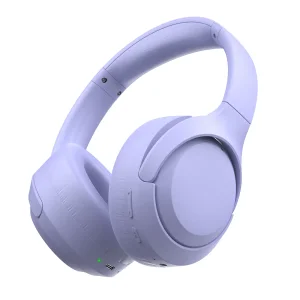
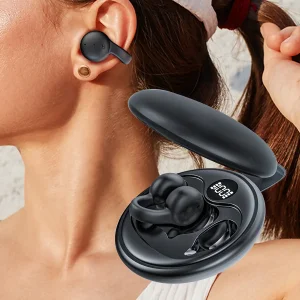
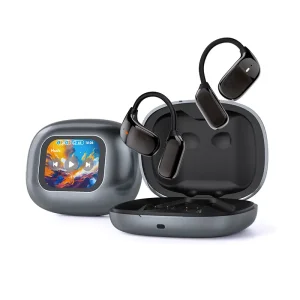
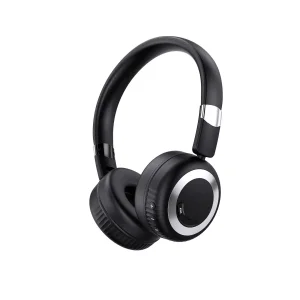
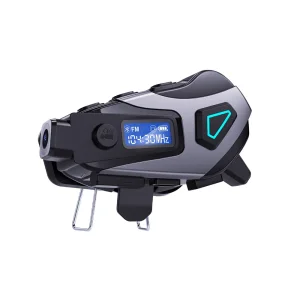
From bone conduction headsets for kids to high-performance open-ear workout gear and helmet-integrated comms systems, explore our factory-direct customizable line-up.

Frequently Asked Sourcing & Engineering Questions
Direct answers regarding factory qualification, OEM customization limits, minimum order quantities (MOQ), and production lead times.