
OEM/ODM Custom Gaming & Commercial Audio Hardware
Precision-engineered audio solutions available for direct enterprise export, private label customization, and bulk procurement quotes.
Global Gaming Audio Market Dynamics & Strategic OEM Sourcing
An in-depth structural analysis of ultra-low latency wireless protocols, custom DSP engineering, dynamic range compression, and international export economics for enterprise buyers.
Sub-20ms Ultra-Low Latency Ecosystems
In competitive Esports environments, acoustic timing is as critical as frame rates. Traditional Bluetooth A2DP audio profiles present inherent latency overheads ranging between 120ms and 220ms—a delay unacceptable for fast-paced First-Person Shooter (FPS) and Battle Royale titles. Modern export-grade gaming audio hardware relies on proprietary 2.4GHz RF uncompressed wireless dongles alongside integrated Bluetooth 5.4 LE Audio (LC3 Codec) chipsets.
By shifting to dual-mode chipsets (such as PixArt, Airoha, or Nordic Semiconductor solutions), B2B gaming audio brands can deliver sub-18ms glass-to-ear latency. This architectural upgrade ensures real-time acoustic spatial cues, positional footstep tracking, and immediate gunshot synchronization, elevating gaming headset OEMs into high-margin tier-1 distribution channels.
Acoustic Tuning & Spatial Spatialization
Commercial consumer headphones prioritize flat sound profiles or exaggerated V-shaped bass curves. Conversely, custom gaming audio engineering demands surgical parametric EQ tuning. Hardware exporters must implement dynamic driver assemblies—utilizing 50mm Neodymium dynamic drivers with PET/Titanium composite diaphragms—to prevent bass bloat from masking high-frequency audio cues.
Advanced custom quotes frequently incorporate embedded 7.1 virtual surround sound DSP engines or head-tracking IMU (Inertial Measurement Unit) sensors. By integrating onboard hardware-level spatial virtualization, manufacturers eliminate reliance on host PC software overhead, ensuring seamless plug-and-play cross-platform compatibility across Sony PlayStation 5, Microsoft Xbox Series X, Nintendo Switch, and mobile platforms.
Technical Paradigm Shift: Consumer Audio vs. Esports Gaming Audio
| Acoustic Parameter | Standard Consumer Wireless Audio | Enterprise Custom Gaming Audio (OEM Export Standard) |
|---|---|---|
| Wireless Transmission Latency | 150ms – 250ms (SBC / AAC) | 12ms – 18ms (2.4GHz Proprietary RF + LC3 LE Audio) |
| Microphone Uplink Architecture | Single Omnidirectional MEMS | Dual-Mic ENC Array with AI Deep Neural Network Noise Suppression |
| Driver Diaphragm Structure | 40mm Mylar / Paper Cone | 50mm Titanium-Plated Polyethylene Naphthalate (PEN) |
| Cross-Platform Compatibility | Bluetooth Mobile Only | Multi-Node USB-C / USB-A RF Dongle + BT 5.4 Dual-Mode |
| Acoustic Spatial Accuracy | 2-Channel Stereo Field | Hardware-Decoded Virtual 7.1 & HRTF Spatial Positioning |
B2B Procurement Strategies & Quote Structure for Audio Exporters
Understanding the Total Cost of Ownership (TCO), Bill of Materials (BOM) optimization, custom tooling amortizations, and risk mitigation in audio manufacturing.
1. Bill of Materials (BOM) Optimization
When evaluating custom audio quotes from China factories, procurement managers must evaluate chip-level specifications. The SoC (System on Chip) accounts for 25-35% of total electronic BOM cost. High-tier gaming headsets leverage dual-core DSPs supporting active noise cancellation (ANC) alongside environmental noise cancellation (ENC) for crystal-clear team communication.
- Qualcomm QCC3056 / Airoha AB1565 dual-mode options
- Custom PCB layout to minimize RF interference and cross-talk
- Li-Polymer battery protection ICs (KC/UL certified cells)
2. Tooling & Industrial Design
Custom housing tooling requires initial NRE (Non-Recurring Engineering) investments. Private label exporters can choose between existing open-tooling modifications or full custom injection molds (CNC aluminum tooling). Ergonomic headband pressure distribution (target range: 3.5N - 4.2N clamping force) is vital to eliminate long-session ear fatigue.
- Protein leather vs. Breathable mesh fabric ear cushions
- Custom RGB light pipe optics and housing finishes
- 3D CAD rapid prototyping and acoustic chamber testing
3. Quality Control & Yield Management
Exporter quotes must clearly state Acceptance Quality Limit (AQL) standards. For premium audio electronics, standard compliance mandates AQL 1.0 Critical, 1.5 Major, and 4.0 Minor. Precision audio testing requires SoundCheck or AP (Audio Precision) analyzer sweeps across every production line unit to verify frequency curve consistency.
- 100% frequency response & THD (<1%) acoustic testing
- RF wireless sensitivity and Anechoic chamber calibration
- Hinge durability drop-tests & salt spray corrosion checks
Localization Support, Regulatory Compliance & Logistics Security
Navigating worldwide certification frameworks ensures seamless customs clearance, zero market recall risks, and immediate retail readiness.
North American & European Compliance Protocols
Shipping customized audio electronics into tier-1 Western markets demands strict regulatory documentation. Failure to provide validated test reports can result in customs seizures, heavy fines, or platform seller bans.
- FCC Part 15B & 15C: Intentional radiator certifications for 2.4GHz RF and Bluetooth spectrums.
- CE-RED (Radio Equipment Directive): European compliance for RF safety, EMC, and health limits.
- RoHS & REACH Compliance: Verification of non-hazardous materials in plastics, cabling, and solder joints.
- California Proposition 65: Phthalate-free and heavy-metal-tested ear pad materials.
Asia-Pacific & Emerging Market Sourcing Security
Expanding into Asia-Pacific and South American distribution channels requires tailored certification strategies and custom localized firmware setups.
- TELEC / MIC (Japan): Technical conformity marking for radio frequency equipment in Japan.
- KC Certification (South Korea): Safety and EMC testing for integrated lithium battery circuits.
- Anatel (Brazil) & NCC (Taiwan): Mandatory wireless telecommunications approval protocols.
- Custom Voice Prompts & Localized Packaging: Multi-language firmware audio prompts (EN, JP, DE, ES, FR).
Technology Roadmap: The Future of Gaming Audio (2025–2028)
How emerging hardware paradigms like AI-driven mic isolation, LE Audio, and haptic feedback will transform OEM custom quotes.
AI Edge Neural Noise Suppression
Next-generation gaming headsets are shifting from traditional dual-mic phase inversion ENC to integrated NPU (Neural Processing Unit) edge algorithms. Deep Neural Networks (DNN) trained on over 500 million noise samples isolate human vocal chords while instantaneously eliminating mechanical keyboard clicks, room reverb, and ambient fan noise with zero voice distortion.
BLE Audio & LC3 Codec Standardization
Bluetooth Low Energy (BLE) Audio with the LC3 (Low Complexity Communication Codec) is replacing legacy SBC protocols. This transition allows high-fidelity audio transmission at half the bit rate, reducing power consumption by up to 40% while supporting multi-stream audio broadcast (Auracast) for tournament arenas and shared gaming environments.
Sensory Haptic Dynamic Feedback
Integrating wideband Linear Resonant Actuators (LRA) within the earcups transforms low-frequency audio signals into localized physical vibrations. By pairing 20Hz bass frequencies with haptic tactile responses, players experience immersive in-game explosions and vehicular feedback without distorting acoustic mid-range clarity.
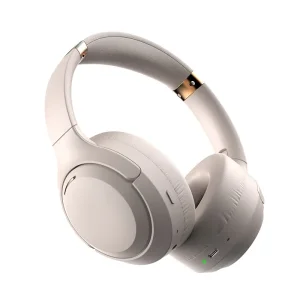
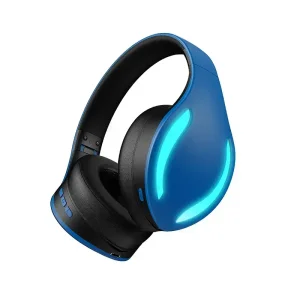
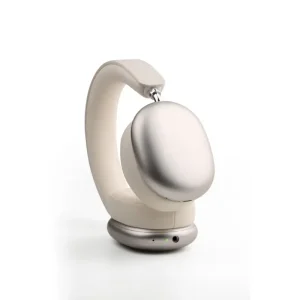
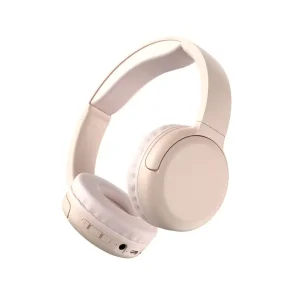
High-Performance Audio Hardware Ready for Custom RFQ
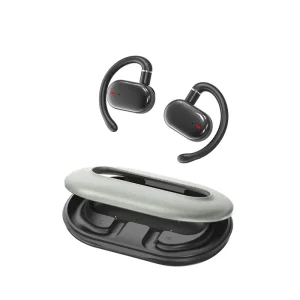
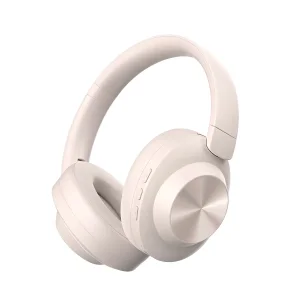
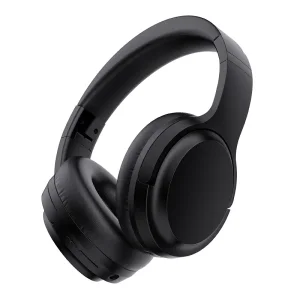
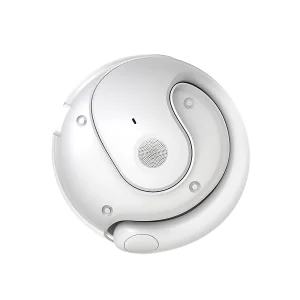
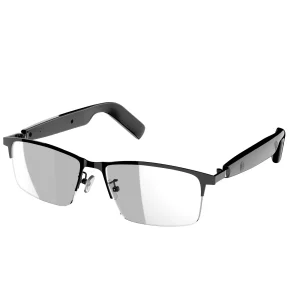
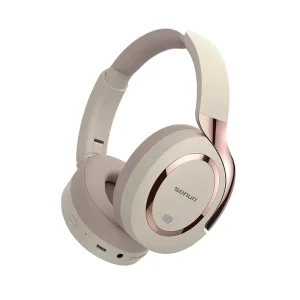
Explore fully customizable, factory-direct over-ear, in-ear, and open-ear audio equipment for international export markets.
Custom Gaming Audio Sourcing & RFQ FAQ
Essential technical and commercial answers for enterprise procurement officers, brand managers, and international audio importers.