
Enterprise OEM/ODM Headphones Portfolio (Part I)
Explore our flagship Active Noise Cancelling over-ear models, Bluetooth 5.4 wireless headsets, and specialized acoustic solutions designed for global private-label distribution.
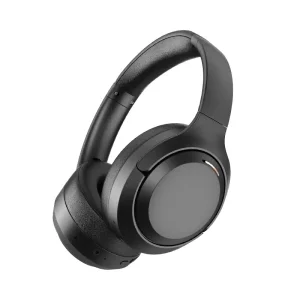
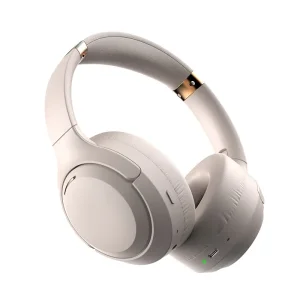
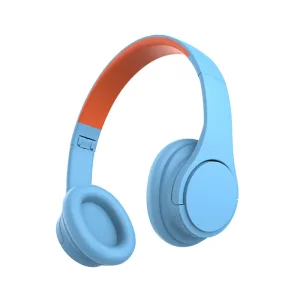
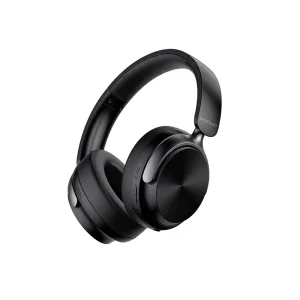
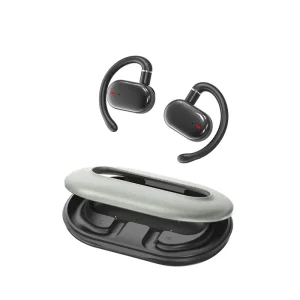

1. Enterprise Sourcing Intent & Macro Sourcing Intelligence for ANC Headphones
In the rapidly evolving global wireless audio market, procurement decision-makers—ranging from tier-one consumer electronics brand executives to enterprise procurement directors and airline amenity buyers—face a complex set of trade-offs. Sourcing high-performance Custom Bluetooth Active Noise Cancelling (ANC) Headphones requires moving far beyond basic aesthetic customization. Modern purchasing intent centers around acoustic fidelity, digital signal processing (DSP) stability, thermal efficiency of integrated batteries, and regulatory risk mitigation across international markets.
As a specialized Shenzhen headphone factory founded in 2006, Shenzhen Sonun Technology Co., Ltd. has observed a fundamental shift in B2B buying intent. Global distributors no longer search merely for lower unit pricing; they demand turnkey engineering partner capabilities. When evaluating an OEM/ODM manufacturer for active noise reduction audio hardware, professional sourcing teams focus on five primary core performance dimensions:
Acoustic Isolation Depth & Bandwidth
Moving from basic Feedforward ANC (20dB–25dB attenuation) to advanced Hybrid Feedforward + Feedback multi-mic architectures capable of broadband attenuation exceeding -38dB to -45dB across 20Hz to 1000Hz spectrums.
Wireless Connectivity & Codec Support
Seamless transition to Bluetooth 5.4 and LE Audio (Low Energy Audio) infrastructure supporting LC3 codecs, ultra-low latency gaming modes (<40ms), and multi-point device switching without packet loss.
Power Management & Battery Life
Optimizing power-consumption curves of dual-core DSP chips to deliver continuous playback times ranging from 35 hours to over 70 hours with ANC enabled, supported by NTC thermal protection circuitry.
Information Gain Insights for B2B Purchasing Officers
Standard off-the-shelf headphones often fail international commercial channel audits due to inconsistent noise cancellation phase alignment. When feedforward microphones pick up external ambient signals, an uncalibrated DSP can inadvertently introduce phase distortion into the driver diaphragm, resulting in high-frequency hiss or low-frequency popping (pressure equalization failure). Professional OEM manufacturing demands per-unit automated acoustic calibration using SoundCheck® or Audio Precision® analyzer arrays on the assembly line.
2. Macro Industry Solutions & Acoustic Engineering Architecture
Building enterprise-class wireless headphones requires systemic integration across mechanical design, acoustic chamber simulation, printed circuit board (PCBA) routing, and firmware tuning. At Sonun's Longhua manufacturing facility, our engineering workflow follows a rigorous architectural methodology to ensure stability across high-volume production runs.
1. Multi-Microphone ANC Topology
We implement Hybrid ANC topologies combining external Feedforward MEMS microphones (detecting ambient environmental noise before it reaches the ear canal) with internal Feedback MEMS microphones (monitoring residual acoustic energy inside the ear cup). By combining real-time differential DSP algorithms, our system neutralizes complex low-frequency noise generated by jet engines, HVAC systems, and urban transit.
2. Precision Acoustic Cavity Design
Driver diaphragm selection directly dictates transient response and acoustic distortion. Sonun utilizes 40mm to 45mm custom dynamic drivers featuring titanium-coated PET or polyether ether ketone (PEEK) composite diaphragms paired with N52 neodymium magnet structures. Independent front-and-rear acoustic chambers prevent back-wave phase interference, keeping Total Harmonic Distortion (THD) below 0.5% at 1kHz 94dB SPL.
3. ENC Mic Array for Clear Calling
Clear voice transmission during remote enterprise calls or noisy outdoor commutes is critical. Our Environmental Noise Cancellation (ENC) utilizes dual or quad omnidirectional MEMS microphones driven by neural-network beamforming algorithms (cVc 8.0 or proprietary AI-NC algorithms). The system isolates human speech frequencies (300Hz–3.4kHz) while suppressing up to 35dB of crosswind and background traffic noise.
The table below illustrates the technical divergence between standard consumer-grade wireless headphones and Sonun’s industrial-grade OEM ANC solutions engineered for brand partners:
3. Technology Roadmap & Future Outlook in Wireless Audio (2025–2030)
The personal audio ecosystem is undergoing a massive transformation driven by advanced semiconductor manufacturing, artificial intelligence at the edge, and emerging wireless audio transmission protocols. As an established OEM/ODM factory partner, Sonun actively invests in next-generation R&D projects to ensure our clients maintain a multi-year technology advantage over competing consumer brands.
Auracast™ Broadcast Audio Integration
Bluetooth LE Audio and Auracast™ are replacing legacy Bluetooth Classic profile architectures. Future Sonun active noise cancelling headphones are designed to support uncompressed multi-stream broadcasting, allowing users in public venues (airports, conference halls, silent discos) to tune into local audio broadcasts seamlessly with minimal battery power consumption.
Real-Time Spatial Audio & Head Tracking
By embedding 6-axis Inertial Measurement Units (IMU—combining 3-axis gyroscopes and 3-axis accelerometers) directly onto the headset PCBA, our engineering team enables 3D Spatial Audio rendering. Firmware algorithms dynamically recalculate sound stage positioning based on real-time user head orientation, delivering an immersive cinematic or gaming experience.
AI Adaptive Environment Sensing
Next-generation ANC algorithms no longer rely on static filter profiles. Embedded Edge-AI DSP modules continuously analyze surrounding soundscapes—automatically adjusting active noise attenuation profiles when transitioning from a high-frequency subway environment to a quiet office space, avoiding ear-pressure fatigue.
Sustainable Material Engineering (PCR & Bio-Plastics)
In accordance with European Union ESG directives and global corporate sustainability commitments, Sonun offers Post-Consumer Recycled (PCR) ABS plastic enclosures, vegan protein-leather ear pads derived from bio-based polyols, and 100% plastic-free soy-ink retail packaging options.
4. Global Commercial Landscape, Regulatory Compliance & Supply Chain Security
Navigating international trade barriers and regulatory frameworks requires an experienced OEM factory partner. Importing electronic acoustic devices into major commercial territories like North America, the European Economic Area (EEA), Japan, and South America involves strict mandatory certification standards. Failure to comply can result in customs seizures, massive fines, or product recalls.
Comprehensive Certification Ecosystem Supported by Sonun
At the onset of every private label or custom ODM headphone project, Sonun's regulatory engineering team aligns raw material selection and circuit board layouts to satisfy target market certification prerequisites:
- North America (US & Canada): FCC ID (Part 15C), IC (Industry Canada), California Proposition 65 (Phthalates & Lead restriction), UL2054 / IEEE1725 battery safety standards.
- European Union (EU / EEA): CE-RED (Radio Equipment Directive 2014/53/EU), RoHS 3 (Directive 2015/863), REACH SVHC candidate list compliance, EN 50332 acoustic safety (sound pressure level limits for hearing protection).
- Global Wireless Licensing: Bluetooth SIG BQB (Bluetooth Qualification Body) declaration and royalty licensing to prevent trademark infringement customs holds.
- Battery Logistics Safety: UN38.3 transport testing, MSDS documentation, and IEC 62133 certification for worldwide air and sea freight clearance.
Beyond regulatory paperwork, manufacturing reliability depends on strict batch-to-batch Quality Control (QC) workflows. Sonun operates an end-to-end quality control pipeline within our Shenzhen industrial park:
IQC (Incoming Quality Control)
100% inspection of incoming MEMS microphones, dynamic speaker drivers, Bluetooth ICs, battery cells, and plastic housing molds using automated optical inspection (AOI) and acoustic tolerance testing.
IPQC (In-Process Quality Control)
Continuous monitoring during SMT surface mounting, acoustic cavity sealing, ultrasonic welding, and wiring harness assembly to guarantee zero cold-solder joints.
FQC / OQC (Final Outgoing Control)
Every single headphone unit passes through an automated electro-acoustic test box running frequency curve matching, ANC active noise depth checks, RF output power calibration, and physical button endurance testing.
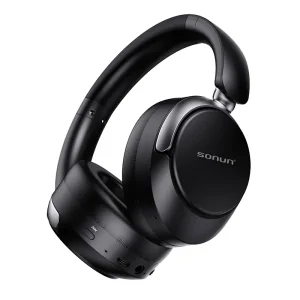
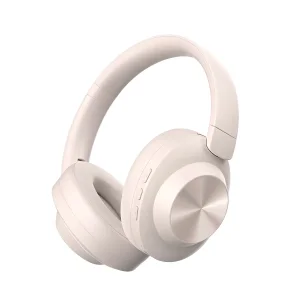
Enterprise OEM/ODM Headphones Portfolio (Part II)
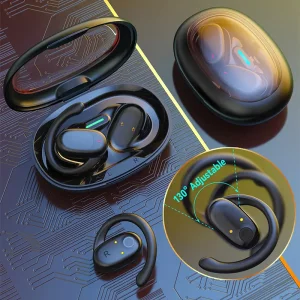
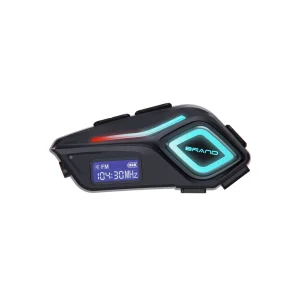
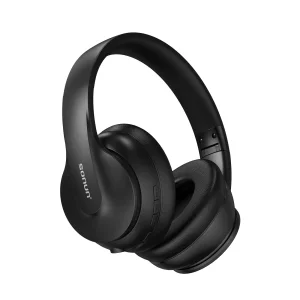
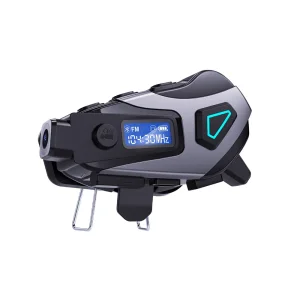
Discover our extended line of high-resolution sports earbuds, specialized riding headsets, hybrid ANC over-ear units, and customizable OEM wireless solutions.
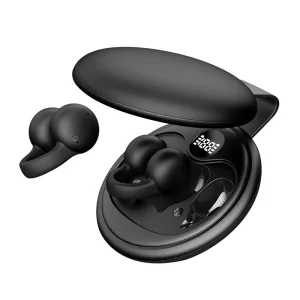
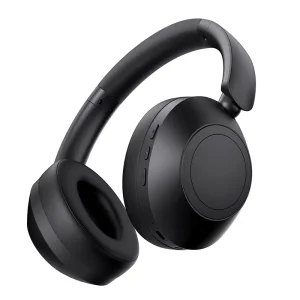
5. Why Partner with Shenzhen Sonun Technology Co., Ltd.
Established in 2006, Shenzhen Sonun Technology Co., Ltd. has evolved into a cornerstone manufacturer within the Longhua District electronics manufacturing ecosystem in Shenzhen, China. Our facilities span state-of-the-art acoustic testing laboratories, modern clean-room assembly lines, tooling workshops, and aging test bays.
We bridge the gap between creative product concepts and mass-production realities. Whether you are launching a private-label direct-to-consumer (D2C) premium headphone line or seeking an experienced ODM partner for a customized acoustic headband mold, Sonun provides structured milestone execution:
Phase 1: Product Briefing & Feasibility
Definition of target acoustical parameters (attenuation dB, driver size, EQ curve targets), budget parameters, Bluetooth chip selection (Qualcomm, Realtek, BES, JL), and compliance roadmaps.
Phase 2: Industrial Design & Tooling
3D CAD modeling, rapid SLA prototyping, acoustic chamber fluid simulation, and precision CNC injection mold production ensuring ergonomic clamp force and seal integrity.
Phase 3: Golden Sample Approval
Fabrication of fully functional pre-production samples. Acoustic verification using Head and Torso Simulator (HATS) systems to lock in reference frequency curves.
Phase 4: Bulk Production & Logistics
Mass assembly under ISO9001 quality guidelines, automated SoundCheck electro-acoustic validation, customized packaging print, and streamlined FOB/CIF export logistics.
Frequently Asked Questions (FAQ) for B2B Procurement
Technical and commercial answers to clear your sourcing queries before placing an OEM/ODM order with Sonun.