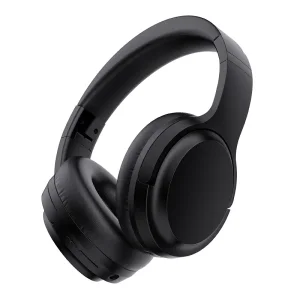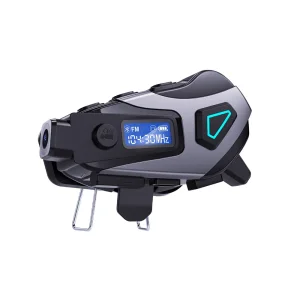
Featured OEM/ODM Industrial Earbud & Headset Systems
Explore our factory-direct flagship acoustic solutions engineered for global export compliance, extreme bass response, active noise cancellation, and high-reliability wireless protocols.
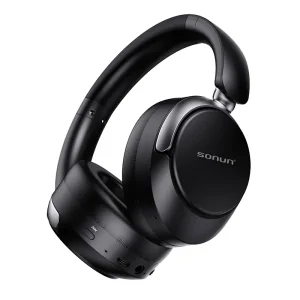
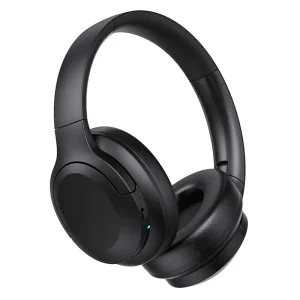
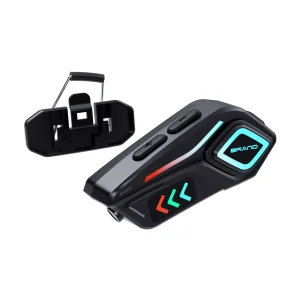
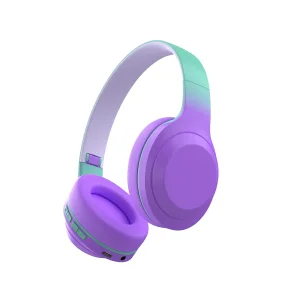
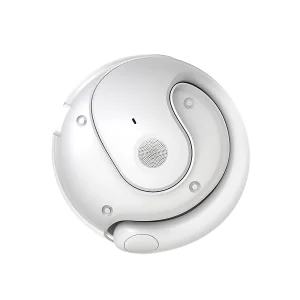
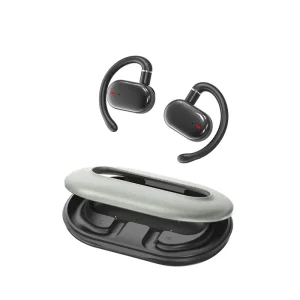
1. Executive Technical Brief: Mining the True Intent of "Good ANC"
In the global consumer electronics landscape, search queries surrounding "Custom Good ANC Earbuds Factories & Exporters" reflect a high-intent procurement phase where enterprise buyers, brand owners, and importers move beyond generic OEM pricing toward acoustic validation, engineering rigor, and supply chain transparency.
From an engineering perspective, "Good ANC" (Active Noise Cancellation) is no longer quantified merely by peak decibel (-dB) numbers on a promotional datasheet. Modern B2B procurement demands a holistic acoustic dynamic range, stable hybrid microphone placement, and sophisticated Digital Signal Processing (DSP). When enterprise brand directors query tier-1 manufacturing hubs in China, they are actively seeking factories capable of solving complex physical acoustic challenges:
Acoustic Isolation & Hybrid DSP
Integrating Feedforward (FF) exterior mics with Feedback (FB) interior ear-canal mics to achieve multi-layered active attenuation across low, mid, and high frequencies (20Hz–2000Hz) without compromising driver dynamic range.
Aeroacoustic Wind-Noise Suppression
Designing physical microphone cavities with anti-wind fluid dynamics (physical mesh dampers) combined with real-time algorithm gains to eliminate low-frequency turbulence when users move at speeds up to 35 km/h.
Low Power SoC Optimization
Balancing high computing power demands of real-time ANC filtering (up to 192kHz sampling rates) with ultra-dense lithium polymer battery architecture to guarantee >8 hours of continuous ANC playback.
2. Acoustic Engineering Roadmap & Tech Outlook (2025–2030)
The next half-decade of personal audio will be driven by profound shifts in micro-transducer materials, Edge AI silicon processing, and spatial computing protocols. Tier-1 China manufacturing partners are transitioning from passive contract assemblers to co-development engineering powerhouses.
Silicon MEMS Speakers & Hybrid Drivers
Replacing or augmenting traditional dynamic coil drivers with micro-electromechanical systems (MEMS) dynamic drivers. MEMS drivers offer flat phase response, zero ultrasonic distortion, and millisecond-level impulse speeds, setting a new benchmark for Hi-Res audio reproduction.
Edge Neural Processing (NPU) & Adaptive ANC
On-chip NPU integration enables real-time acoustic scene classification. The earbud automatically switches between Transparency Mode, Flight Noise Cancellation, and Office Conversation Enhancement within 50 milliseconds based on real-time ambient noise analysis.
Bluetooth 5.4, LE Audio & LC3 Codec Integration
Implementation of the LC3 codec replaces legacy SBC, cutting power consumption by 50% while offering superior bitrate transmission. Multi-stream audio broadcasting and spatial audio with 6-axis head tracking are becoming mandatory B2B export specs.
3. Macro-Industry Solutions & Customized Vertical Applications
B2B buyers require specialized hardware turnkeys tailored to specific commercial market verticals. Modern Chinese exporters customize housing acoustics, firmware logic, and physical ergonomics based on end-user environments.
| Vertical Market Sector | Core Acoustic & Hardware Challenges | Factory Technical Customization Solution | Compliance & Regulatory Standard |
|---|---|---|---|
| Unified Communications & Remote Work | Background speech interference, keyboard clicking, vocal strain during long calls. | Multi-mic Beamforming ENC algorithms, dedicated USB-C high-bandwidth dongles, Teams/Zoom EQ tuning. | CE, FCC, RoHS, Microsoft Teams Acoustic Guidelines |
| Extreme Sports & Active Lifestyle | Sweat ingress, impact shocks, severe wind turbulence noise, earbud retention. | IP68 Nano-coating structural sealing, anti-wind mesh chamber geometry, ergonomic ear-hook mechanics. | IP68 Waterproof Test, UN38.3 Drop Test |
| Industrial & Construction Noise Safety | Dangerous high-dB impulses (machinery, drills) mixed with voice communication needs. | Real-time acoustic limiter (<85dB output), selective active noise filtering, ruggedized ABS/TPU housing. | EN 352 Safety Standards, OSHA Hearing Safety |
| Pediatric Education & Kid's Audio | Risk of hearing damage from excessive volume spikes, delicate headband/earbud durability. | Hardware-locked 85dB/94dB volume limiters, food-grade non-toxic silicone ear tips, tangle-free cables. | CPSIA, EN71, REACH Non-Phthalate Certification |
4. China's Industry 4.0 Supply Chain: Speed, Resilience & Quality Control
The Greater Bay Area (Shenzhen-Dongguan-Huizhou audio eco-system) controls over 85% of global wireless headphone production. Leveraging fully integrated supply networks, accredited factories deliver unmatched cost-efficiencies and speed-to-market advantages.
High-Precision Automated SMT Lines
Surface Mount Technology (SMT) with inline 3D Automated Optical Inspection (AOI) guarantees ultra-clean micro-soldering for multi-layer Bluetooth PCBs, minimizing signal impedance and preventing cold-solder failures under thermal stress.
Anechoic Chamber Acoustic Testing
Every ANC model undergoes 100% automated acoustic sweep testing using Audio Precision (AP555) analyzers in calibrated free-field sound chambers, validating frequency response curves, THD (Total Harmonic Distortion), and phase consistency.
Supply Chain Vertical Integration
From in-house plastic injection tooling, CNC headband machining, and automated battery spot welding to custom box packaging, vertical integration reduces sample lead times from 45 days down to 12 days.
5. Localization Support & Global Certification Architecture
Navigating global customs and regional product safety laws is a crucial responsibility for Tier-1 exporters. Complete compliance infrastructure shields brand importers from costly customs holds, port rejections, or consumer product recalls.
Custom Firmware & Multilingual Voice Prompts
Exporters offer custom Bluetooth pairing names, localized system voice prompts (English, German, French, Japanese, Spanish), customized EQ companion mobile apps (iOS/Android), and custom touch-control mapping.
Hazardous Substance & Chemical Testing
Full compliance with RoHS 2.0, REACH SVHC, California Proposition 65, and POPs regulations. Materials contacting human skin (ear tips, headband cushions) undergo strict biocompatibility and non-cytotoxicity testing.
Battery Safety & Freight Logistics Docs
Lithium-ion battery packs are UN38.3 certified with complete MSDS, 1.2m drop test compliance, and IEC 62133 international safety standard reports for hassle-free air and sea transport worldwide.
6. Enterprise Procurement Strategy & Quality Audit Protocol
Successful B2B headphone manufacturing partnerships rely on strict stage-gate quality assurance protocols. Procurement managers should evaluate factory capabilities against standard engineering milestones.
1. EVT (Engineering Validation Test)
Verification of core PCB hardware layout, wireless antenna efficiency (TRP/TIS measurements), Bluetooth signal strength, and fundamental acoustic driver selection in raw 3D-printed enclosures.
2. DVT (Design Validation Test)
Testing fully injection-molded production samples. Subjected to environmental reliability testing: drop test, thermal shock (-20°C to 65°C), salt spray corrosion, insertion force, and button actuation lifespans.
3. PVT & Mass Production (AQL 0.65/1.0)
Pilot production run to validate assembly jig line efficiency. Final mass production batches are inspected strictly according to ISO 2859-1 (AQL) standards with Critical 0, Major 0.65, and Minor 1.0 limits.
7. Frequently Asked Questions (B2B Sourcing Engineering FAQ)
In-depth answers to technical, operational, and financial queries commonly raised by international audio brand buyers and supply chain executives.
Q1: What is the technical difference between Feedforward, Feedback, and Hybrid ANC in custom earbuds?
Feedforward (FF) ANC uses an external microphone to capture ambient environmental sound before it reaches the ear canal, effective for cancelling mid-to-high frequency noises. Feedback (FB) ANC places the mic inside the ear cup near the speaker cone to listen to the exact sound entering the ear, optimizing low-frequency cancellation but requiring complex phase management. Hybrid ANC combines both FF and FB microphones, providing comprehensive noise attenuation (up to -45dB across 20Hz-2000Hz) and eliminating audio distortion.
Q2: What is the typical Minimum Order Quantity (MOQ) for OEM vs. ODM custom ANC projects?
For standard OEM branding (applying custom silk-screen logo, custom packaging, and custom Bluetooth pairing name on existing factory tooling), the MOQ typically starts at 1,000 units per color. For complete ODM customized projects (new industrial design, custom injection mold tooling, unique PCB layout, and bespoke acoustic tuning), the MOQ is generally 3,000 to 5,000 units to amortize tooling expenses (NRE charges).
Q3: How do factory engineers address wind noise reduction in ANC earbuds?
Wind noise reduction is achieved through dual-layer mitigation: 1) Physical mechanical engineering, including recessed microphone placements, anti-turbulence mesh covers, and fluid-dynamic air ducts; 2) DSP software algorithms that detect wind noise frequencies and dynamically reduce feedforward microphone gain while maintaining low-frequency bass output.
Q4: What certifications are legally required to import custom ANC earbuds into North America and the EU?
For the North American market, products require FCC ID (for wireless RF compliance), UL/IEC 62133 (battery safety), and Prop 65 material compliance. For the European Union, products must carry CE marking, RED (Radio Equipment Directive), RoHS 2.0, REACH compliance, WEEE disposal certification, and EN 50332 sound pressure safety testing.
Q5: How can enterprise buyers verify a factory's true acoustic quality standards remotely?
Buyers should request raw acoustic graph export files (such as target curve response overlays from Audio Precision AP555 or SoundCheck equipment), request ISO 9001/BSCI audit reports, evaluate golden sample units across varying temperature environments, and contract third-party inspection firms (e.g., SGS, Bureau Veritas, TÜV) for pre-shipment auditing.
Q6: What is the typical production timeline from mold approval to mass shipment?
Once tooling and T1 samples are approved, the mass production timeline is typically 30 to 35 days. This covers component procurement (chipsets, battery cell aging, custom packaging printing), SMT assembly, automated testing, final burn-in aging tests, and bulk packaging.
Complete Exporter Product Catalog & Specialized OEM Series
Browse our full range of customizable wireless audio products, including sports ear-hook solutions, passive noise isolation gaming headsets, and open-ear air conduction models.