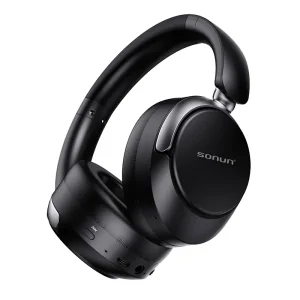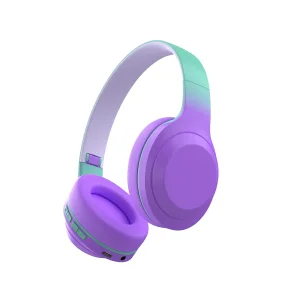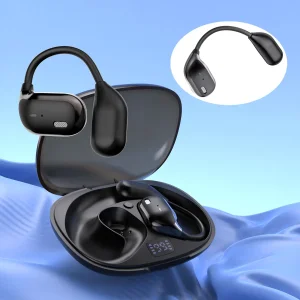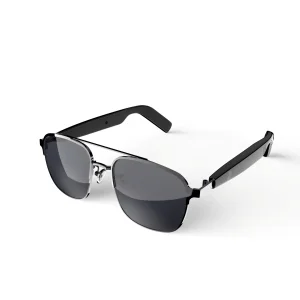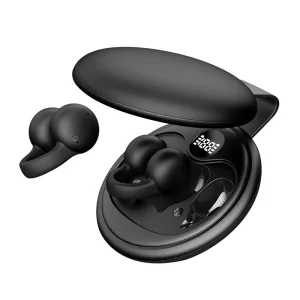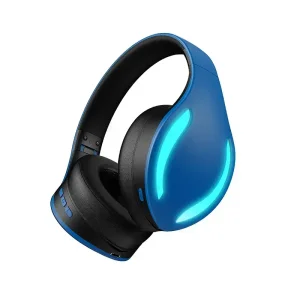
High-Performance Custom Noise-Canceling Headsets
Explore our flagship OEM/ODM acoustic platforms featuring hybrid noise attenuation, ultra-low latency wireless chipsets, and enterprise-grade voice isolation.
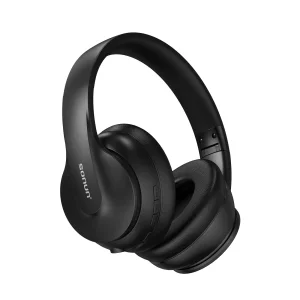
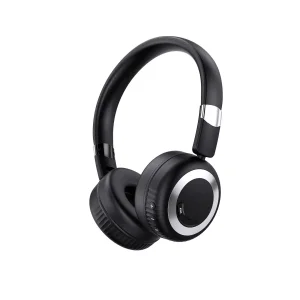
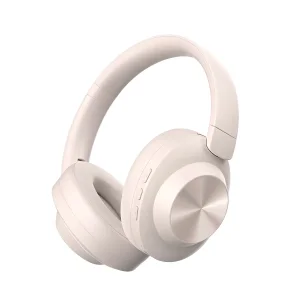
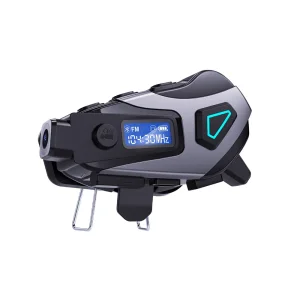
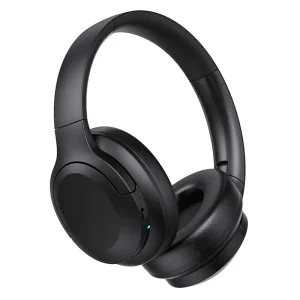
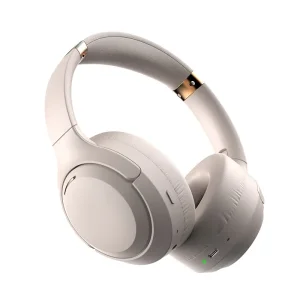
Global Enterprise Procurement Demand for Custom Headset Noise Control
In the rapidly evolving global communications ecosystem, acoustic environment management has transformed from a luxury feature into an essential operational parameter. Modern commercial buyers—ranging from Fortune 500 unified communication hubs to high-noise industrial operators—are actively seeking specialized custom headset noise suppliers and factory partners capable of delivering tailored acoustic insulation solutions. As open-plan office layouts become standard and remote collaboration tools dominate enterprise workflows, ambient acoustic pollution directly impairs workplace productivity, voice comprehension, and operator situational awareness.
B2B procurement decision-makers no longer evaluate audio equipment solely on consumer aesthetics. Instead, rigorous procurement protocols demand quantifiable acoustic metrics: deep Active Noise Cancellation (ANC) dB attenuation curves, dual-microphone Environmental Noise Cancellation (ENC) beamforming clarity, speech-to-noise ratio (SNR) optimization, and long-session ergonomic compliance.
Unified Contact Centers (BPO)
High-density customer support hubs require aggressive background speech rejection. Custom headsets engineered with multi-mic DSP algorithms prevent cross-talk transmission, protecting sensitive end-user customer data while enhancing caller intelligibility.
Industrial & Logistics Safety
Manufacturing plants, aviation ground support, and warehousing hubs demand pass-through spatial awareness alongside auditory protection. Customized helmet-integrated headsets provide passive acoustic attenuation paired with selective vocal frequency amplification.
Educational & Pediatric Audio
Institutional buying specs for digital learning require strict SPL (Sound Pressure Level) volume-limiting circuitry (<85dB) paired with active noise reduction to foster student focus without posing auditory damage risks during extended remote study sessions.
Macro Industry Solutions & Acoustic Engineering Architecture
Achieving world-class active noise reduction across diverse custom headset platforms requires a sophisticated integration of acoustic cavity mechanics, digital signal processing (DSP), and advanced semiconductor chipsets. As a top-tier custom headset noise supplier, our OEM/ODM engineering framework is structured around three core technological pillars:
| Acoustic Technology | Operational Mechanism | Primary Target Frequencies | Key Commercial Benefit |
|---|---|---|---|
| Feedforward ANC | External MEMS microphone captures environmental noise prior to reaching the ear canal. | 50Hz - 800Hz (Low-frequency hums, engines) | Rapid response time, ideal for predictable, steady-state transportation noise. |
| Feedback ANC | Internal microphone positioned inside ear-cup measures audio directly entering human ear. | 20Hz - 400Hz (Deep sub-bass resonances) | Self-correcting loop; adjusts for ear pad seal variations and anatomical differences. |
| Hybrid ANC Platform | Dual-mic topology combining Feedforward and Feedback micro-sensors with DSP. | 20Hz - 3,000Hz (Broadband attenuation up to -38dB) | Maximum isolation across complex ambient environments (offices, aircraft, industrial). |
| Beamforming ENC (Mic) | Multi-mic array calculates phase delays to isolate vocal vectors while canceling ambient noise. | Voice Bandwidth (300Hz - 7,000Hz) | Crystal-clear outbound voice calls even in 80dB+ noisy background environments. |
1. Acoustic Chamber Physics & Ergonomic Isolation
Active electronic cancellation can only perform at peak efficiency when complemented by robust passive acoustic isolation. Our industrial design engineers employ finite element analysis (FEA) to simulate ear-cup resonance and acoustic leakage. By customizing headband clamping force (calibrated precisely to 3.8N–4.2N for extended wear) and utilizing multi-density memory foam earpads wrapped in breathable protein leather or cooling gel fabric, we achieve an initial passive noise reduction rating (NRR) of up to 18dB prior to ANC activation.
2. Adaptive DSP & AI-Powered Environmental Tuning
The modern enterprise landscape requires intelligent acoustic adaptability. Our custom Bluetooth 5.3 and 5.4 chipset platforms integrate dedicated neural processing units (NPUs) running real-time scene detection. The headset dynamic filter continuously analyzes incoming audio profile vectors and seamlessly switches between Deep Noise Reduction, Office/Indoor Mode, and Transparent Ambient Pass-Through—ensuring wearers retain environmental safety awareness without compromising acoustic clarity.
OEM/ODM Technical Roadmap & Future Outlook (2025–2030)
The custom headset noise landscape is undergoing rapid technological convergence. To maintain competitive advantage, audio brand owners and enterprise buyers must align with manufacturing partners actively deploying next-generation acoustic standards.
LE Audio & LC3 Codec Integration
Transitioning from legacy SBC/AAC to LC3 audio codecs via Bluetooth 5.4. Delivers superior wireless acoustic audio quality at less than half the bit rate, reducing power consumption and permitting ultra-compact battery integration in custom ANC headsets.
Ultra-Low Latency Gaming & Helmet Modules
Proprietary 2.4GHz RF dongle solutions paired with custom Bluetooth chipsets achieve under 15ms end-to-end audio latency. Crucial for military, motor-sports helmet communication, and competitive gaming headset deployments.
Integrated UV-C Hygiene & Open-Wearable Safety
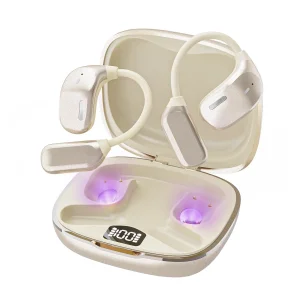
Emerging OWS (Open Wearable Stereo) and air-conduction designs utilize integrated UV sterilization within charging cases, satisfying strict healthcare, call-center sharing, and enterprise hygienic compliance demands.
Strategic Manufacturing Advantage
By leveraging our modular ODM architectural templates, clients reduce new product introduction (NPI) lead times from 12 months down to 90 days, bypassing initial acoustic tooling overhead while preserving full custom branding flexibility.
Global Business & Industrial Manufacturing Ecosystem
Situated at the epicenter of world acoustic innovation in Shenzhen, China, our manufacturing infrastructure bridges raw technological component sourcing with end-to-end quality assurance. Securing a reliable custom headset noise supplier requires auditing the complete vertical integration chain—from driver diaphragm vacuum plating to final SMT circuit assembly.
Our factory operations follow lean manufacturing methodologies, integrating automated optical inspection (AOI), SoundCheck electroacoustic testing suites, and climatic chamber stress testing to guarantee structural and acoustic integrity across every production batch:
- Precision CNC Injection Molding: Custom housing design with acoustic damping materials, eliminating micro-vibrations and seal leakage.
- Automated SMT Production Lines: High-precision placement of Bluetooth micro-controllers, MEMS microphones, and active noise filtering ICs.
- Anechoic Chamber Acoustic Calibration: 100% automated sweep-frequency testing verifying frequency response curves (20Hz–20kHz) and Total Harmonic Distortion (THD < 0.5%).
- Reliability Testing Rigor: Headband flex testing (>10,000 cycles), button life cycles (>100,000 presses), salt-spray corrosion resistance, and thermal shock endurance (-20°C to 65°C).
Localization Support, Regulatory Compliance & Risk Mitigation
Global market penetration demands rigorous adherence to international regulatory landscapes. Importing custom noise-canceling audio hardware without comprehensive certification poses severe supply chain risks, including customs impoundment and retail distribution penalties.
As a trusted international manufacturing export supplier, we ensure all custom OEM/ODM headset products are fully certified and tailored for seamless regional clearance:
North American Compliance
Full FCC ID registration for RF emission standards, UL2054/Li-ion battery safety verification, and Proposition 65 chemical compliance testing for skin-contact materials.
European Union Standards
CE-RED (Radio Equipment Directive) certification, RoHS 2.0 and REACH chemical safety compliance, WEEE recycling documentation, and EN50332 acoustic safety volume limits.
Global Regional Access
Telec/MIC certification for Japan, Anatel certification for Brazil, KC certification for South Korea, and localized custom packaging artwork localization support.
Frequently Asked Questions (B2B Procurement Guide)
Find authoritative answers regarding OEM/ODM customization capabilities, Minimum Order Quantities (MOQ), acoustic tuning, and supply chain logistics.
1. What differentiates Feedforward, Feedback, and Hybrid ANC in custom headset manufacturing?
2. What options are available for custom branding on OEM/ODM noise headsets?
3. What is the standard Minimum Order Quantity (MOQ) and lead time for custom production?
4. How do you guarantee microphone speech clarity in noisy call centers or industrial environments?
5. Are your custom headsets compliant with international health, safety, and radio regulations?
Specialized Wireless & Industrial Noise Isolation Headsets
Explore our specialized audio product range engineered for heavy-bass performance, helmet integration, sports ergonomics, and low-latency gaming.