
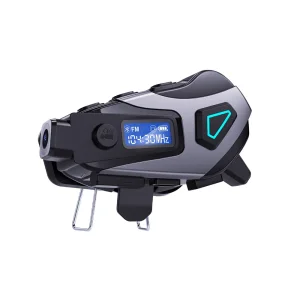
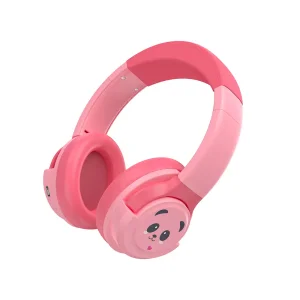
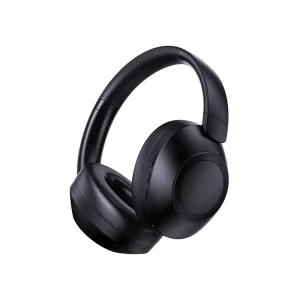
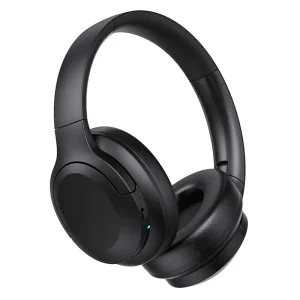
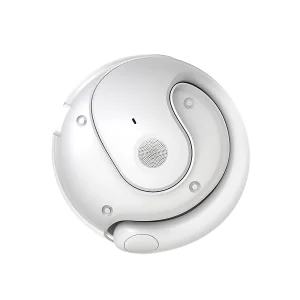
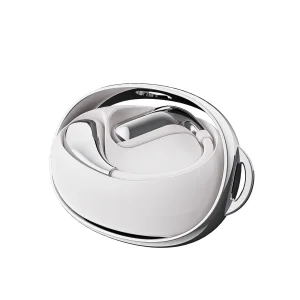
Featured ODM & OEM Audio Hardware Portfolio
Industrial-grade headset configurations, custom acoustic tooling, and turn-key manufacturing solutions available for immediate private-label deployment.
Executive Summary: The Evolution of Global Gaming Audio Manufacturing
The global gaming peripheral market has undergone a fundamental paradigm shift. What was once dominated by standard analog headsets with simple dynamic drivers has transitioned into a multi-billion dollar ecosystem driven by ultra-low latency wireless protocols, algorithmic environmental noise cancellation (ENC), and hardware-accelerated spatial audio processing. For enterprise procurement directors, eSports brand managers, and hardware distributors, navigating the global manufacturing ecosystem—specifically China’s advanced electro-acoustic clusters—requires a sophisticated understanding of both hardware OEM/ODM capabilities and architectural roadmaps.
This technical whitepaper outlines the critical engineering criteria, supply chain risk mitigation protocols, macro-market trends, and regulatory compliance standards necessary for executing high-margin ODM gaming headset projects. By bridging the gap between high-level user intent mining and physical manufacturing capabilities, top-tier factories now offer co-development models that drastically reduce time-to-market while guaranteeing strict E-E-A-T quality compliance.
Macro Industry Trends Shaping Gaming Headset Manufacturing
Key technical advancements and consumer intent shifts reshaping B2B procurement specifications in 2025 and beyond.
Dual-Mode Low-Latency Connectivity
Modern eSports players require simultaneous connection to high-end PCs via 2.4GHz wireless dongles (utilizing Nordic or Realtek chipsets) alongside Bluetooth 5.4 LE Audio (LC3 codec) for mobile communications. Modern ODM factories must ensure seamless hardware channel mixing with sub-15ms latency metrics.
AI Neural Network Microphone ENC
Traditional passive or simple dual-mic noise cancellation is obsolete. Industry-leading factories embed DSP-level AI beamforming neural algorithms directly into the microphone bridge, filtering out up to 95% of mechanical keyboard clicks and background ambient noise without destroying vocal dynamics.
Spatial Sound Engineering & Custom Drivers
Transitioning from basic stereo to 7.1 surround and object-based spatial audio (Dolby Atmos / DTS Headphone:X integration ready). Manufacturing requires high-rigidity 50mm neodymium magnetic drivers with neodymium N52 magnets and titanium-coated diaphragms for micro-detail reproduction.
Global Corporate Procurement & Manufacturing Solutions
Navigating the choice between OEM private labeling and complete ODM custom engineering.
| Evaluation Parameter | OEM Sourcing (Private Label) | ODM Co-Development (Custom Hardware) |
|---|---|---|
| Tooling & Mold Investment | Zero CapEx (Utilizes existing factory tooling) | Custom injection molds (Requires NRE fee structure) |
| Development Timeframe | Rapid Execution (4 to 6 Weeks) | Complete NPI Cycle (16 to 24 Weeks) |
| IP & Industrial Design Protection | Shared factory housing design | 100% Exclusive patent rights & custom ID protection |
| Acoustic & Firmware Customization | EQ tuning, logo printing, colorways, packaging | Custom PCB layout, DSP code, driver tuning, custom RGB lighting |
| Minimum Order Quantity (MOQ) | Flexible (1,000 – 2,000 units) | Higher Commitment (3,000 – 5,000+ units) |
NPI Protocol (New Product Introduction)
A rigorous ODM manufacturing process follows a structured engineering workflow: Concept Verification → Industrial Design (ID) → Mechanical Engineering (ME) → Prototype Verification (EVT) → Design Verification (DVT) → Process Verification (PVT) → Mass Production (MP). Every stage involves strict milestone sign-offs.
BOM Cost Optimization & Supply Assurance
By establishing long-term strategic relationships with premier semiconductor vendors (Nordic, Realtek, Airoha, C-Media) and acoustic diaphragm suppliers, tier-1 Chinese factories mitigate supply chain volatility and provide stable Bill-of-Materials (BOM) pricing guaranteed for multi-year contracts.
Global Regulatory Compliance & Quality Assurance Framework
Ensuring seamless market access across North America, the European Union, Asia-Pacific, and Latin America.
International Safety & RF Compliance
All manufactured gaming headsets undergo comprehensive certification testing prior to shipment: CE, FCC, RoHS, REACH, CA Prop 65, TELEC (Japan), ANATEL (Brazil), and KC (Korea). Built-in battery protection ICs comply with UN38.3, MSDS, and IEC 62133 safety mandates.
Acoustic & Reliability Testing Protocols
Factory QA standard includes artificial head acoustic measurement (SoundCheck / AP system) for frequency response curve alignment, total harmonic distortion (THD < 1%), multi-axis headband drop testing (1.5m drop tests), 10,000-cycle rotational hinge stress testing, and salt-spray corrosion resistance tests.
Ergonomics & Thermal Management
Long gaming sessions demand advanced thermal dissipation. Modern gaming headsets incorporate hybrid memory foam ear cushions lined with cooling-gel infused fabric, combined with protein leather rims for passive sound isolation and weight distribution engineered under 280 grams.
Technology Roadmap: Future Outlook for Gaming Audio (2025–2030)
Anticipating hardware breakthroughs and preparing ODM products for next-generation platform requirements.
Haptic Feedback & Tactile Immersion
Integrating ultra-compact LFA (Linear Resonant Actuator) haptic motors within the earcup chassis. These drivers translate low-frequency explosion channels (20Hz–80Hz) into tactile feedback without distorting midrange voice comms, producing a truly immersive 4D spatial gaming environment.
Cloud Gaming & Headset Native Processing
As cloud gaming platforms (GeForce NOW, Xbox Cloud Gaming) gain dominance, latency budgets shrink. Future headsets feature micro-embedded Linux-based DSP cores capable of running localized spatial audio algorithms directly on-device, bypassing OS audio pipeline overhead completely.
Sustainability & Eco-Conscious Materials
Enterprise procurement now emphasizes ESG mandates. Top manufacturing facilities utilize post-consumer recycled (PCR) ABS plastics, FSC-certified plastic-free packaging, bio-based memory foam interiors, and modular screw-free disassemblies to facilitate circular economy recycling.
Ultra-Wideband (UWB) Audio Transmission
Evaluating UWB chips to replace or supplement traditional 2.4GHz ISM band RF. UWB offers up to 12Mbps bandwidth, eliminating audio compression completely and allowing uncompressed 24-bit/96kHz lossless spatial audio streaming with sub-5ms transmission latency.
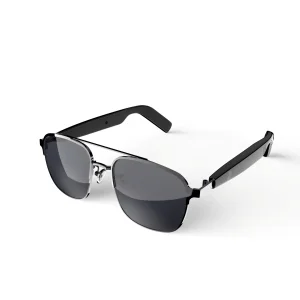
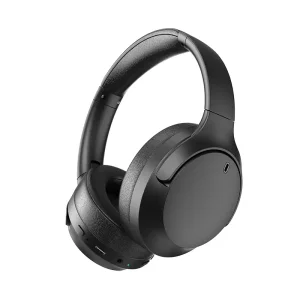
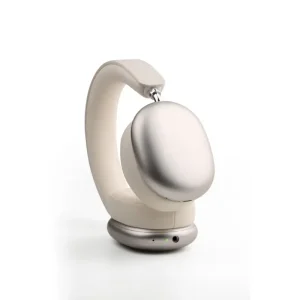
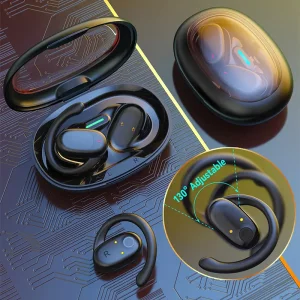
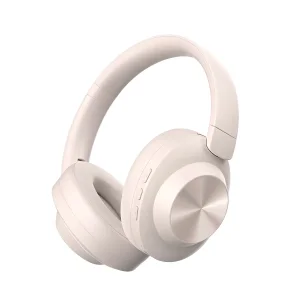
Specialized Electro-Acoustic Hardware Solutions
Explore additional specialized headphone categories produced across our automated production facilities.


Frequently Asked Questions (B2B Procurement FAQ)
Expert technical and commercial answers addressing key concerns for global audio brand managers and procurement executives.