
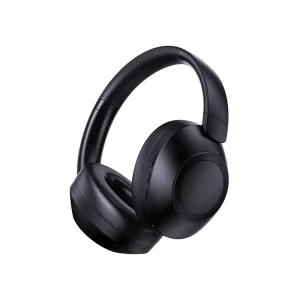
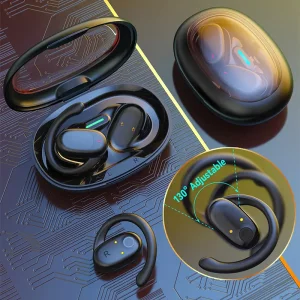
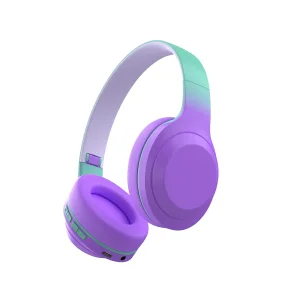
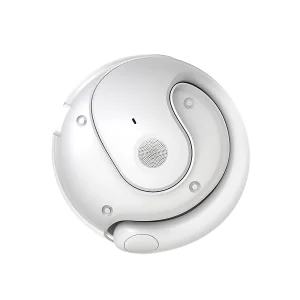
Featured ODM/OEM Headset Hardware Showcase
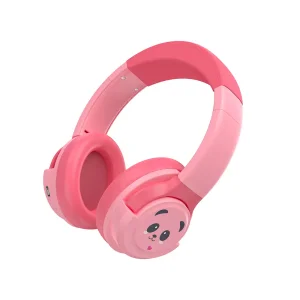
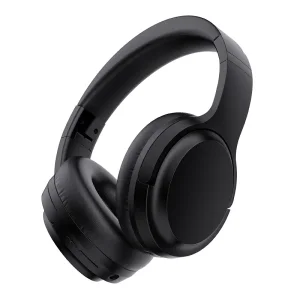
High-performance acoustic solutions engineered for enterprise, gaming, translate wear, and youth safety verticals.

Global Commercial & Industrial State of the ODM Headsets Business
An executive overview of market volume, regional ecosystem advantages, supply chain maturity, and strategic ODM sourcing imperatives for enterprise buyers.
The global personal audio hardware sector has undergone a structural paradigm shift, evolving from simple acoustic transducer assembly into a highly integrated micro-electronics and software intelligence discipline. Valuation estimates position the global market for wireless, enterprise, and smart headsets at over $68.4 Billion by 2026, driven by expanding remote workforce infrastructure, hyper-adoption of active noise cancellation (ANC), and the convergence of real-time AI processing at the edge.
At the center of this industry rests the Original Design Manufacturer (ODM) model. Unlike traditional OEM (Original Equipment Manufacturing), where a factory simply builds to client-provided drawings, ODM partners provide full-stack R&D—encompassing acoustic cavity modeling, printed circuit board assembly (PCBA) design, antenna tuning (RF engineering), firmware development, and automated testing compliance. This enables brand owners, retail chains, and enterprise solution providers to commercialize proprietary hardware lines with dramatically lower Non-Recurring Engineering (NRE) costs and accelerated Time-to-Market (TTM).
Emerging Development Trends Shaping Headset ODM
How Bluetooth 5.4, Edge AI, Open-Wearable Stereo (OWS), and Advanced MEMS ANC are redefining private-label headset specifications.
AI Hardware Acceleration & Edge Processing
Modern ODM platforms integrate dedicated Neural Processing Units (NPU) into the primary Bluetooth System-on-Chip (SoC). This allows onboard real-time AI voice translation, adaptive environmental noise suppression (ENC), and user intent detection without latency or reliance on continuous cloud connections.
Bluetooth 5.4 & LE Audio LC3 Codec
Migration to Bluetooth 5.4 with Low Energy (LE) Audio standardizes the LC3 codec. This delivers superior audio fidelity at half the bit-rate of legacy SBC, drastically reduces power consumption, extends battery lifecycle beyond 60+ hours, and enables multi-stream Auracast broadcasting.
Hybrid ANC & Spatial Audio Processing
Advanced dual-feedforward and feedback MEMS microphone arrays deliver active noise attenuation up to -45dB across broad frequency bands (20Hz–2kHz). Integrated head-tracking gyroscopes enable true 3D spatial audio rendering for immersive corporate communication and gaming.
OWS & Air/Bone Conduction Architecture
Open-Wearable Stereo (OWS) and directional air conduction technology prevent ear-canal fatigue and dynamic hearing damage. Demand for non-intrusive safety-first audio designs in sports and industrial workplaces has surged, becoming a core growth driver in ODM portfolios.
Localized Application Scenarios & Tailored Hardware Architectures
Mapping ODM headset customization to specific vertical enterprise requirements and regional regulatory environments.
A critical mistake in headset sourcing is treating audio hardware as a universal commodity. High-ROI B2B procurement demands strict alignment with the acoustic, ergonomic, and regulatory demands of specific localized environments:
1. Enterprise Unified Communications (UC)
Primary Requirements: Multi-point Bluetooth pairing, Microsoft Teams/Zoom certification compliance, quad-microphone Environmental Noise Cancellation (ENC), light-weight ear cushions, and 40+ hours talk time.
ODM Customization Engineering: Beamforming mic placement, physical mute switches with LED status indicators, and custom USB-A/USB-C RF dongles optimized for low-latency desktop VoIP.
2. Sports, Cycling & Extreme Outdoor Wear
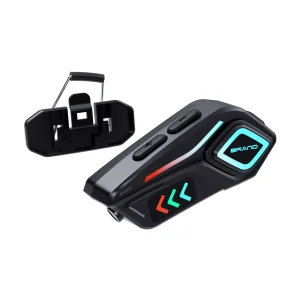
Primary Requirements: IPX7/IPX8 waterproofing, wind-noise suppression acoustic channels, helmet-compatible ergonomic ear-hooks, and high-visibility reflective coatings.
ODM Customization Engineering: Specialized hydrophobic speaker mesh membranes, bone conduction transducers, and integrated safety lighting modules with Bluetooth 5.4 cycling telemetry controls.
3. K-12 EdTech & Institutional Learning
Primary Requirements: Hearing safety volume limit caps (85dB/95dB compliant with WHO/EN50332 regulations), food-grade non-toxic flexible materials, and drop-resistant swivel joints.
ODM Customization Engineering: Tangle-free braided nylon audio cables with inline call buttons, modular audio-sharing daisy chain ports, and antimicrobial headband TPU plastics.
Technology Roadmap & Future Outlook (2025–2030)
Anticipating hardware milestones, sensor fusion, and sustainability protocols for next-generation ODM development platforms.
| Development Milestone | Current Baseline (2024–2025) | Mid-Term Trajectory (2026–2027) | Future Benchmark (2028–2030) |
|---|---|---|---|
| Primary SoC Architecture | 22nm Dual-Core DSP + BT 5.3/5.4 | 12nm Multi-Core + Dedicated Edge AI NPU | 6nm Ultra-Low Power Quantum DSP + Neural Chipset |
| Noise Cancellation (ANC) | Hybrid Feedforward/Feedback (-40dB to -45dB) | Adaptive Real-Time Environment Matching (-50dB) | AI-driven Selective Frequency & Isolation Filter |
| Biometric & Health Sensing | Basic Optical HR Sensor (Select Premium Models) | Integrated PPG In-Ear Heart Rate & Temp Sensing | Continuous Core Biometric & Brainwave EEG Auditory Tracking |
| Acoustic Transducer Tech | Dynamic PET/Titanium Composite Diaphragms | Solid-State MEMS Micro-Speakers + Dynamic Drivers | Graphene Monolithic Transducers with Zero Distortion |
| Power Management | Standard Li-ion Polymer (300–800mAh) | Silicon-Carbon Anode Batteries (+35% Energy Density) | Solid-State Micro Batteries with Ambient Solar Harvesting |
Comprehensive ODM Sourcing & Pricelist Cost Matrix
Unpacking Bill of Materials (BOM) cost tiers, minimum order quantities (MOQ), and tooling investment profiles for private-label headset buyers.
A critical aspect of B2B user intent in searching for "ODM Headsets Business Manufacturers & Pricelist" is accessing accurate cost structure data to formulate RFP benchmarks. Headset manufacturing pricing is dictated by chip selection, ANC implementation tier, battery cell quality, housing finish (e.g., UV coating, rubberized paint, metallic PVD), and certification compliance requirements (CE, FCC, RoHS, REACH, Prop 65).
| Headset Category & Tier | Key Hardware Specs | MOQ Tier | Est. Unit FOB Price (USD) | NRE Custom Mold Fee |
|---|---|---|---|---|
| Basic Kids/EdTech Wired | 30mm Dynamic Driver, 85dB Volume Limit, 3.5mm Aux | 1,000 – 3,000 pcs | $2.80 – $4.50 | $3,500 – $6,000 |
| Standard Wireless Over-Ear | BT 5.3/5.4, 40mm Mylar Driver, 400mAh (30H Playtime) | 1,000 – 2,000 pcs | $6.50 – $9.80 | $8,000 – $12,000 |
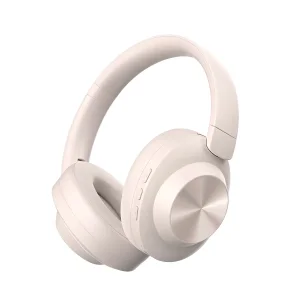
| Pro Hybrid ANC Over-Ear | BT 5.4, Dual MEMS -42dB ANC, 600mAh (60H Playtime), Memory Foam | 1,000 pcs | $16.50 – $24.00 | $15,000 – $25,000 |
| AI Translator Open-Ear (OWS) | BT 5.4, Dual Mic ENC, App-Assisted NPU Real-Time Translate | 500 – 1,000 pcs | $18.00 – $28.50 | $18,000 – $28,000 |
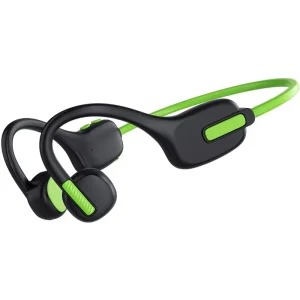
| Bone Conduction Sports Headset | IPX8 Waterproof, BT 5.4, Titanium Memory Alloy Frame | 1,000 pcs | $12.50 – $19.00 | $12,000 – $20,000 |
Anatomy of an ODM Headset Bill of Materials (BOM) Cost Structure
When evaluating factory quotations, importers must analyze how budget allocations impact reliability:
- System-on-Chip (SoC) & RF Circuitry (30% - 35% of BOM): Industry-standard chipsets (e.g., BES, Realtek, JL, Qualcomm) determine Bluetooth connection stability, audio latency, and ANC algorithmic capacity.
- Acoustic Transducers & Microphones (18% - 22% of BOM): PET vs Titanium vs Silk diaphragms, combined with Knowles/MEMS microphone sensitivity specs, directly define Hi-Res sound fidelity and call clarity.
- Lithium Polymer Battery & Protection Circuit (12% - 15% of BOM): High-grade UN38.3/MSDS certified cells with PTC safety protection prevent thermal runaway and maintain 80%+ capacity after 500 charge cycles.
- Mechanical Housing, Tooling & Surface Finish (15% - 20% of BOM): Precision plastic injection molds, steel headband reinforcements, protein leather cushions, and eco-friendly packaging.
- Quality Control, SMT Assembly & Testing (10% - 15% of BOM): Automated RF wireless testing, acoustic artificial ear measurement (AP audio analyzers), drop tests, and sweat resistance validation.
Additional OEM/ODM Headset Manufacturing Models
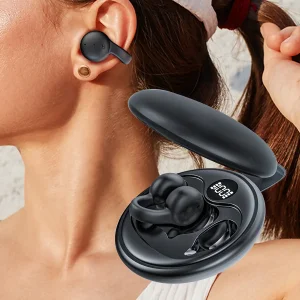
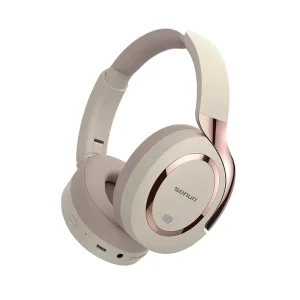
Specialized bone conduction, helmet-integrated, ultra-light sport, and premium noise-canceling headsets ready for private-label order placement.

Frequently Asked Questions (FAQ) for Headset ODM Procurement
Expert answers regarding factory audits, customization scope, quality assurance standards (AQL), and regulatory certifications.