
Featured OEM/ODM Acoustic Products
Explore our market-ready chassis platforms and custom acoustic engineering options.
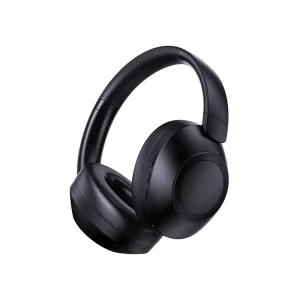

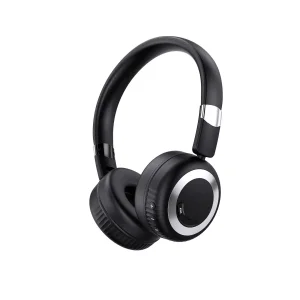
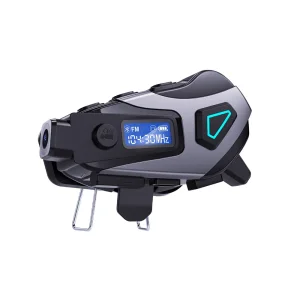
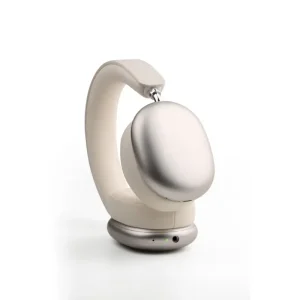
The Global Landscape of TWS Active Noise Cancellation
Analyzing market shifts, Average Selling Price (ASP) pressures, and technological convergence in consumer and industrial audio.
The global market for True Wireless Stereo (TWS) Noise Cancelling Earbuds has transitioned from a premium, niche luxury reserved for audio-enthusiasts to a baseline requirement across consumer electronics, enterprise telecommunications, and industrial field work. With active noise cancellation technology maturing rapidly, the key differentiator for consumer audio brands is no longer just whether a product offers ANC, but how effectively that noise suppression algorithm operates across dynamic environments without compromising acoustic fidelity or battery endurance.
Original Design Manufacturers (ODMs) and Original Equipment Manufacturers (OEMs) operate at the epicenter of this technology transition. As global retail channels and private-label brands seek competitive advantages against established audio titans, the demand for high-performance, cost-effective, and fully customized ANC TWS platforms has surged. Modern procurement managers require deep technical transparency—spanning Digital Signal Processor (DSP) selection, microphone array architecture, feedforward/feedback calibration loops, and real-world acoustic insertion loss metrics.
Acoustic Tuning Precision
Moving beyond standard preset EQ curves, tier-1 ODM manufacturers utilize custom algorithmic DSP tuning to maintain flat frequency responses even under maximum hybrid noise isolation modes.
Hardware-Level Reliability
Integrating IPX7 waterproof membranes, anti-corrosion charging contacts, and high-density lithium polymer button cell batteries to prevent field failure rates in demanding operational climates.
Compliance Ready
Comprehensive pre-certified reference designs supporting FCC, CE, TELEC, RoHS, REACH, and UN38.3 regulatory frameworks, drastically shortening market launch timelines.
The Shenzhen Advantage: Supply Chain Ecosystem & Efficiency
Why the Greater Bay Area remains the unrivaled global hub for high-volume, cost-optimized acoustic hardware manufacturing.
When sourcing OEM or ODM Noise Cancelling True Wireless Earbuds, procurement executives are not simply buying a physical product; they are tapping into an interconnected industrial ecosystem. China’s Greater Bay Area (GBA), particularly Shenzhen and Dongguan, houses over 80% of the world's wireless audio component supply chain. This hyper-dense industrial concentration offers unparalleled strategic advantages:
Chipset Ecosystem Access
Direct tier-1 strategic partnerships with leading Bluetooth System-on-Chip (SoC) vendors—including Qualcomm (QCC series), Bestechnic (BES), Airoha (MediaTek), and Realtek—ensuring priority silicon allocation and direct firmware support.
Component Proximity
Acoustic driver manufacturers, MEMS microphone suppliers (Knowles, Goertek), micro-battery cell producers, and precision injection molders operate within a 30-mile radius, accelerating New Product Introduction (NPI) cycles.
Automated Assembly
Deployment of high-precision Surface Mount Technology (SMT) lines, automated acoustic calibration chambers, and robotic dispenser systems that reduce human error and minimize unit variance across high-volume runs.
Unmatched Agility
Rapid prototyping capabilities allow functional, 3D-printed acoustic samples and working PCBA boards to be delivered for client evaluation in as few as 7 to 10 working days from initial industrial design approval.
Technical Architecture Comparison for ODM Procurement
| ANC Architecture | Typical Noise Attenuation | Microphone Configuration | Target Frequency Range | Ideal Application Scenario |
|---|---|---|---|---|
| Feedforward ANC | 15dB – 25dB | 1x External MEMS per earbud | 100Hz – 800Hz (Low-frequency) | Entry-level consumer TWS, budget commuting |
| Feedback ANC | 20dB – 28dB | 1x Internal Ear-canal MEMS | 50Hz – 1000Hz (Mid/Low range) | Sleep assistance, steady-state hum suppression |
| Hybrid ANC | 35dB – 48dB | 2x Dual MEMS (Feedforward + Feedback) | 20Hz – 2500Hz (Wideband) | Premium audio, aviation, noisy office, urban commute |
| Adaptive AI ANC | Up to 50dB (Dynamic) | 3x MEMS + Bone Conduction / VPU | Full Spectrum Real-time Adaptation | Enterprise headsets, high-end audiophile, smart workplace |
Acoustic Engineering Deep-Dive: Active Noise Cancellation & Wireless Protocols
Understanding the hardware, software, and electro-acoustic mechanics required for true zero-defect performance.
Phase Inversion & DSP Algorithms
Active Noise Cancellation functions on the physical law of destructive interference. External ambient microphones pick up low-frequency acoustic waves, sending signals to the onboard DSP chip. Within microseconds, the DSP processes the incoming waveform and generates an exact anti-phase sound wave (180° out of phase). When acoustic waves merge, ambient noise is effectively neutralized before reaching the human eardrum.
MEMS Microphone Calibration
The performance of ANC hardware hinges heavily on the Signal-to-Noise Ratio (SNR) and sensitivity match of chosen MEMS microphones. In high-performance Hybrid ANC ODM designs, feedback and feedforward microphones must maintain tight phase and sensitivity tolerances (within ±1dB). High-SNR MEMS mics prevent "hissing" floor noise during low-volume playback or silence.
Bluetooth 5.4 & LE Audio Integration
Modern ODM platforms integrate Bluetooth 5.4 protocols, utilizing LC3 (Low Complexity Communication Codec) encoding. This technology dramatically reduces power consumption while doubling audio bandwidth compared to legacy SBC codecs. Furthermore, low-latency transmission modes (under 40ms) ensure synchronization between high-definition audio and video streaming.
The Crucial Balance Between ANC Depth and Sound Quality
A frequent flaw in lower-tier OEM noise-cancelling earbuds is the acoustic penalty incurred when ANC is engaged. Aggressive destructive interference in the 20Hz - 500Hz band can strip away bass response, flattening the dynamic range of musical tracks. Professional ODM acoustic engineers utilize multi-core DSP architectures that run independent, parallel channels for active cancellation processing and acoustic equalization.
By implementing dynamic low-frequency compensation algorithms, the acoustic driver dynamically adjusts its excursion based on real-time feedback mic signal data. This guarantees that deep bass response (20Hz - 100Hz) remains punchy, clear, and distortion-free, while harsh environmental frequencies—such as jet engines, HVAC systems, and street traffic—are effectively muted.
Targeted Verticals & Localized Application Scenarios
Customizing hardware features and software firmware for targeted consumer markets and industrial environments.
Urban Transit & Aviation
Primary Need: Deep static noise suppression (100Hz – 400Hz).
Designed with specialized aviation algorithms to cancel engine drone while utilizing Transparency Mode for crisp airport gate announcements.
Corporate Office & Remote Work
Primary Need: Voice clarity & Environmental Noise Cancellation (ENC).
Features 4-mic beamforming algorithms that isolate human vocal frequencies while suppressing keyboard clicks, chatter, and background office noise.
Sports & Outdoor Activities
Primary Need: Ergonomic security & Wind Noise Reduction.
Hydrophobic mesh overlays over microphone cavities combined with physical aerodynamic contours to suppress wind shear up to 25 km/h.
Industrial & Workplace Safety
Primary Need: Hearing protection & Instant pass-through.
Configured with high impulse noise limiting technology, automatically attenuating hazardous factory noise spikes (>85dB) while allowing localized vocal communication.
Next-Generation Technology Trends in ODM Earbud Development
Positioning brand catalogs ahead of market disruption through AI edge computing and hybrid wearable designs.
AI Neural Processing Units (NPUs)
Integration of dedicated low-power AI accelerator cores on SoC hardware. Deep Neural Network (DNN) algorithms trained on millions of noise profiles can instantly distinguish human speech from transient background noise in real-time.
Spatial Audio & Head Tracking
Modern ODM platforms are embedding 6-axis Inertial Measurement Units (IMUs—accelerometers and gyroscopes). Combined with real-time dynamic spatial rendering algorithms, earbuds deliver cinematic, 3D audio experiences for movie and gaming markets.
Hearing Augmentation & OWS Hybrids
Convergence of Personal Sound Amplification Products (PSAPs) with consumer TWS. Emerging Open-Wearable Stereo (OWS) platforms combine open-ear comfort with localized anti-phase acoustic directional projection to minimize sound leakage.
Global Sourcing & Procurement Framework for Enterprise Buyers
A step-by-step roadmap to managing Bill of Materials (BOM) costs, Minimum Order Quantities (MOQs), and quality assurance milestones.
Procuring private-label or ODM noise-cancelling earbuds requires a rigorous vendor evaluation matrix. Beyond unit cost estimations, brand owners must evaluate an OEM partner’s operational maturity across four core dimensions:
1. BOM Cost Transparency
High-tier ODM vendors provide clear Cost-Breakdown Structures (CBS). Major cost drivers include the SoC Bluetooth Chipset (25-35%), Battery Cells (12-18%), Acoustic Driver Modules (10-15%), and MEMS Microphone Arrays (8-12%). Tooling and firmware amortization decrease significantly as order volumes cross 10,000 units.
2. Quality Control Standards (AQL)
Standard enterprise procurement requires Acceptance Quality Limit (AQL) parameters of 0.65 Critical / 1.5 Major / 4.0 Minor. Factory inspection protocol must incorporate AP500 audio analyzer testing, battery lifecycle cycling, drop testing (1.2m onto hardwood), environmental chamber thermal testing (-20°C to 60°C), and IPX water jet validation.
3. Custom Tooling & NPI Timelines
Standard OEM private labeling (custom logo, color palette, packaging, voice prompts) typically executes in 25 to 30 days. Full ODM projects involving unique plastic injection mold development, PCB layout engineering, and custom acoustic chamber tuning require a 60 to 90-day New Product Introduction (NPI) schedule.
Frequently Asked Procurement Questions (FAQ)
Addressing essential technical, contractual, and operational questions for OEM & ODM buyers.
- North America (US/Canada): FCC ID (Radio Frequency), IC (Canada), Prop 65, UL2054 (Battery Safety).
- European Union: CE-RED (Radio Equipment Directive), RoHS, REACH, WEEE.
- Japan: TELEC / MIC Certification.
- Global Logistics: UN38.3, MSDS, and 1.2m Drop Test Reports for Lithium Polymer Battery air and sea shipping compliance.
Additional Private-Label Acoustic Solutions
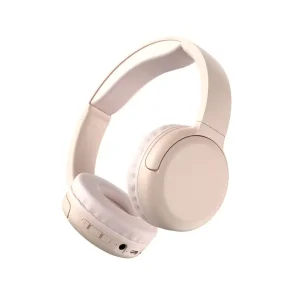
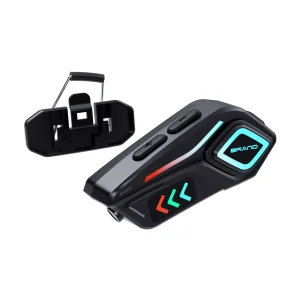
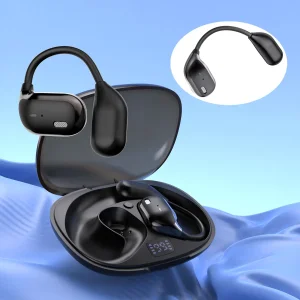
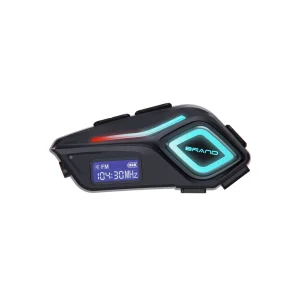
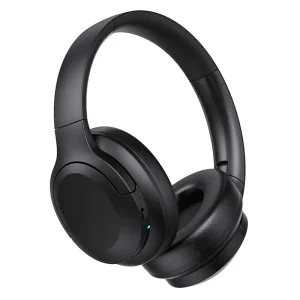
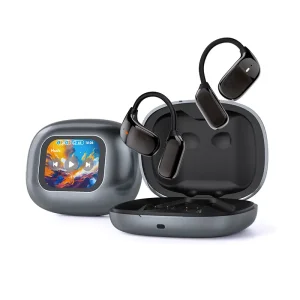
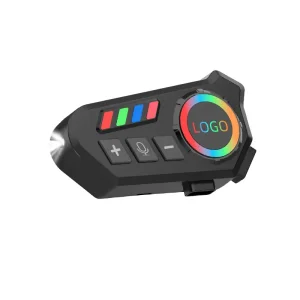
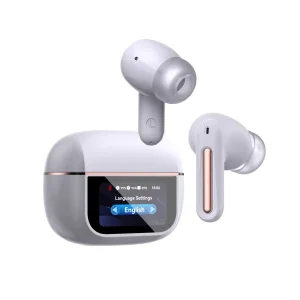
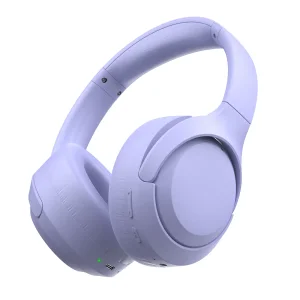
Explore our versatile catalog of sports, helmet, open-ear, and smart noise-cancelling headphones.

Ready to Launch Your Next-Gen Noise Cancelling Line?
Partner with a trusted Shenzhen OEM/ODM manufacturer with 19+ years of acoustic engineering mastery. Contact our technical sales team for comprehensive price quotes, engineering schematics, and evaluation samples.
Request an Instant OEM/ODM Quote