
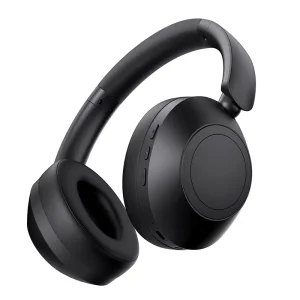
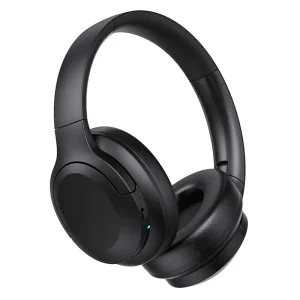
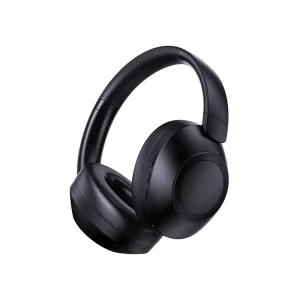
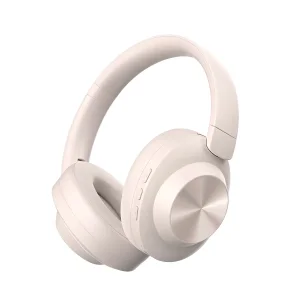
Featured Enterprise Wireless PC Headset ODM Solutions
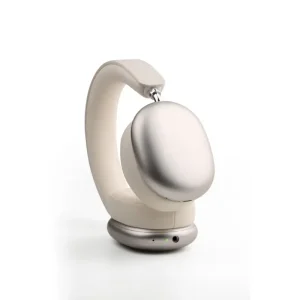
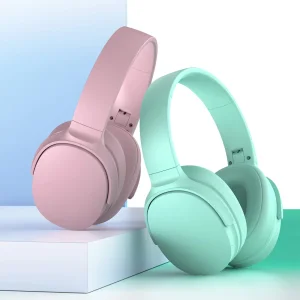
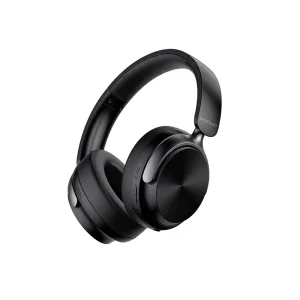
High-performance private label audio equipment engineered for enterprise deployment, hybrid office communications, and gaming environments.
Global Enterprise Demand & B2B Procurement Dynamics
Analysis of changing corporate communication ecosystems, hardware standardization, and OEM/ODM sourcing models for multinational buyers.
Unified Communications Integration
Modern enterprise procurement requires headsets fully certified for UC platforms (Microsoft Teams, Zoom, Cisco Webex). ODM wireless PC headsets must feature hardware-level DSP integration to ensure seamless mute synchronization, call control, and dynamic band switching without software friction.
Hybrid Workforce Acoustic Ergonomics
As corporate work environments shift between open offices, home environments, and transit, business users demand active noise cancellation (ANC) and beamforming Environmental Noise Cancellation (ENC) microphones. Lightweight materials reduce physical fatigue during 8-hour shift deployments.
Enterprise Data Security & RF Stability
Wireless peripherals must prevent eavesdropping and frequency hopping congestion. Modern ODM exporters integrate AES 128-bit encryption over 2.4GHz proprietary protocols and Bluetooth 5.4 secure pairing, guaranteeing interference-free performance in high-density office environments.
Global IT distributors and OEM brand buyers are moving away from off-the-shelf consumer headphones toward purpose-built enterprise headsets. By controlling driver acoustics, battery chemistry, modular headband mechanics, and firmware source code at the original factory level, enterprise buyers reduce long-term RMA rates below 0.5% while extending product lifecycles to 3+ years.
Acoustic Engineering & Hardware Architecture
Technical breakdown of how high-grade ODM wireless PC headsets are designed, tuned, and manufactured for critical communications.
| Hardware Dimension | Technical Specification Standard | Enterprise & Commercial Impact |
|---|---|---|
| Wireless Connectivity | Dual-Mode: 2.4GHz RF USB-A/USB-C Dongle + Bluetooth 5.4 LE Audio | Sub-20ms ultra-low latency audio response for video calls and gaming alongside seamless mobile multipoint switching. |
| Active Noise Reduction | Hybrid Feedforward + Feedback ANC (-35dB to -45dB depth) | Eliminates low-frequency HVAC hum, ambient office chatter, and background fan noise for uninterrupted focus. |
| Microphone Architecture | Dual/Quad MEMS array with AI-powered DNN Environmental Noise Cancellation | Filters up to 99% of ambient environment noise, ensuring pristine voice clarity over VOIP protocols. |
| Acoustic Driver Units | 40mm / 50mm Custom Polymer Composite Diaphragm (PET + Titanium Coating) | Delivers flat, neutral frequency response curve tuned specifically for vocal intelligibility (20Hz - 20kHz). |
| Power Management | 800mAh - 1200mAh Lithium-Polymer with Seiko Safety Protection Circuit IC | Supports 50 to 80+ hours of continuous speech/playback with USB-C Fast Charge (10 min charge = 5 hrs use). |
| Ergonomics & Materials | Memory Foam Ear Cushions wrapped in Protein Leather or Breathable Cooling Mesh | Distributes clamping force evenly across user skull boundaries, eliminating pressure points during long shifts. |
Technology Roadmap & Future Outlook (2025–2030)
Key evolutionary milestones driving next-generation ODM wireless PC headsets and smart audio peripherals.
1. Bluetooth LE Audio & LC3 Codec Integration
Transitioning from traditional SBC/AAC codecs to Low Complexity Communication Codec (LC3). LC3 provides higher audio fidelity at half the bit rate, dramatically lowering power consumption and supporting multi-stream audio broadcasting (Auracast™) directly from enterprise PC stations.
2. Edge AI Microcontrollers & On-DSP Voice Isolation
Embedding Dedicated Neural Processing Units (NPUs) directly into the Bluetooth System-on-Chip (SoC). Next-gen ODM headsets process voice isolation algorithms locally on chip rather than relying on PC CPU power, achieving instantaneous voice extraction even in high-decibel environments.
3. Spatial Audio & Dynamic Head Tracking
Incorporating 6-axis Gyroscope & Accelerometer sensors within the earcups to provide real-time spatial orientation. Designed for virtual meeting rooms, immersive online collaboration platforms, and competitive gaming headset exporters catering to high-end consumer sectors.
Shenzhen Manufacturing Ecosystem & Quality Control Pipeline
Why sourcing directly from established China audio exporters ensures technical superiority, rapid scale, and strict component traceability.
In-House Tooling & Acoustic Testing Facilities
Premier ODM exporters operate private plastic injection mold workshops, automated surface-mount technology (SMT) lines, and fully calibrated acoustic testing chambers. By employing Head & Torso Simulators (HATS) alongside Audio Precision (APx555) analyzers, every production batch is checked for Total Harmonic Distortion (THD < 1%), Frequency Response consistency, and phase alignment.
- Precision tooling tolerances maintained within ±0.02mm.
- Automated SMT placement for Bluetooth ICs and power management boards.
- 100% full-functional testing of ANC response curves on line.
Multi-Stage Quality Control Protocol
To eliminate early-life hardware failures, an end-to-end Quality Assurance (QA) workflow is enforced across every manufacturing stage:
- IQC (Incoming Quality Control): X-ray inspection of IC chips, lithium battery battery cell discharge testing, and acoustic driver matching.
- IPQC (In-Process Quality Control): Ultrasonic plastic welding integrity checks, wire pull stress tests, and microphone sensitivity calibration.
- FQC/OQC (Final & Outgoing QC): Drop testing (1.2m onto concrete), headband torsion endurance (10,000 cycles), button click life tests (100,000 actuations), and thermal shock cycling (-20°C to +60°C).
International Compliance & Regulatory Protection
Ensuring frictionless global export across North America, the European Union, Asia-Pacific, and emerging markets.
North America (US & Canada)
Full compliance with FCC Part 15B / 15C regulations for RF emissions and intentional radiators. Materials meet California Proposition 65 requirements, and integrated lithium-ion batteries hold UL 2054 / UN38.3 transportation safety certifications.
European Union (EU & UK)
Complete documentation packages for CE-RED (Radio Equipment Directive), RoHS 2.0 (10 Hazardous Substances), and REACH SVHC safety standards. Eco-design initiatives support WEEE recycling directives and plastic-free packaging options.
Global Access (APAC/LATAM)
Factory support for specialized regional certifications including Japan TELEC/MIC, South Korea KC, Brazil ANATEL, and Australia RCM. Direct support for customized factory audits (ISO9001, BSCI, Sedex SMETA).
Specialized ODM/OEM Audio Product Portfolio
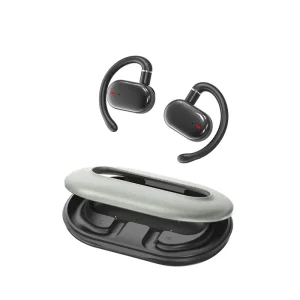
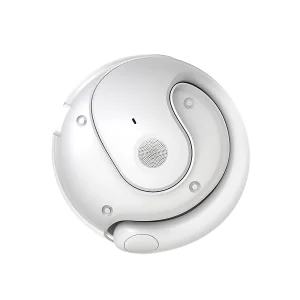
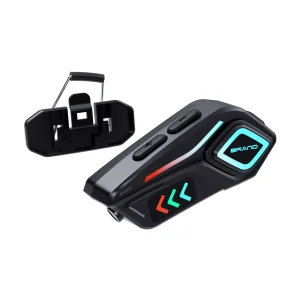
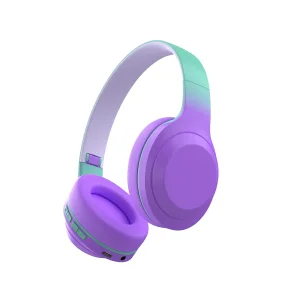
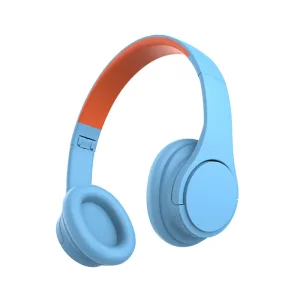
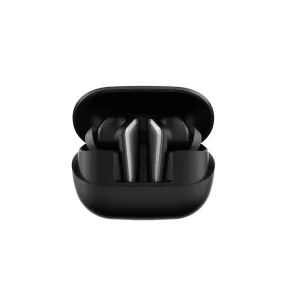
Explore additional wireless audio hardware configurations, including open-ear designs, kids safe volume headsets, and gaming peripherals.

Frequently Asked Questions for B2B Sourcing & ODM Exporters
In-depth answers covering new product development, tooling investment, MOQ requirements, firmware adaptation, and quality guarantees.
OEM (Original Equipment Manufacturing): Involves adopting existing, fully engineered factory base models (molds, PCBs, acoustic tuning) and customizing cosmetic elements such as brand logos, surface finishes (rubberized oil, metallic plating), ear pad materials, custom packaging, and Bluetooth device broadcast names.
ODM (Original Design Manufacturing): A comprehensive design-to-production journey. The ODM factory handles ground-up industrial design (ID), 3D mechanical engineering (MD), custom acoustic chamber design, PCB motherboard layout, chipset selection (e.g., Qualcomm, Realtek, Bestechnic), custom firmware feature integration, dynamic DSP tuning, and new injection tooling fabrication.
Standard Bluetooth audio profiles (A2DP) introduce latency ranging from 100ms to 220ms, which causes visible audio-lip sync delay in VOIP conferencing and competitive gaming. To overcome this, our ODM PC headsets utilize a dual-mode strategy:
- 2.4GHz RF Dongle Mode: Employs proprietary compressed LC3/FSK protocols over USB-A or USB-C interfaces, reducing latency down to 15ms–20ms.
- Automatic Fast-Switching: Allows simultaneous connection to a desktop PC via 2.4GHz RF and a mobile phone via Bluetooth 5.4, allowing auto-pause on PC media when a mobile call comes in.
A standard ODM hardware execution cycle follows a disciplined 12-to-16 week timeline:
- Weeks 1–2 (Industrial Design & Architecture): ID renders approval, 3D mechanical layout, acoustic cavity simulations, and BOM cost confirmation.
- Weeks 3–4 (Prototyping & EVT): 3D SLA functional prototypes, preliminary PCB spin, and acoustic performance baseline testing.
- Weeks 5–9 (Tooling Fabrication & DVT): Steel injection mold creation, plastic flow analysis, initial T1 sample molding, and environmental stress testing.
- Weeks 10–12 (PVT & Certification): Pilot production run (500 units), final firmware lock, golden sample approval, and submission for FCC/CE/RoHS certifications.
- Weeks 13+: Full-scale mass manufacturing and international export shipping.
For standard OEM logo branding on established tooling, MOQs start as low as 1,000 units per colorway. For full ODM projects requiring custom steel plastic molds, the initial MOQ is typically 3,000 to 5,000 units to amortize engineering tooling investments. We offer NRE (Non-Recurring Engineering) tooling rebate programs where mold fees are refunded once order thresholds are reached over a 12-month period.
Microphone ENC relies on a dual MEMS hardware layout coupled with Deep Neural Network (DNN) AI algorithms. The primary talk microphone picks up the user's near-field voice, while the secondary ambient microphone samples surrounding acoustic background noise. The onboard DSP calculates the phase differential in real time, subtracting background voices, keyboard clicks, and air conditioning noise by up to 35dB-40dB while preserving the natural warm frequencies of human speech.
Yes. We offer software development kits (SDKs) and app development services for Windows, macOS, Android, and iOS. Custom software options include customizable multi-band Graphic Equalizers (EQ), active sidetone adjustments, spatial audio toggles, battery health indicators, over-the-air (OTA) firmware updates, and direct softphone button mapping for enterprise software integration.
All production contracts include a standard 12-to-24 month quality warranty. We maintain an AQL (Acceptable Quality Limit) target of Major 1.0 / Minor 2.5 during pre-shipment inspections. To handle potential field defects, importers can choose between receiving 0.5%–1.0% free FOC (Free of Charge) finished units / spare parts with each bulk shipment, or receiving credit notes against future manufacturing runs for verified defective units.
We maintain multi-vendor chip architecture flexibility across our PCB design layouts. Mainboards are engineered to support drop-in pin-to-pin compatible Bluetooth SoCs (e.g., dual layout compatibility between Realtek and Actions or Qualcomm and Bestechnic). Battery cells are sourced exclusively from Tier-1 UL-listed battery manufacturers with UN38.3 sea/air transport hazard certifications, ensuring continuous supply stability regardless of global semiconductor fluctuations.