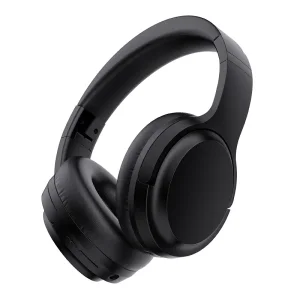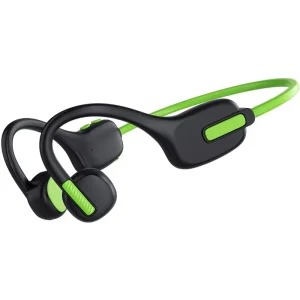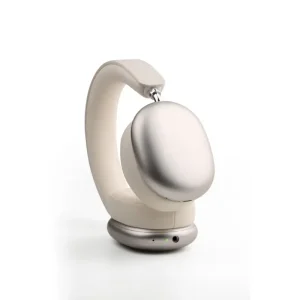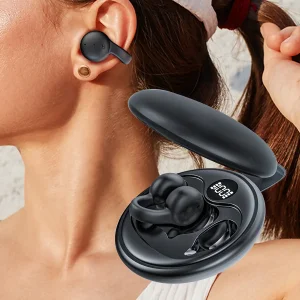
Featured OEM/ODM Audio Hardware Showcase
Direct factory-sourced acoustic engineering solutions available for private-label customization, brand licensing, and bulk enterprise distribution.

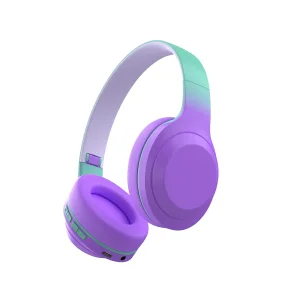
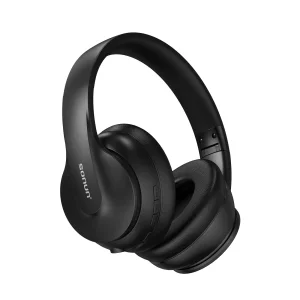
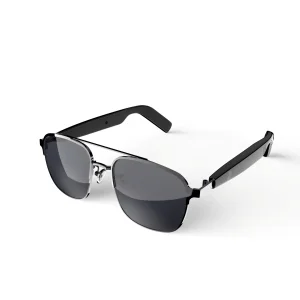
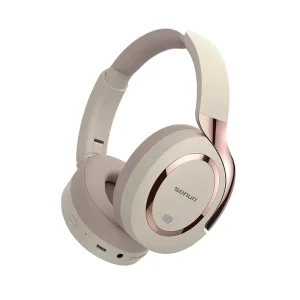
1. Executive Summary: The Evolution of Gaming Audio Architecture
Understanding the technical and commercial shifts defining the modern true wireless gaming earbuds industry.
The global gaming peripherals sector is undergoing a massive structural shift. Driven by the explosive expansion of mobile esports (such as PUBG Mobile, Free Fire, and Honor of Kings) and the convergence of competitive cross-platform play across PC, console, and handheld devices, demand for high-performance, ultra-low-latency wireless gaming earbuds has reached an all-time high. Global B2B buyers—ranging from established gaming tier-1 brands to regional electronics distributors—are transitioning away from bulky legacy wired headsets toward sleek, dual-mode True Wireless Stereo (TWS) and open-wearable sound solutions.
Historically, Bluetooth audio was plagued by severe latency handicaps (ranging between 150ms to 300ms), rendering it fundamentally unusable for fast-paced competitive gaming where sound-localization cues (footsteps, reload clicks, positional gunfire) determine victory or defeat. However, recent breakthroughs in 2.4GHz proprietary wireless dongles, Bluetooth 5.4 Low Energy (LE) Audio, and LC3/LC3plus codec integration have crushed latency barriers down to an imperceptible <15ms to 25ms range.
Consequently, the role of Original Design Manufacturers (ODM) and Original Equipment Manufacturers (OEM) in China has evolved. B2B importers no longer look for simple assembly facilities; they require end-to-end R&D manufacturing partners capable of mastering RF layout design, custom DSP tuning, acoustic chamber simulation, and complex multi-protocol firmware optimization. This whitepaper analyzes the core technical foundations, economic efficiencies, procurement frameworks, and market opportunities available when partnering with top-tier Chinese ODM audio exporters.
2. Engineering Benchmark: Low Latency, Acoustic Drivers & DSP Architecture
A technical breakdown of hardware engineering parameters defining competitive-grade ODM gaming audio products.
Dual-Mode Wireless Connectivity
Modern ODM gaming earbuds integrate dynamic dual-mode chipsets (Realtek, Airoha, or Nordic Semiconductor) enabling concurrent connection to a 2.4GHz Type-C USB dongle and Bluetooth 5.4. Switch instantly between low-latency gameplay and cellular voice calls without repairing.
AI-ENC Dual Microphones
Enterprise gaming earbuds incorporate 2-mic or 4-mic MEMS arrays powered by Deep Neural Network (DNN) environmental noise cancellation algorithms. Background mechanical keyboard chatter and ambient fan noise are filtered out by up to 35dB while preserving clear voice chat.
Acoustic Driver Dynamics
Utilizing DLC (Diamond-Like Carbon) or Titanium Composite 10mm-13mm dynamic drivers to deliver sub-bass impact (20Hz) while maintaining extreme clarity in mid-to-high frequencies (up to 40kHz) essential for 3D positional audio imaging.
Technical Specification Comparison: Consumer TWS vs. Professional ODM Gaming Earbuds
When sourcing custom audio hardware, engineering procurement teams must evaluate hardware capabilities against strict performance benchmarks:
| Hardware Parameter | Standard Consumer TWS Earbuds | Professional ODM Gaming Earbuds | B2B Sourcing Advantage |
|---|---|---|---|
| Wireless Transmission Protocol | Standard Bluetooth 5.0 - 5.3 (SBC / AAC) | Dual-Mode 2.4GHz USB-C Dongle + BT 5.4 (LC3/LC3plus) | Eliminates audio sync lag across PC, Console, Mobile |
| Audio Latency Benchmarks | 180ms – 250ms | 15ms – 25ms (Ultra-Low Latency Mode) | Gives gamers real-time acoustic reaction speeds |
| Microphone Architecture | Single Omnidirectional MEMS Mic | Dual MEMS Array + DNN AI Algorithm | Crystal-clear squad comms in high-noise environments |
| Spatial Audio Processing | Software EQ Emulation | Hardware DSP 3D Positional Engine / IMU Motion Tracking | Accurate 360-degree footstep localization cues |
| Power Consumption / Battery | 4-5 Hours (High Latency Drain) | 6-8 Hours Continuous Play (Low Power LE Audio Chip) | Extended tournament gameplay without recharging |
3. China’s Industrial Manufacturing Density & Supply Chain Efficiencies
Why the Guangdong-Hong Kong-Macao Greater Bay Area (Shenzhen & Dongguan audio clusters) remains the world center for acoustic innovation.
For global brands evaluating OEM/ODM manufacturing destinations, China’s primary competitive advantage extends far beyond raw unit labor costs. It lies in the unmatched supply chain concentration, engineering talent density, and rapid-turnaround tooling ecosystem concentrated in Shenzhen and Dongguan.
1. Hyper-Localized Component Sourcing
Within a 30-minute supply chain radius in Shenzhen's Longhua and Bao'an districts, Tier-1 factories access specialized chipset vendors, SMT surface-mount lines, lithium-polymer battery packagers, precision plastic injection molders, and laser-engraving facilities. This proximity cuts NPI (New Product Introduction) cycles by up to 60% compared to Southeast Asian or European competitors.
2. In-House Acoustic Testing & QA Testing
Leading ODM exporters house fully equipped anechoic chambers, Audio Precision (APx555) analyzers, dynamic battery life testing racks, thermal shock chambers, and ESD static discharge testing units. Rigorous compliance ensures products conform strictly to CE, FCC, RoHS, REACH, and KC standards before export.
3. Flexible Tooling & Rapid Prototyping
Advanced CAD structural engineering teams can produce 3D resin acoustic prototypes within 48 hours, proceed to T1 sample tooling in 18 to 22 days, and enter mass production in less than 35 days. Custom ID tooling options allow global brands to stand out with unique industrial aesthetics and RGB lighting effects.
4. Global Application Scenarios & Target Buyer Segments
How private-label gaming audio products adapt across diverse regional markets, gaming hardware setups, and lifestyle environments.
1. Mobile Esports & Regional Gaming Hubs
In Southeast Asia, Latin America, and Eastern Europe, mobile-first gaming dominates. Earbuds engineered with compact Type-C dongles that fit snugly against smartphones without blocking hands are top sellers for mobile tournament players.
2. Cross-Platform Desktop & Console Users
Gamers switching between PlayStation 5, Nintendo Switch, Steam Deck, and Windows PCs require multi-system dongle compatibility. Plug-and-play driverless setups allow effortless hardware transitions without software setup headaches.
3. Hybrid Commute & Outdoor Lifestyle
Modern consumers demand versatility. A single earbud pair must handle dynamic low-latency gaming at home, switch to ANC Active Noise Cancellation on noisy subway commutes, and provide IPX5 water resistance for gym workouts.
5. Enterprise Procurement Checklist & Factory Quality Management
A structured evaluation matrix for procurement managers auditing Chinese audio manufacturers.
Mitigating risk in international B2B audio manufacturing requires clear specification protocols and structured milestone approvals. Below is the framework recommended by senior supply chain directors when verifying factory capabilities:
Phase 1: Qualification & Audits
• Verify ISO9001 quality management and BSCI social compliance certifications.
• Audit SMT line automation, optical inspection systems (AOI), and yield rates.
• Review factory capability for environmental compliance (RoHS 2.0, REACH, POPs).
Phase 2: EVT / DVT Validation
• Engineering Validation Test (EVT): Evaluate PCB layout, RF antenna efficiency, and battery protection circuits.
• Design Validation Test (DVT): Test acoustic curve consistency against target Harman target curve curves in anechoic chambers.
Phase 3: PVT & Mass Production
• Production Validation Test (PVT): Run pilot production line at speed to establish assembly yield targets (>98.5%).
• Implement MIL-STD-105E sampling standards for final Outgoing Quality Control (OQC).
6. Future Technology Roadmap (2025–2030): What’s Next in Gaming Audio?
Emerging hardware innovations B2B brands must monitor to maintain a multi-year competitive advantage.
As the audio industry advances, progressive ODM factories are actively prototyping next-generation feature sets to help brand partners capture market share:
MEMS Dynamic Drivers
Silicon-based MEMS micro-speakers offer millisecond-level dynamic response times, flat phase response, and ultra-crisp high frequencies, revolutionizing spatial clarity in micro earbud form factors.
Smart Touchscreen Charging Cases
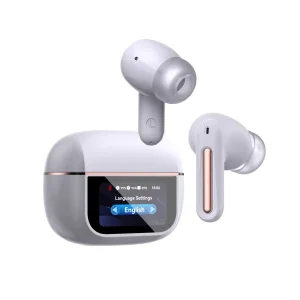
Smart cases with full-color interactive OLED screens allow real-time EQ switching, battery telemetry tracking, dongle storage, and ambient audio control directly from the charging case without opening smartphone apps.
6-Axis IMU Head Tracking
Integrated inertial measurement units (IMUs) track head movement in real time, dynamically rendering true 3D spatial audio fields for immersive virtual reality (VR) and AR gaming environments.
7. B2B Sourcing FAQ: Procurement Questions Answered by Audio Engineers
Direct insights addressing common manufacturing, compliance, tooling, and customization queries.
What is the typical Minimum Order Quantity (MOQ) for private-label gaming earbuds?
For standard OEM production (custom logo laser etching, brand packaging, custom Bluetooth pairing names, and custom housing colorways using existing tooling), the standard MOQ typically ranges from 1,000 to 2,000 units per colorway. For complete ODM custom industrial design tooling projects (new plastic injection molds, custom PCB layout design, custom case shape), the initial production MOQ usually starts at 3,000 to 5,000 units.
How do Chinese factories achieve sub-20ms wireless latency?
Sub-20ms ultra-low latency is achieved by replacing standard Bluetooth AAC/SBC stack processing with proprietary 2.4GHz RF protocols embedded inside a dedicated USB-C wireless dongle. Paired with high-efficiency chipsets (e.g., Realtek, Airoha, or Nordic Semiconductor) running optimized LC3 audio codecs, data transmission cycles are shortened down to 5ms-10ms packet intervals, achieving true real-time synchronization.
What certification documentation is required for exporting to North America and Europe?
For North America, products require FCC ID certification for RF equipment, UN38.3 & MSDS documentation for lithium battery transport safety, and California Proposition 65 chemical compliance. For the European Union, CE (RED directive for radio equipment), RoHS 2.0, REACH, EN62368-1 safety testing, and WEEE registration are strictly required before customs clearance.
What is the typical lead time from design freeze to final bulk delivery?
For OEM customized existing models, sample delivery takes 5 to 7 business days, with mass production completed in 25 to 30 days. For new ODM tooling projects: ID design & 3D prototyping (7-10 days) -> Tooling production (25-30 days) -> EVT/DVT sample approval (10 days) -> Mass Production (30-35 days), yielding a total project lead time of roughly 75 to 90 days.
Can ODM factories support custom mobile companion app development?
Yes. Premier ODM manufacturers maintain dedicated software team resources to deliver white-label iOS and Android companion apps. Key customizable features include touch control remapping, 10-band parametric EQ preset tuning, dynamic RGB light effect control, OTA (Over-The-Air) firmware updates, and earbud location tracking.
Expanded Factory Product Catalog & Export Lineup
Explore additional production-ready audio hardware solutions direct from our Shenzhen manufacturing lines.