
Explore our primary factory-direct product catalog featuring specialized gaming headsets, ultra-low latency wireless earphones, and child-safe gaming hardware engineered for global export.
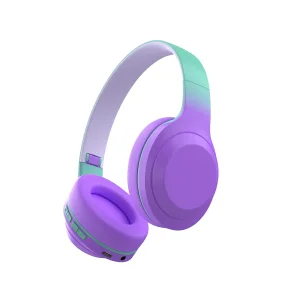
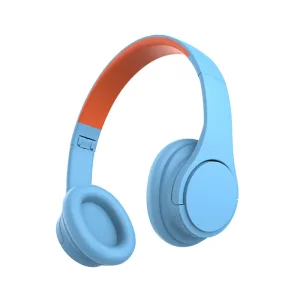
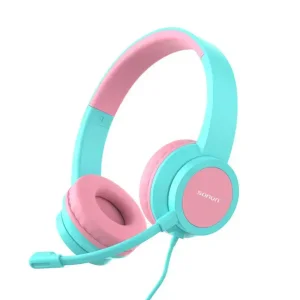
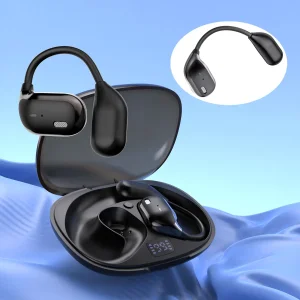
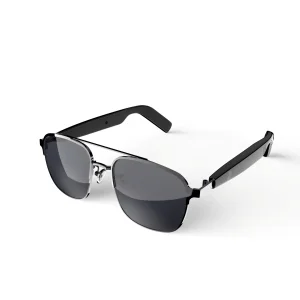
The global gaming peripherals sector is experiencing an unprecedented structural evolution. As competitive esports, immersive spatial audio, and cross-platform interactive gaming dominate consumer demands, the requirements for Original Design Manufacturing (ODM) and Original Equipment Manufacturing (OEM) in PC gaming headsets have transformed dramatically. Simple plastic audio accessories are no longer viable in today's performance-driven market. Modern gaming brands require high-fidelity acoustic architecture, sub-15-millisecond wireless synchronization, AI-powered Environmental Noise Cancellation (ENC), and ergonomic construction capable of enduring 12+ hour gaming sessions.
This comprehensive technical whitepaper and procurement guide provides enterprise decision-makers, global supply chain directors, brand owners, and channel importers with an inside look into custom PC gaming headset production. From chipset selection and driver diaphragm acoustics to China manufacturing supply chain dynamics and unit cost pricelists, this document outlines everything required to launch or scale a high-margin private-label gaming audio brand.
Shenzhen and Dongguan remain the undisputed epicenter of world audio manufacturing. Contracting an ODM PC gaming headset factory in China provides brand owners with distinct operational, structural, and financial advantages that cannot be replicated elsewhere.
Hyper-Clustered Component Sourcing
Within a 30-kilometer radius in Guangdong province, our manufacturing cluster houses chip designers (Airoha, Realtek, PixArt, Nordic), acoustic diaphragm pressing plants, CNC mold tooling shops, and foam molding factories. This spatial concentration eliminates logistics lag and lowers total Component Bill of Materials (BOM) costs by 18% to 25%.
Rapid Prototype-to-Mass-Production Velocity
Where Western or SEA facilities require 12 to 16 weeks to refine mold tooling and acoustic cavities, our factory achieves T1 sample approval within 14 to 21 days using advanced stereolithography (SLA) 3D printing, rapid aluminum tooling, and in-house Anechoic Chamber acoustic testing.
Automated Quality Assurance & B&K Calibration
Our assembly lines utilize automated SMT placement for RF transmitter boards, fully automated artificial ear acoustic testing rigs (Bruel & Kjaer 4128-C), and robotic headband flexibility testers, guaranteeing strict conformity to frequency response curves within ±1.5dB tolerances across entire production runs.
Success in the consumer gaming hardware market requires staying ahead of technological inflections. Private-label buyers must align their ODM product specifications with current macro industry developments:
1. Tri-Mode Seamless Connectivity Architecture
Gamers demand versatile connectivity. Modern ODM PC gaming headsets must support 2.4GHz Ultra-Low Latency Wireless via USB-C dongle, Bluetooth 5.4 with LE Audio (LC3 Codec), and 3.5mm / USB-A Wired Backup. Automatic pass-through allows users to receive smartphone calls while actively listening to in-game audio seamlessly.
2. AI Neural Network Noise-Canceling Microphones
Traditional passive noise-canceling boom mics are being replaced by dual-microphone arrays integrated with onboard AI DSP neural networks. These chips filter out mechanical keyboard clacks, ambient room echo, and fan noise while preserving natural vocal voice formants for crisp esports communication.
3. Spatial Audio & Hardware 7.1 Virtualizers
Engineered dual-chamber acoustic enclosures coupled with 50mm dynamic drivers titanium-coated for rigidity allow pinpoint spatial awareness. Gamers can detect enemy footsteps and directional audio cues with millimeter accuracy across Windows Sonic, Dolby Atmos, and custom PC software suite integrations.
4. Lightweight Thermal-Management Ergonomics
Headset weight has plummeted from 380 grams down to sub-260 grams. Modern ODM designs feature breathable mesh fabrics, memory foam with infused cooling gel pads, and flexible manganese alloy headbands that prevent clamping fatigue during marathon gaming tournaments.
Different market channels have distinct operational requirements. Our ODM/OEM manufacturing frameworks adapt to specific enterprise application scenarios:
| Target Channel / Scenario | Primary Technical Requirement | Key Hardware/Firmware Customization | Factory Compliance & Testing |
|---|---|---|---|
| Esports Arenas & Tournaments | Zero interference, ultra-low latency, passive isolation | 2.4GHz anti-jamming frequency hopping, 50dB passive isolation cups, detachable boom mic | CE, FCC, RED, 20,000-cycle headband flex stress test |
| Cross-Border E-Commerce (Amazon/Ebay) | High review scores, unique aesthetic, compact packaging | Custom RGB lighting patterns, private label logo engraving, volume-limited switches | RoHS, REACH, UN38.3 (battery transport), MSDS certification |
| Console & PC Hybrid Gaming Brands | Multi-platform impedance matching, quick EQ toggles | Customized DSP voice presets (FPS/MOBA/Music), dual-device audio mixing | Type-C protocol compliance, Sony PS5 / Nintendo Switch hardware compatibility |
| Educational & iCafe Fleet Sourcing | Vandal-proof durability, easily sanitized materials | Steel-reinforced braided cabling, PU leather washable cushions, strain-relief cords | Drop test (1.8 meters), salt-spray corrosion test for connectors |
Transparency in Bill of Materials (BOM) cost structures is vital for procurement executives calculating gross margin targets. The table below represents standard wholesale EXW/FOB price tiers for customized ODM PC gaming headset manufacturing based on order volume and technical specification complexity.
| Tier Category | Key Hardware Specifications | MOQ Target | Estimated EXW Price (USD) | Sample Lead Time |
|---|---|---|---|---|
| Tier 1: Entry-Level Wired Gaming | 40mm Dynamic Drivers, Single 3.5mm/USB Plug, Fixed Omnidirectional Mic, Static LED or No Light, ABS Headband. | 1,000 Pcs | $4.80 – $8.50 | 3–5 Days |
| Tier 2: Mid-Range RGB Virtual 7.1 USB | 50mm Neodymium Drivers, C-Media / Jieli Audio DSP, Multi-zone RGB Lighting, Detachable Noise-Canceling Mic, Memory Foam. | 1,000 Pcs | $9.20 – $15.80 | 5–7 Days |
| Tier 3: Competitive 2.4G + BT Dual Wireless | 50mm Titanium Diaphragm Drivers, PixArt/Realtek low-latency chipset (<20ms), 1000mAh Battery (up to 50h playtime), Breathable Fabric. | 2,000 Pcs | $18.50 – $28.00 | 7–10 Days |
| Tier 4: Flagship Tri-Mode AI ENC & Spatial Audio | Dual-Chamber Acoustic Cavity, AI ENC Dual Mic Array, Tri-Mode (2.4G/BT5.4/Wired), Aluminum Suspension Frame, Custom App EQ. | 3,000 Pcs | $29.50 – $45.00+ | 10–14 Days |
* Note: Prices vary based on real-time raw material cost fluctuations (chipset tariffs, copper wiring, neodymium magnets) and exact packaging design specifications. Contact our sales engineering team for a binding custom quotation.
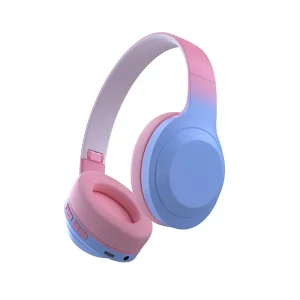
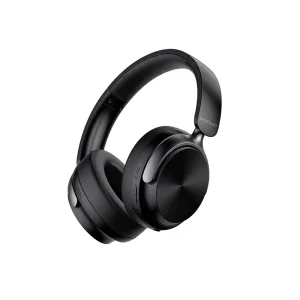
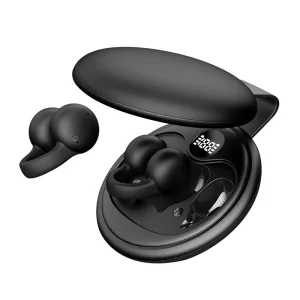
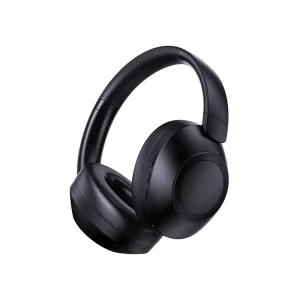
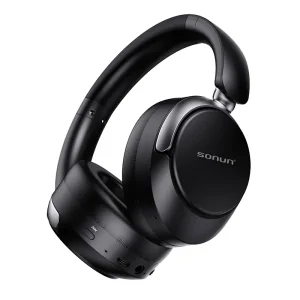
Discover our secondary specialized line of custom audio devices, high-durability headsets, rotatable passive noise isolating headphones, and bone conduction sports devices.
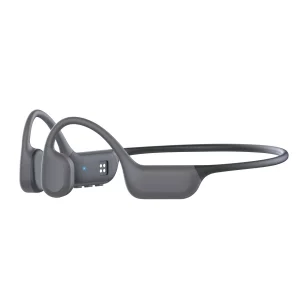
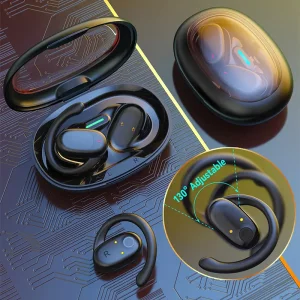
Our ISO9001 and BSCI-certified Shenzhen manufacturing facility enforces a rigorous 6-stage Quality Assurance Standard Operating Procedure (SOP) to guarantee zero defect rates in global shipments:
Stage 1: IQC Incoming Quality Inspection
100% inspection of raw materials including neodymium magnets, IC wireless chipsets, PCB boards, lithium-ion battery cells (capacity testing), and ear cushion toxicological safety checks (REACH compliance).
Stage 2: SMT Automated PCB Assembly
Surface-Mount Technology lines assemble wireless receiver boards with 3D Automated Optical Inspection (AOI) to eliminate solder bridging or component misalignments prior to housing assembly.
Stage 3: Acoustic Chamber Driver Pairing
Dynamic acoustic drivers are individually measured and matched in pairs to within ±0.8dB frequency balance across 20Hz – 20kHz, ensuring flawless binaural spatial positioning for competitive gaming.
Stage 4: In-Line Assembly Testing (IPQC)
During housing insertion, robotic stations perform high-voltage insulation tests, USB port mating tests, boom mic SNR calibration, and RGB LED color uniformity checks.
Stage 5: Reliability Aging & Stress Testing
A random sample from every batch undergoes 48-hour continuous signal burn-in, salt spray corrosion testing for metal connectors, headband twist testing (10,000 cycles), and 1.5m drop testing onto hardwood floors.
Stage 6: OQC Pre-Shipment Audit
Final Outgoing Quality Control checks strictly adhere to AQL 0.65 Major / 1.0 Minor standards prior to master carton sealing, palletization, and container loading.