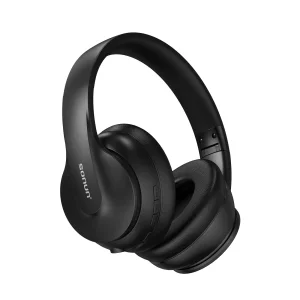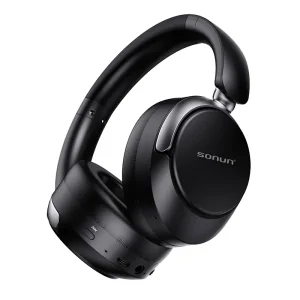
Enterprise-Grade TWS & ANC Audio Product Portfolio
Direct-from-factory ODM/OEM solutions with customizable ANC/ENC topologies, high-resolution Bluetooth 5.4 SoCs, and field-tested durability.
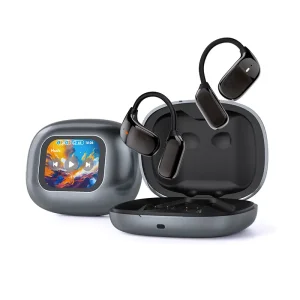
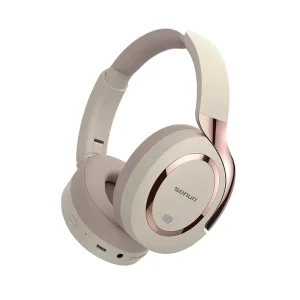
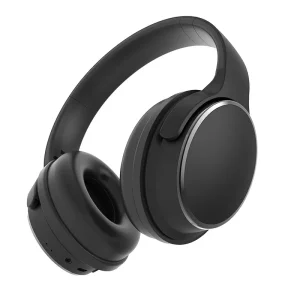
The Macro Evolution of True Wireless Stereo (TWS) Hardware (2025–2030)
The global wireless audio ecosystem is undergoing a fundamental paradigm shift. Beyond simple consumer music playback, True Wireless Stereo (TWS) earphones have transitioned into mission-critical personal audio terminals serving enterprise communication, biometric health tracking, adaptive environmental processing, and immersive gaming.
LE Audio & LC3 Codec Standards
Bluetooth 5.4 LE Audio is replacing legacy Classic Bluetooth SBC codecs. Featuring the Low Complexity Communication Codec (LC3), modern ODM TWS architectures deliver up to 50% better sound quality at half the data rate, while enabling Auracast™ multi-stream broadcast capabilities across public and corporate spaces.
Hybrid ANC & Neural ENC Integration
Enterprise buyers now require Active Noise Cancellation (ANC) depths exceeding -45dB via Feedforward + Feedback dual-microphone setups. Integrated Neural Processing Units (NPUs) within the audio SoC power Environmental Noise Cancellation (ENC) algorithms to eliminate ambient wind and industrial noise during voice calls.
Open-Wearable Stereo (OWS) Shift
The market is rapidly diversifying into air-conduction and bone-conduction OWS formats. B2B buyers seeking ergonomically safe, long-wear audio solutions favor non-in-ear designs that prevent ear-canal fatigue while preserving situational awareness in urban and industrial environments.
Decoding Global Enterprise Sourcing Intent for TWS Quotes
When procurement directors, consumer electronic brand managers, and high-volume importers request ODM quotes for TWS earphones, the evaluation criteria extend far beyond unit price. Sustainable competitive advantage requires evaluating total cost of ownership (TCO), Bill of Materials (BOM) transparency, engineering adaptability, and international compliance agility.
Architectural BOM Transparency & Chipset Selection
A reliable ODM quotation must clearly itemize the core System-on-Chip (SoC) vendor—such as Realtek, Qualcomm, Bestechnic (BES), or Jieli—alongside component specifics:
- Acoustic Transducers: Graphene-coated dynamic drivers, dynamic balanced armatures, or MEMS speaker modules.
- Power Management: PMIC protection ICs, pure cobalt battery chemistries ensuring >80% capacity retention after 500 charge cycles.
- Microphone Topologies: Knowles or Goertek MEMS microphones specified with high Signal-to-Noise Ratios (SNR > 64dB).
Regulatory Compliance & Turnkey Certification Support
Crossing international borders requires robust certification engineering. Premium ODM suppliers provide full compliance testing suites prior to mass shipment:
- North America: FCC ID certification, NRTL electrical safety, California Prop 65 toxicological validation.
- European Union: CE-RED directive compliance, RoHS 10-substance compliance, REACH chemical registration, and WEEE recycling alignment.
- Global Battery Safety: UN38.3 transport certification, MSDS datasheets, and IEC 62133 cell standards.
Supply Chain Resilience & High-Precision Production Efficiency
Situated in the heart of the Shenzhen-Dongguan consumer audio industrial cluster, modern ODM manufacturing leverages unprecedented vertical integration, advanced automation, and rigorous acoustic quality control.
Automated SMT & Micro-Assembly
High-speed Surface Mount Technology (SMT) lines place microscopic components onto multi-layer PCBs with ±0.01mm placement accuracy, eliminating human solder variance and thermal stress.
Anechoic Chamber Audio Calibration
Every batch undergoes automated 100% audio testing via Audio Precision (APx555) analyzers within full soundproof anechoic chambers to measure THD, frequency response curves, and phase coherence.
IPX Environmental Reliability
Integrated vacuum sealing equipment and precision nano-coating technology guarantee IPX5 to IPX8 waterproof/sweatproof compliance across sports and industrial headset lines.
ODM TWS Technical Comparison & Engineering Specifications
Compare architectural features across our core custom product platforms to match target buyer intent, retail pricing tiers, and application requirements.
| Specification Category | Standard Consumer TWS | Hybrid ANC Pro Series | OWS Open-Ear Sports | Enterprise UC Headsets |
|---|---|---|---|---|
| Primary Bluetooth SoC | Bluetooth 5.3 / 5.4 Entry | BES2600 / Realtek RTL8773 | Bluetooth 5.4 Low Power | Qualcomm QCC3056 / BT 5.4 |
| Noise Cancellation | Software ENC (1-Mic) | Feedforward+Feedback Hybrid ANC (-45dB) | Directional Sound Beamforming | Dual-Mic Neural Network ENC |
| Acoustic Driver Type | 10mm Dynamic PET Membrane | 12mm Composite PU+Titanium | 16.2mm Polymer Dynamic Driver | 40mm Neodymium Over-Ear |
| Latency Performance | 60ms - 80ms | 40ms Gaming Mode | 50ms Standard | <20ms via 2.4G Dedicated Dongle |
| Single Charge Battery | 5 - 7 Hours | 8 - 10 Hours (ANC Off) | 10 - 12 Hours Continuous | 33 - 50+ Hours Heavy Duty |
| Waterproof Rating | IPX4 Splashproof | IPX5 Sweat Resistant | IPX7 Hydrophobic Coated | IPX4 Office Standard |
| Target FOB Unit Cost | $4.50 - $8.00 | $14.50 - $26.00 | $11.00 - $19.50 | $18.00 - $35.00 |
Industry-Specific Field Deployments
Tailoring ODM TWS acoustic architecture to specialized vertical markets ensures superior end-user retention and minimized return rates.
Corporate Unified Communications
Optimized for Microsoft Teams, Zoom, and Google Meet with dedicated hardware mute controls, ultra-clear microphone pickup, and long-wear memory foam earpads.
Outdoor Sports & Fitness
Featuring ergonomic soft-silicone earhooks, UV-sterilization charging cases, and anti-sweat nano-coatings built to endure rigorous athletic training.
Industrial & Logistics Comm
Integrated inside safety helmets or rugged headsets, supplying high-decibel acoustic output and extreme battery longevity for warehouse and construction crews.
Educational Audio
Custom wired and wireless headsets featuring safe 85dB volume limiting, durable drop-tested plastics, and clear vocal clarity tuning for remote learning.
Step-by-Step ODM/OEM Sourcing Roadmap
How our engineering team transforms your initial design brief into certified, mass-produced TWS products.
Requirement Brief & Quote
Define acoustic profile, chipset selection, ANC requirements, target price range, packaging guidelines, and destination market regulatory standards.
Prototyping & Golden Sample
Rapid 3D tooling mockups, PCB layout verification, custom EQ acoustic tuning, and delivery of golden approval samples prior to production tool opening.
Mass Production & QC Inspection
Sourcing A-grade battery cells, automated SMT board assembly, 100% sound acoustic chamber testing, pre-shipment inspection reports, and export delivery.
Frequently Asked Procurement Questions (FAQ)
In-depth answers to real-world engineering, financial, and logistical questions asked by international audio brand managers and buyers.
How do you calculate the initial ODM tooling cost and Minimum Order Quantity (MOQ)?
Our standard Minimum Order Quantity (MOQ) for customized private-label TWS earphones using existing industrial molds is typically 1,000 to 2,000 units per colorway. For fully customized ODM projects requiring unique injection tooling, plastic steel molds range from $8,000 to $25,000 depending on structural complexity and surface finish requirements (e.g., dual-injection, UV plating, soft-touch matte). Tooling costs can be fully rebated back to the buyer upon reaching agreed-upon cumulative order milestones (e.g., 50,000 units within 12 months).
What is the difference between Feedforward, Feedback, and Hybrid Active Noise Cancellation (ANC)?
Feedforward ANC uses an external microphone facing outward to detect incoming ambient noise before it reaches the user's ear, canceling high-frequency chatter effectively. Feedback ANC places a microphone inside the earcup/nozzle to capture what the user actually hears, processing low-frequency rumble effectively. Hybrid ANC combines both feedforward and feedback microphones alongside advanced DSP algorithms, achieving noise attenuation up to -45dB across a broad bandwidth (20Hz–2,000Hz). Hybrid ANC provides the highest audio fidelity and most immersive silence, making it the preferred choice for premium ODM product lines.
How does Bluetooth 5.4 improve product reliability compared to older Bluetooth versions?
Bluetooth 5.4 introduces Encrypted Advertising Data (EAD), Periodic Advertising with Responses (PAwR), and optimized LE Audio connection topologies. For end consumers and enterprise users, this translates to faster multi-device switching, reduced signal dropout in congested environments (such as airports or trade shows), lower power consumption extending playback times by 15-20%, and seamless sub-20ms ultra-low latency audio sync during video playback and gaming.
What quality assurance tests are performed prior to mass shipping?
Our manufacturing facility applies a rigorous 6-stage Quality Assurance protocol: 1) Incoming Material Inspection (IQC) on driver coils, plastic housing materials, and micro-lithium batteries; 2) SMT Line Automated Optical Inspection (AOI); 3) In-Process Quality Control (IPQC) checking solder integrity and acoustic curves; 4) 100% Full-Acoustic Testing in soundproof anechoic chambers via APx555 analyzers; 5) Environmental Stress Testing including salt-spray corrosion tests, thermal shock chamber cycles (-20°C to 60°C), drop tests (1.2m onto hardwood), and button actuation lifecycle testing (>100,000 cycles); 6) Final Outgoing Quality Control (OQC) against AQL 0.65 Major / 1.0 Minor standards.
Can you assist with firmware customization, app integration, and custom Bluetooth pairing names?
Yes. Every ODM project includes firmware customization. We can hardcode your custom broadcast Bluetooth pairing name (e.g., "YourBrand TWS-Pro"), record multi-lingual localized voice prompts (English, Spanish, German, Japanese, French), adjust tactile touch-control sensitivities, tune default hardware equalizer (EQ) curves, and provide Software Development Kits (SDKs) or API documentation if you are developing a companion iOS/Android mobile app for custom button mapping and over-the-air (OTA) firmware updates.
What is the typical lead time from initial contract signing to container loading?
For standard OEM repeat orders utilizing existing molds and customized packaging, typical lead times are 20 to 25 calendar days. For new private-label orders involving specialized color-matching (Pantone calibration) and custom firmware flashing, lead times average 30 to 35 days. For ground-up ODM projects requiring new mold fabrication, NPI trial runs, and international regulatory testing (CE/FCC/RoHS), total timeline spans approximately 60 to 75 days from initial CAD sign-off to mass production shipment.
High-Demand Custom Audio Solutions
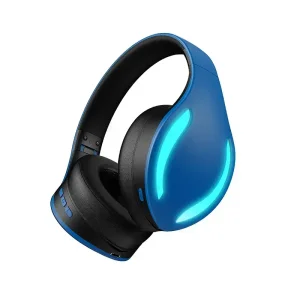
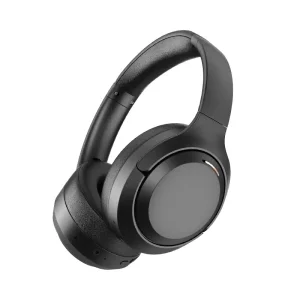
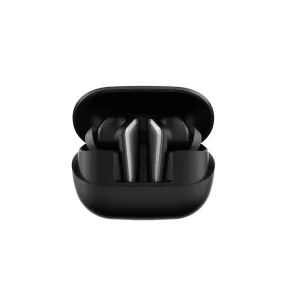
Select a model below to request technical specification sheets, BOM breakdowns, and volume tier pricing quotes directly from our sales engineers.