
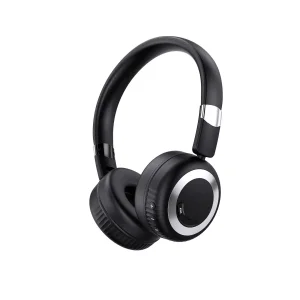
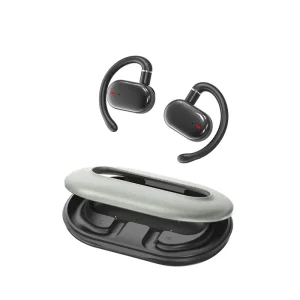
The Global Commercial & Industrial Landscape of Wired In Headphones
In an era increasingly dominated by consumer wireless earwear, the global demand for professional ODM Wired In Headphones remains at an all-time high across mission-critical enterprise, industrial, educational, and medical sectors. Enterprise procurement officers and brand managers recognize that physical wired connections deliver an unyielding set of operational advantages: true zero-latency signal propagation, complete immunity to RF interference, battery-free continuous operation, and unrivaled audio clarity through uncompressed analog or lossless digital transmission.
Modern commercial ecosystems rely heavily on engineered wired audio assets. From high-density call centers handling thousands of concurrent VoIP lines to K-12 standardized testing environments requiring localized sound isolation and ruggedized cabling, wired headsets form the backbone of reliable communications. Furthermore, in high-security environments—such as financial trading floors, government defense facilities, and corporate conference centers—wired audio eliminates airborne wireless snooping risks, fulfilling stringent data compliance and physical security protocols.
Wired connections prevent eavesdropping and eliminate RF signal congestion in dense corporate offices, making them mandatory for military, banking, and government operations.
Operating directly off host bus power via 3.5mm TRS/TRRS or USB-C interfaces, eliminating charging downtime, battery degradation, and logistics headaches.
Direct metallic conductor signal delivery preserves full dynamic range, linear frequency curves, and ultra-low Total Harmonic Distortion (THD < 0.5%).
China Manufacturing Efficiency & The Shenzhen Acoustic Cluster Advantage
As a global epicenter for consumer electronics manufacturing, Shenzhen and the broader Pearl River Delta region offer unmatched structural efficiencies for audio OEM/ODM production. Partnering directly with a established Shenzhen audio factory like Sonun Technology unlocks vast competitive advantages across the entire product lifecycle:
- Full-Chain Supply Supply Ecosystem: Within a 50-kilometer radius, our factory accesses world-class component suppliers specializing in neodymium dynamic drivers, precision acoustic dampening mesh, custom tooling molds, CNC metal turning, and TPE/TPU wire extrusion.
- Agile Engineering Prototyping: Rapid turnarounds for 3D functional mockups, acoustic target curve tuning on Audio Precision APx555 analyzers, and rapid tooling creation in as little as 14 business days.
- Economies of Scale & Cost Efficiency: High-volume automated line integration minimizes per-unit assembly costs without sacrificing mechanical precision, passing substantial margin savings to enterprise brand partners.
- Rigorous Standardized Testing: Stringent AQL (Acceptable Quality Limit) Level II inspection protocols covering cable flex strain tests (up to 10,000 cycles), salt spray corrosion resistance, acoustic frequency sweeping, and drop-impact resistance.
| Performance Standard | Sonun ODM Wired Specification | Generic Market Equivalent | Commercial Value Advantage |
|---|---|---|---|
| Driver Dynamic Range | 20Hz – 22,000Hz (Hi-Res Target) | 100Hz – 15,000Hz | Crystal-clear vocal clarity for call centers & studio playback. |
| Cable Core Conductor | Oxygen-Free Copper (OFC) + Kevlar Braid | Recycled Copper Clad Aluminum (CCA) | High tensile strength, zero signal attenuation, anti-tangle resilience. |
| Total Harmonic Distortion | < 0.5% @ 1kHz, 1mW | > 2.0% @ 1kHz | Fatigue-free listening during extended work shifts and testing. |
| Strain Relief Durability | > 10,000 Bend Cycles (R=5mm, 200g load) | < 2,000 Bend Cycles | Drastically reduced return rates and operational failure in schools/offices. |
| Connector Plating | 24K Gold-Plated 3.5mm / Type-C Nickel Shell | Standard Flash Tin / Low-Grade Nickel | Corrosion-resistant contact stability over years of repeated insertion. |
Technical Deep-Dive: Material Engineering & Interface Architecture
Specifying custom wired headphones requires an in-depth understanding of acoustic driver physics, housing resonance, cable geometry, and digital-to-analog conversion interface chips. As an ODM specialist, Sonun collaborates with client engineering teams to tailor every physical parameter to match target buyer personas:
1. Driver Mechanics & Acoustic Tuning
The core of sound reproduction rests within the dynamic driver assembly. Depending on target application, we deploy neodymium magnets (N42 to N52 grades) paired with ultra-thin polymer diaphragms (PET, PEK, Titanium Composite, or Beryllium Coating). For voice-centric enterprise headsets, we engineer driver resonance to boost vocal frequencies between 300Hz and 3.4kHz while taming bass rumble. For audiophile and studio-monitoring white labels, we align frequency responses with the Harman Target Curve for accurate tonal balance.
2. Cable Geometry, Shielding & Interface Standardization
Cabling failure is the leading cause of wired headphone breakdown. To eliminate this weakness, Sonun uses multi-core Oxygen-Free Copper (OFC) wrapped in high-density Kevlar fibers, enclosed in flexible TPE or braided nylon jackets. On the interface side, we support:
- Standard 3.5mm AUX (TRS / TRRS CTIA & OMTP): Compatible with legacy laptops, mobile devices, and institutional media hardware.
- USB Type-C with Integrated High-Res DAC: Modern digital audio integration featuring integrated Realtek, BES, or CX Cirrus Logic DAC chipsets delivering 24-bit/96kHz lossless playback and low-noise active electret microphone equalization.
- USB-A Digital Workstation Interfaces: Dedicated for enterprise office softphones with inline hardware controls (Mute, Volume +, Volume -, Hook On/Off).
The End-to-End ODM Customization Lifecycle
Sonun streamlined OEM/ODM process ensures complete risk mitigation from preliminary concept sketch to international customs clearance:
We work with your procurement team to establish acoustic targets, electrical specifications, cable lengths, strain relief tolerances, and packaging targets.
Our structural engineers draft precision mold tooling designs, validating acoustic cavity volume and ergonomic clamp pressure prior to physical tooling cutting.
A physical prototype is fabricated and verified on our APx555 acoustic bench and environmental chambers, guaranteeing client sign-off on exact specs.
Full assembly under ISO9001 quality controls, featuring 100% automated acoustic sweep testing, cable flex validation, and custom packaging fulfillment.
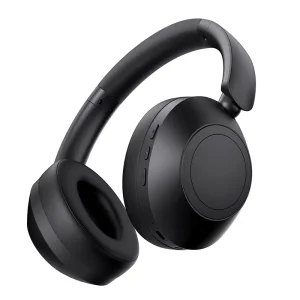
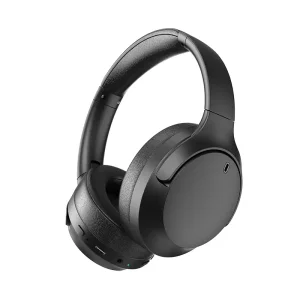
Global Sourcing Trends: 2025–2030 Horizon
As corporate IT departments, audio brands, and educational authorities plan multi-year equipment cycles, several macro trends are reshaping the wired headphone manufacturing industry:
1. The Universal Transition to USB Type-C Audio Standard
With global regulatory mandates (such as the EU Common Charger Directive) phasing out legacy ports, USB Type-C has rapidly emerged as the primary connector for wired headphones. This shift enables digital audio processing right inside the headphone housing. By embedding low-power DSP (Digital Signal Processor) microchips, Sonun ODM wired headphones can execute real-time EQ curves, active noise suppression algorithms, and spatial audio rendering without relying on the host hardware's DAC capabilities.
2. Sustainable Material Sourcing & Circular Economics
Global enterprises are actively pursuing Scope 3 emissions reductions. In response, Sonun offers eco-friendly ODM material configurations, including PCR (Post-Consumer Recycled) ABS plastics for ear cups, bio-degradable TPE jacketing for cables, and 100% plastic-free soy-ink printed retail packaging. Certified compliance with EU REACH and RoHS regulations ensures smooth market access across North America and Europe.
3. Micro-Acoustic Innovations for Hearing Health
Continuous listening in call centers and educational facilities has heightened awareness around auditory fatigue and noise-induced hearing loss. Modern wired headsets incorporate hardware-level acoustic limiters (limiting peak output to safe 85dB SPL levels for educational use or 95dB SPL for adult enterprise use) alongside passive ambient isolation ear cushion geometry, protecting user health over 8-hour workdays.