
Featured OEM/ODM Active Noise Cancellation Series
Explore our certified over-ear and in-ear active noise-cancelling platforms engineered for global brands, wholesale distributors, and private-label enterprise buyers.
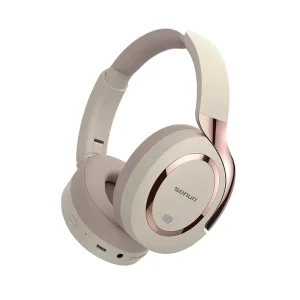
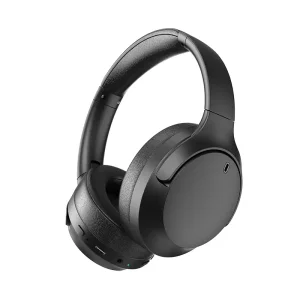
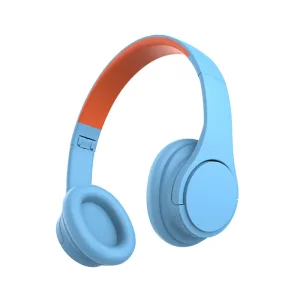
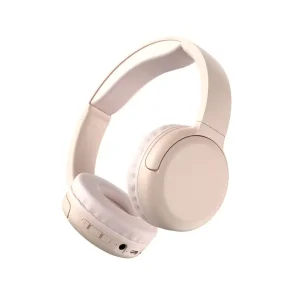
Acoustic Engineering Architecture of Hybrid ANC Headphones
Understanding the physics, DSP algorithm design, and electro-acoustic mechanics behind high-performance Active Noise Cancellation manufacturing.
Active Noise Cancellation (ANC) has evolved from a niche aviation luxury into a non-negotiable benchmark feature across premium enterprise and consumer audio markets. As a specialized OEM ANC Noise Cancelling Headphones Manufacturer & Supplier, our acoustic engineering division approaches noise suppression not merely as a component drop-in, but as a fully integrated electro-acoustic system synthesis combining structural seal acoustic impedance, high-SNR MEMS microphone arrays, specialized Digital Signal Processors (DSP), and ultra-low distortion neodymium dynamic drivers.
Feedforward ANC Architecture
Utilizes externally mounted reference microphones to capture ambient acoustic waveforms prior to entering the ear cup, enabling rapid phase inversion filter processing for ambient high-frequency attenuation.
Feedback ANC Architecture
Employs internal error microphones placed inside the acoustic chamber directly facing the speaker driver, continuously measuring real-time residual noise at the ear drum for low-frequency precision correction.
Hybrid ANC System Integration
Combines feedforward and feedback topology driven by dual-core multi-threaded DSPs to achieve real-time noise reduction depths exceeding -38dB to -45dB across a broad spectrum (20Hz–2,500Hz).
Achieving true acoustic transparency and class-leading noise rejection without inducing listener fatigue or audible high-frequency "hiss" requires micro-second algorithmic calculation. During OEM mass production, every ear-cup housing undergoes automated acoustic sealing verification and response curve calibration inside state-of-the-art Anechoic Test Chambers using SoundCheck® and AP (Audio Precision) signal analyzers. This guarantees that passive attenuation curves complement active phase cancellation seamlessly across every unit produced.
Technology Roadmap & Future Outlook for ANC Audio
How next-gen silicon chipsets, AI adaptive algorithms, and ultra-low power wireless protocols are reshaping private-label audio manufacturing.
Adaptive AI Dynamic Noise Cancellation
Next-generation ANC hardware departs from static dB attenuation modes. Utilizing real-time scene detection neural networks, our upcoming 2025–2026 OEM platforms auto-adjust cancellation filters dynamically—seamlessly transitioning between high-noise transit environments, windy outdoor streets, and quiet office environments without manual app intervention.
Bluetooth 5.4, LE Audio & LC3 Codec Integration
By migrating from legacy SBC/AAC to the LC3 (Low Complexity Communication Codec) integrated over Bluetooth 5.4, our custom audio platforms achieve up to 50% lower power consumption while delivering superior bit-rate efficiency. This tech roadmap enables extended playback times exceeding 80+ hours on standard 500mAh battery configurations with ANC active.
Spatial Audio & Dynamic Head Tracking
Enterprise and gaming headsets now demand immersive 3D spatial soundscapes. Our ODM engineering services incorporate 6-axis IMU (Inertial Measurement Unit) gyroscopes and customized binaural rendering engines, delivering head-tracked spatial audio for next-gen media consumption and immersive virtual conference spaces.
Solid-State Silicon MEMS Drivers
Future high-resolution audio platforms are transitioning toward hybrid dynamic-MEMS acoustic driver layouts. Utilizing solid-state silicon drivers for high-frequency precision alongside custom 40mm composite dynamic diaphragms ensures phase alignment and THD (Total Harmonic Distortion) under 0.1% across high-resolution playback standards.
China Industry 4.0: Supply Chain Resilience & Efficiency
Leveraging the world's most concentrated electro-acoustic cluster in Shenzhen and Dongguan to deliver unmatched speed, precision scale, and cost-efficiency.
Global brands sourcing private-label audio products require absolute supply chain predictability, rapid prototyping cycles, and rigid quality assurance. Situated in the center of the Pearl River Delta electronics ecosystem, our China Industry 4.0 Headphone Manufacturing Facility combines complete vertical integration under one roof—eliminating vendor fragmentation and streamlining project management from industrial design (ID) to final freight release.
| Manufacturing Capability | Traditional Fragmented Supply Chain | Sonun Industry 4.0 Integrated OEM Facility |
|---|---|---|
| T1 Tooling & Mold Lead Time | 35 - 50 Days | 15 - 20 Days (Accelerated Rapid Tooling) |
| Acoustic Tuning & DSP Flashing | Third-party outsourced labs | In-House Anechoic Testing & DSP Software Team |
| SMT PCB Assembly | Sub-contracted assembly lines | Automated SMT Production Lines with AOI Inspection |
| Mass Production Yield Rate | 94% - 96% Average | >99.2% Standardized Production Yield |
| Regulatory Testing Lead Time | 4 - 6 Weeks (External re-testing) | Pre-certified PCBA Platforms & Fast-Track Labs |
Rigid Quality Control & Stress Testing Protocols
To guarantee long-term field reliability and prevent warranty claims in international retail markets, every OEM batch undergoes rigorous environmental, mechanical, and electro-acoustic reliability testing prior to master shipment packaging:
- Headband Flexing & Fatigue Resistance: 10,000+ cycle mechanical stress test simulating extreme real-world wear.
- Drop & Impact Resistance: 1.5-meter multi-angle concrete impact testing on final housing tooling.
- Environmental & Thermal Shock Chamber: Temperature cycling from -20°C to +65°C with 95% RH humidity exposure.
- Acoustic Pair Matching: L/R channel frequency response deviation locked strictly within ±1dB tolerances.
- Battery Cycling & Protection Circuit Inspection: UN38.3 & IEC 62133 safety compliance on all lithium polymer cells.
Macro Industry Solutions & Customization Vectors
Tailor-made active noise cancelling audio platforms engineered to meet specific commercial sector demands.
Unified Communications & Enterprise Office
Equipped with Dual-Mic AI Environmental Noise Cancellation (ENC) beamforming microphones. Isolates vocal frequencies while filtering up to 98% of background office chatter and keystroke noise, fully optimized for MS Teams, Zoom, and call-center environments.
Safe-Volume EdTech & Kids Headphones
Customized sound pressure level (SPL) limiters capped strictly at 85dB or 94dB according to WHO hearing safety recommendations. Manufactured using non-toxic, hypoallergenic, food-grade materials with extreme impact durability for classroom deployment.
Aviation & Commuter High-Noise Isolation
Focused attenuation in ultra-low frequency spectrums (20Hz–500Hz) specifically designed to eliminate jet engine hum, subway rail rumble, and HVAC system noise, paired with memory-foam ear cushions for 12+ hour wearing comfort.
Active Sports & Open-Ear Air/Bone Conduction
Open-ear directional audio acoustics engineered for outdoor runners, cyclists, and fitness enthusiasts. Combines situational environment awareness with IPX7 waterproof nano-coatings and sweat-resistant physical architecture.
Localization Support & Compliance Assurance
Removing global trade barriers through full international regulatory certification, localized software, and white-label branding customization.
Exporting consumer audio products into North American, European, and Asian markets requires strict adherence to regional electromagnetic compatibility (EMC), radio frequency (RF), safety, and environmental standards. Our regulatory compliance department guarantees that all OEM builds are delivered with full documentation ready for immediate customs clearance and retail shelving.
North American Compliance
FCC Part 15B / 15C, ANSI C63.4, CA Prop 65, UL2054. Complete ID authorization filings for Bluetooth RF spectral compliance and hazardous chemical restriction across all US/Canada state guidelines.
European Union & UK Standards
CE-RED (Radio Equipment Directive), RoHS 2.0, REACH, WEEE, EN 50332 (Acoustic Safety). Direct compliance with EU max sound pressure restrictions and toxic chemical restrictions.
Global Wireless & Battery Safety
Bluetooth SIG BQB Licensing, UN38.3 Lithium Battery Air Freight Safety, MSDS, IEC 62133, TELEC (Japan), KC (Korea). Protecting your brand from intellectual property penalties and customs impoundment.
Full-Funnel Localization Engineering
Localized Voice Prompts & Companion App SDKs: Multi-language prompt audio recording (English, German, French, Spanish, Japanese). White-label iOS/Android app integration for EQ control and OTA firmware updates.
Additional Specialized Wireless & Audio Platform Solutions
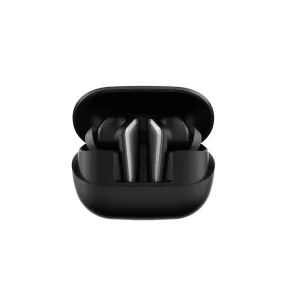
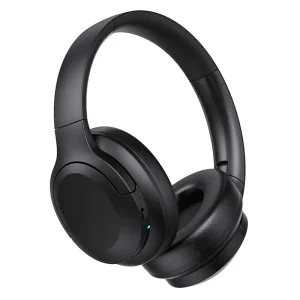
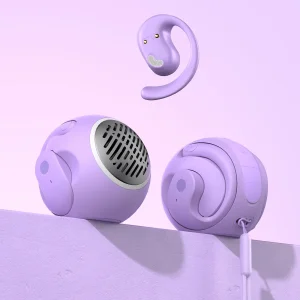
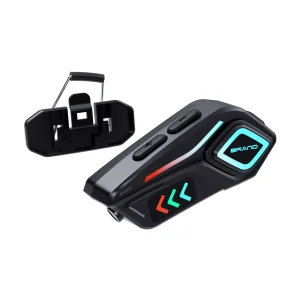
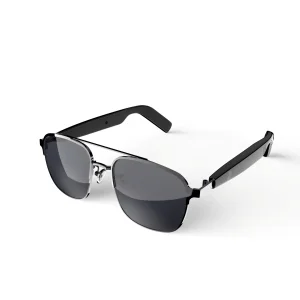
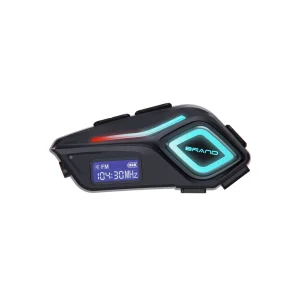
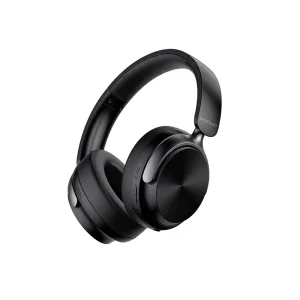
Explore our extended OEM product lineup spanning open-ear, children's safety headsets, heavy bass models, and cycling helmet audio systems.
Global Enterprise Procurement Requirements Checklist
Essential criteria volume buyers must evaluate when selecting a long-term OEM ANC manufacturing partner.
1. Bill of Materials (BOM) Transparency
Always verify chipset tiering (e.g., Qualcomm, Bestechnic, Realtek, Jieli) and driver magnet specs (N35 vs. N52 Neodymium). Transparent suppliers provide full component datasheets prior to sample approval.
2. Tooling Ownership & IP Protection
For custom ODM projects, formal Non-Disclosure Agreements (NDAs) and clear Non-Recurring Engineering (NRE) tooling contracts must explicitly guarantee that custom plastic injection molds remain 100% brand-exclusive property.
3. Minimum Order Quantity (MOQ) Flexibility
Standard OEM logo branding typically starts at 1,000 units per colorway, whereas customized injection housing colors or full ODM structural modifications usually require 2,000 to 3,000 units depending on tooling complexity.
4. Golden Sample Lock-In & AQL Standards
Pre-production "Golden Samples" must be acoustically mapped and signed off by both engineering teams. Mass production quality inspection should adhere to ISO 2859-1 AQL standards (Major Defects: 1.0, Minor Defects: 2.5).
OEM/ODM ANC Headphones Procurement Q&A
Expert engineering answers to common technical, commercial, and operational procurement inquiries.
Feedforward ANC utilizes external mics to reduce ambient high-frequency noise but struggles with low-frequency positioning. Feedback ANC uses internal ear-cup mics to isolate low frequencies but can be sensitive to wind turbulence. Hybrid ANC combines both microphone positions, utilizing dual-core DSP processing to deliver broad-spectrum noise rejection from 20Hz up to 2.5kHz with attenuation depths reaching -38dB to -45dB.
Every headset on our automated assembly line undergoes 100% online acoustic sweep testing using SoundCheck® hardware inside mini-anechoic booths. Drive-unit impedance, frequency response curves, total harmonic distortion (THD), and active noise reduction phase curves are automatically compared against the locked Golden Sample tolerance band (±1dB max variance) before packaging.
Yes. We provide complete software customization services, including custom Bluetooth broadcast IDs (SSID), localized multi-language voice prompts, custom EQ sound presets, custom LED lighting sequences, and full iOS/Android white-label smartphone apps with Over-The-Air (OTA) firmware update capabilities.
For existing OEM private-label models with custom logos and packaging, typical production lead time is 20–25 days. For full ODM projects requiring custom industrial design and new plastic injection molds, rapid prototyping takes 7 days, T1 mold samples require 20 days, and initial mass production is completed in 30–35 days post-sample approval.
All lithium-ion and lithium-polymer batteries used in our headphones feature integrated Seiko protection IC boards (over-charge, over-discharge, short-circuit protection) and carry current UN38.3 test reports, MSDS datasheets, and 1.2m drop test certification, guaranteeing full compliance for international air and sea cargo shipments.