
Engineered OEM/ODM Audio Solutions
Explore our industrial-grade, highly customizable earbuds and headphones engineered for global brands, importers, and enterprise distributors.
Macro Dynamics of the Global OEM Decent Earbuds Market
Analyzing supply chain transformation, acoustic component innovations, and quality benchmarks for enterprise audio procurement in 2026 and beyond.
The global consumer and enterprise audio landscape is experiencing a fundamental paradigm shift. As wireless audio moves from luxury commodity to ubiquitous operational infrastructure, global brands, private-label retailers, and enterprise procurement divisions face unprecedented pressure to source decent earbuds—defined not merely by low manufacturing costs, but by superior acoustic engineering, robust signal stability, long battery lifecycles, and absolute regulatory compliance. Selecting a top-tier OEM decent earbuds manufacturer has become a core strategic imperative for consumer electronics brands seeking sustainable market differentiation and high profit margins.
Historically, B2B procurement in the wireless earbud domain was plagued by extreme quality variance. Early-generation True Wireless Stereo (TWS) products suffered from high return rates driven by asynchronous Bluetooth desynchronization, rapid battery degradation, poor Environmental Noise Cancellation (ENC) during calls, and acoustic driver distortion. Modern tier-1 OEM manufacturers have overcome these systemic vulnerabilities through advanced silicon system-on-chip (SoC) integration, automated surface-mount technology (SMT) production lines, and rigorous acoustic calibration protocols.
Enterprise Sourcing Drivers for Decent Earbuds
Understanding what enterprise buyers, brand managers, and supply chain directors evaluate when selecting a manufacturing partner.
Total Cost of Ownership (TCO) Optimization
Enterprise buyers focus on minimizing post-purchase RMA rates. Decent earbuds engineered with Grade-A battery cells and ESD-protected PCBA circuits drop warranty claim rates below 0.5%, yielding significant long-term savings.
Custom Tooling & Industrial Design (ID)
Differentiating from commodity off-the-shelf products requires private tooling, ergonomic ear-canal profiling, custom CMF (Color, Material, Finish), and customized capacitive touch interfaces suited for specific target demographics.
Turnkey Regulatory Assurance
Instant market entry requires full compliance support. Top OEM manufacturers provide complete test reports for CE-RED, FCC ID, TELEC, RoHS, REACH, and UN38.3 battery transport safety documentation prior to mass dispatch.
Understanding Search Intent: What Makes an Earbud "Decent"?
In B2B terminology, the keyphrase "decent earbuds manufacturer" represents a explicit user intent: searchers are not seeking ultra-cheap, disposable tier-3 products, nor are they seeking astronomical pricing from boutique European OEMs. They are seeking the optimal equilibrium point—high acoustic performance, pristine voice pickup, reliable wireless connectivity, and premium tactile feel at factory-direct wholesale economics.
To deliver true "Information Gain," our engineering research highlights four fundamental pillars that elevate standard earbuds into the enterprise-grade "Decent" classification:
- Acoustic Fidelity (THD < 1%): Utilizing composite diaphragm dynamic drivers (Titanium, Graphene, or PEEK+PU) calibrated using Artificial Ear simulators to maintain dynamic range without harmonic distortion.
- Real-World RF Resilience: Implementing 3D LDS (Laser Direct Structuring) or ceramic patch antennas that eliminate audio dropouts in crowded electromagnetic environments such as subway stations or office complexes.
- Dual-Microphone Beamforming ENC: Integrating clear voice capture (cVC 8.0 or neural network AI noise reduction) to isolate human voice from background ambient noise during remote business calls.
- Battery Lifespan Preservation: Employing intelligent battery protection ICs that prevent overcharging, over-discharging, and thermal runaway, maintaining over 80% original capacity after 500 complete charge cycles.
Engineering Architecture & Next-Gen Tech Stack
Inside the hardware components, firmware algorithms, and material science that power premium OEM audio devices.
1. Bluetooth 5.4 & LE Audio Codec Infrastructure
Modern OEM earbud manufacturing has transitioned to Bluetooth 5.4 architecture, incorporating Low Energy (LE) Audio and the LC3 (Low Complexity Communication Codec). Compared to legacy SBC codecs, LC3 offers higher sound quality at half the bit rate, reducing power consumption by up to 35% while extending battery endurance in compact earbud form factors.
| Technical Parameter | Legacy Wireless Earbuds (Tier-3) | Modern Decent OEM Standard (Tier-1) | Enterprise Impact / Benefit |
|---|---|---|---|
| Bluetooth Chipset | Generic BT 5.0 / 5.1 Single Core | Dual-Core BT 5.4 + DSP Engine | Ultra-fast pairing, zero packet loss, high stability |
| Audio Codec Support | SBC Only | AAC, LC3, Hi-Res LDAC / aptX Adaptive | Studio-grade audio transmission with high dynamic range |
| Noise Cancellation | Passive Isolation Only | Hybrid ANC (-35dB to -45dB) + AI ENC | Crystal clear call voice transmission & deep noise abatement |
| Microphone Architecture | Single Electret Mic | Dual / Triple Silicon MEMS Mics | Directional beamforming, wind noise rejection up to 25km/h |
| Playback Latency | 180ms - 250ms | 38ms - 60ms Ultra-Low Latency | Seamless multimedia lip-sync, gaming, and video calls |
| Waterproof Rating | Unrated / IPX4 | IPX5 to IPX8 Hydrophobic Nanocoating | Sweat protection for intensive athletic & outdoor usage |
2. Acoustic Chamber & Transducer Innovation
Acoustic performance is dictated by acoustic enclosure volume and dynamic driver materials. Premium OEM decent earbuds manufacturers utilize dual-cavity structure designs that separate the electronic PCBA from the speaker enclosure. This prevents internal magnetic interference and optimizes back-wave airflow, delivering tight, extended bass response (down to 20Hz) and crisp high-frequency extension (up to 40kHz).
OEM Engineering Insight: Active Noise Cancellation (ANC) Tuning
True Hybrid ANC utilizes both Feedforward (external) and Feedback (internal ear canal) microphones. Achieving a decent noise attenuation depth of -40dB requires precise phase-inversion algorithms customized to the exact mechanical seal of the eartip. Standard off-the-shelf tuning leads to ear pressure discomfort or hiss; true OEM tuning employs real-time adaptive ANC that adjusts filter curves based on ambient noise levels and ear canal fit.
3. Open-Ear (OWS) & Conduction Acoustic Directions
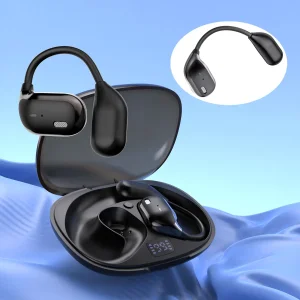
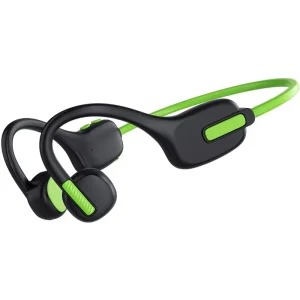
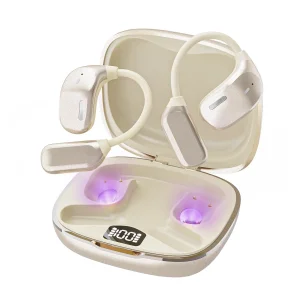
Market demand is expanding beyond traditional in-ear silicone fit towards Open-Ear Wearable (OWS) and Air/Bone Conduction headsets. Leading OEM manufacturers leverage directional sound targeting technology—using inverse acoustic phase cancellation—to deliver private audio to the user's ear without sound leakage into surrounding environments, making open-ear earbuds ideal for corporate sports lines and urban commuting.
ISO-Certified Manufacturing & Reliability Testing
How rigorous quality management systems ensure consistent batch-to-batch excellence across thousands of production units.
1. IQC (Incoming Quality Control)
Every raw material batch undergoes strict incoming inspection: Bluetooth ICs tested via automated test fixtures, battery cells verified for capacity/internal resistance, and plastic enclosures checked for color consistency under X-Rite spectrophotometers.
2. IPQC Acoustic Calibration
During SMT and assembly, 100% of earbud modules pass through SoundCheck or AP (Audio Precision) automated acoustic test chambers. Dynamic response curves, total harmonic distortion, and ANC phase attenuation are logged per serial number.
3. Accelerated Life Testing (ALT)
Representative samples undergo environmental stress testing: thermal shock cycling (-40°C to +70°C), artificial sweat corrosion, tumbling drop tests (1.2m onto steel plates), hinge insertion life (10,000+ cycles), and salt spray exposure.
Regulatory Compliance & Localization Customization
Empowering global brands with seamless market entry across North America, the European Union, Asia-Pacific, and Latin America.
Entering international retail channels requires compliance with stringent regional regulations. A reputable OEM decent earbuds manufacturer maintains comprehensive certification support, ensuring that products move through customs clearance without costly delays or regulatory fines.
Key Compliance Certifications Supported:
- North America: FCC Part 15B/15C certification for RF emissions, Industry Canada (IC), California Proposition 65 chemical compliance, and UL/ETL battery safety verification.
- European Union: CE Marking (RED - Radio Equipment Directive 2014/53/EU), RoHS (Restriction of Hazardous Substances), REACH SVHC chemical safety, WEEE environmental waste compliance, and EN 50332 acoustic safety volume limiting for hearing protection.
- Asia-Pacific & Global: TELEC / MIC certification for Japan, KC Mark for South Korea, BIS for India, SRRC for Mainland China, and NCC for Taiwan.
Private-Label & Firmware Localization Services:
Customization extends far beyond printing logos on charging cases. Professional OEM/ODM services provide turnkey firmware and software tailoring, including:
- Custom Voice Prompts: Studio-recorded multilingual voice prompts (English, Spanish, German, Japanese, French) stored directly in the earbud ROM.
- Dedicated iOS / Android Mobile Apps: Custom-branded companion applications allowing end-users to adjust Graphic Equalizer (EQ) curves, rebind capacitive touch controls, trigger "Find My Earbuds" beaconing, and receive over-the-air (OTA) firmware updates.
- Bespoke Packaging Design: Premium rigid gift boxes, eco-friendly plastic-free FSC paper packaging, custom manuals, and barcode compliance labeling for retail distribution.
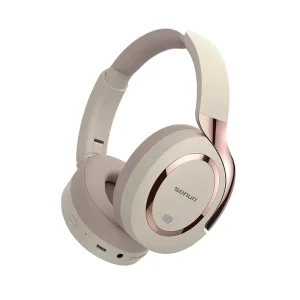
Expanded Enterprise Product Catalog
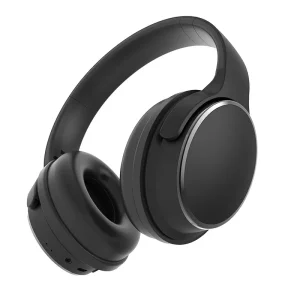
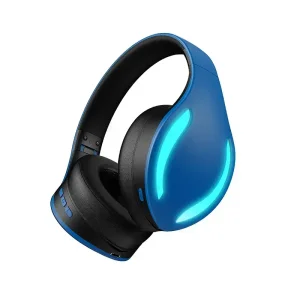
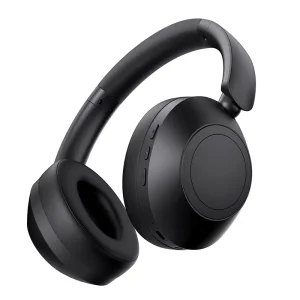
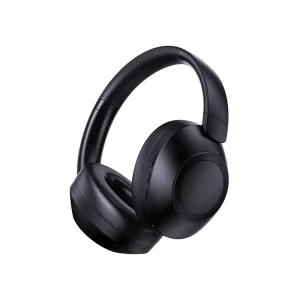
Discover gaming headsets, bone conduction units, OWS open-ear models, and ultra-long battery headphones designed for diverse commercial channels.

Frequently Asked Questions by OEM Audio Buyers
Expert answers addressing production lead times, MOQ thresholds, custom tooling, and acoustic quality assurance.