
Precision-Engineered OEM/ODM Headphone Catalog
Direct factory supply of certified active noise-canceling, ultra-low latency wireless, and specialized acoustic audio devices.
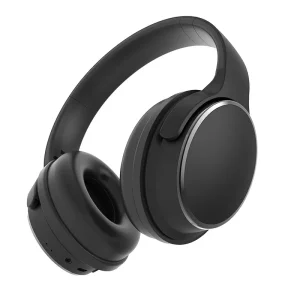
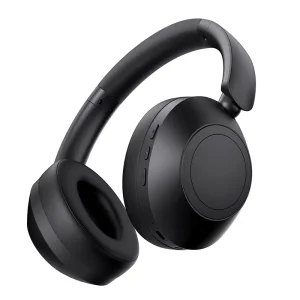
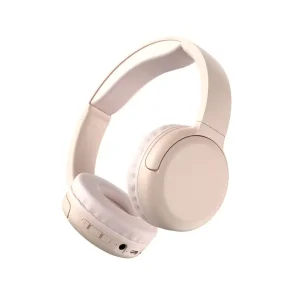
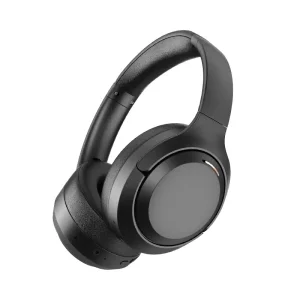
1. Global Electroacoustic Market Landscape & Industrial Dynamics
The transition from commoditized audio assembly to advanced private-label ODM development.
The global earphone and headphone market has surpassed $65 billion in annual valuation, propelled by structural shifts in personal connectivity, wireless bandwidth expansion, and specialized consumer applications. Enterprise buyers, audio brand executives, and global distributors no longer evaluate OEM earphone headphones factories & exporters merely on per-unit manufacturing cost. Modern procurement strategy centers on systemic electroacoustic engineering capabilities, intellectual property safeguards, supply chain resilience, and time-to-market speed.
Electroacoustic hardware has evolved from passive audio transducers into sophisticated edge-computing nodes. The integration of advanced Bluetooth System-on-Chips (SoCs), neural-network Environmental Noise Cancellation (ENC), Active Noise Cancellation (ANC) topologies, and low-power wearable architectures requires seamless vertical integration between acoustic research, surface-mount technology (SMT), tooling precision, and international compliance verification.
Structural Shifts in Global Procurement Demand
Global consumer audio brands and corporate buyers face rapidly shifting consumer preferences. Key drivers reshaping the B2B procurement landscape include:
- Acoustic Personalization & Adaptive DSP: Demand for customized frequency response curves tuned for specific geographic demographics or operational settings (e.g., boosted vocal clarity for enterprise communication vs. punchy bass response for sports wearables).
- Cross-Platform Interoperability: Seamless multi-point pairing across iOS, Android, Windows, and macOS ecosystems via Bluetooth 5.4, LE Audio, and high-bitrate codecs (LDAC, aptX Lossless, LHDC).
- Specialized Form-Factor Expansion: Explosive growth in Open Wearable Stereo (OWS), bone conduction, air conduction, and hybrid smart audio eyewear catering to open-ear safety and active lifestyle demographics.
2. China’s Industrial Ecosystem & Shenzhen Manufacturing Synergies
Deconstructing the unparalleled supply chain density, engineering agility, and cost-efficiency of Chinese electroacoustic hubs.
China maintains an unmatched competitive advantage in electroacoustic manufacturing, with the Greater Bay Area—specifically Shenzhen and Dongguan—serving as the engine of global audio innovation. Within a 50-kilometer radius, an OEM factory can source micro-dynamic drivers, specialized MEMS microphones, custom polymer lithium batteries, precision injection molds, and advanced Bluetooth chipsets from Tier-1 suppliers within 24 to 48 hours.
High-Density Component Ecosystem
Immediate access to leading chipset platforms (Qualcomm, Bestechnic BES, Realtek, Airoha, JL) and driver diaphragm specialized suppliers (PEEK, PU, Titanium dome, Beryllium-coated) enables rapid BOM optimization.
Acoustic Engineering Integration
In-house Brüel & Kjær (B&K) Head and Torso Simulators (HATS), SoundCheck analyzer suites, and full RF Anechoic Testing Chambers ensure precision tuning and passive sound isolation optimization before tooling freezing.
Agile Prototyping & NPI Workflows
New Product Introduction (NPI) cycles are compressed from traditional 9-month windows down to 45–60 days. Rapid 3D SLA modeling, CNC master samples, and soft-tooling allow brands to test market viability with minimal risk.
Information Gain Key Insight: OEM vs. ODM Production Architecture
While OEM (Original Equipment Manufacturing) focuses on executing existing physical designs with custom private-label branding, ODM (Original Design Manufacturing) leverages factory-owned tooling and intellectual property to deliver fully customized acoustic, electrical, and aesthetic modifications—reducing initial engineering setup costs (NRE) by up to 65% for brand importers.
Comprehensive Factory Process Flow Benchmark
| Phase Stage | Engineering Activity | Quality Control Milestone | Standard Timeline |
|---|---|---|---|
| 1. Briefing & Acoustic Simulation | Target frequency response curve selection, 3D CAD design, acoustic chamber simulation | DFM (Design for Manufacturing) Clearance | Days 1 – 7 |
| 2. Rapid Prototyping | 3D-printed housing, SMT breadboard validation, acoustic tuning on B&K HATS | Golden Sample Acoustic Sign-off | Days 8 – 20 |
| 3. Tooling & Molds | High-precision steel mold construction, injection parameter optimization | T1 Sample Inspection & Cpk Study | Days 21 – 45 |
| 4. Trial Mass Production | 100-300 unit pilot run, assembly jig setup, worker procedure standardization | PQA (Pilot Quality Audit) Yield >98% | Days 46 – 50 |
| 5. Full Production & Export | Automated SMT, supersonic plastic welding, 100% RF & acoustic testing, aging test | AQL 0.65 Major / 1.5 Minor Inspection | Days 51 – 65 |
3. Vertical Market Scenarios & Localized Product Optimization
Tailoring electroacoustic hardware parameters to specific B2B end-user environments and operating requirements.
Corporate Enterprise & Unified Communications (UC)
Focused on crystal-clear voice transmission. Requires dual-microphone Environmental Noise Cancellation (ENC) utilizing beamforming algorithms to filter out ambient office background noise (>35dB attenuation), lightweight ergonomic headband clamping force for all-day wearability, and seamless Microsoft Teams/Zoom integration.
Aviation, Transit & Travel Electronics
Requires Hybrid Active Noise Cancellation (Feedforward + Feedback MICs) capable of suppressing low-frequency engine rumble and cabin air turbulence up to -38dB to -45dB. Over-ear protein leather memory foam ear cushions provide superior passive acoustic seals and long-distance pressure distribution.
Education & K-12 Institutional Procurement
Demands strict regulatory adherence to SPL volume limiting (hard-capped at 85dB or switchable 94dB per WHO guidelines). Structural requirements focus on indestructible twistable headbands, food-grade non-toxic plastics (REACH/RoHS certified), and braided tangle-free audio cables with reinforced strain relief.
Esports & High-Performance Gaming
Requires ultra-low latency wireless transmission via 2.4GHz proprietary USB-C dongles (<15ms latency) or Bluetooth 5.4 Low Latency mode. Incorporates 50mm neodymium magnetic drivers for spatial positional audio, custom RGB light customization, and detachable boom microphones.
Active Sports & Extreme Outdoor Use
Employs IPX7/IPX8 waterproof nanoscale hydrophobic coatings, bone conduction or air conduction open-ear designs, firm silicone ear hooks, and built-in MP3 flash memory storage for underwater swimming usage without smartphone connectivity.
Medical, Hearables & Assistive Audio
Incorporates OTC (Over-The-Counter) hearing aid functionality, custom audiometric frequency amplification via mobile companion apps, transparency mode audio pass-through, and real-time biometric sensors (heart rate, body temperature).
4. Key Industry Trends & Next-Gen Audio Innovations (2025–2030)
Strategic technological developments reshaping the contract manufacturing roadmap for forward-thinking headphone exporters.
Bluetooth LE Audio & Auracast Broadcast Revolution
The widespread adoption of Bluetooth Low Energy (LE) Audio and LC3 codec is replacing legacy SBC/AAC codecs. LE Audio provides higher audio quality at half the data rate, significantly reducing energy consumption and enabling dynamic multi-stream audio sharing. Auracast™ broadcast audio allows public venues (airports, conference halls, gyms) to transmit audio to an unlimited number of nearby Bluetooth receivers, transforming commercial procurement needs for public venue headphones and assistive audio devices.
AI-Powered Adaptive Sound & Spatial Audio Tracking
Next-generation OEM hardware increasingly incorporates low-power NPU (Neural Processing Unit) coprocessors directly on the audio SoC. This enables real-time acoustic scene detection—automatically toggling between deep noise cancellation in subways and transparent mode on city streets. Furthermore, integrated 6-axis IMU (Inertial Measurement Unit) sensors allow real-time dynamic head-tracking for immersive 3D Spatial Audio rendering inside gaming and cinema headsets.
Solid-State MEMS Speakers vs. Dynamic Drivers
Silicon MEMS (Micro-Electro-Mechanical Systems) microspeakers are disrupting traditional coil-and-diaphragm driver assemblies. MEMS speakers deliver zero phase shift, ultra-flat frequency response extending up to 40kHz Hi-Res certification, and vastly superior transient response speed. OEM factories integrating hybrid configurations—pairing dynamic drivers for ultra-deep sub-bass with silicon MEMS tweeters for crisp highs—are achieving new milestones in earbud clarity.
Circular Economy & Eco-Conscious Hardware Materials
Global regulatory pressure and corporate ESG directives are pushing factories to utilize Post-Consumer Recycled (PCR) ABS plastics, ocean-bound plastic housing compounds, FSC-certified plastic-free packaging, and bio-based vegan ear cushion leathers. Leading exporters provide full carbon footprint traceability data for enterprise compliance reporting.
5. Global B2B Procurement, Quality Control & Compliance Architecture
A structured blueprint for brand owners and sourcing managers evaluating OEM headphone suppliers.
Navigating international supply chain risk requires rigorous supplier vetting across four critical dimensions: facility certifications, acoustic and reliability testing protocols, regulatory compliance, and IP protection.
Essential Regulatory & Factory Certification Matrix
To ensure frictionless global market entry, reputable Chinese headphone exporters must maintain fully verifiable certifications tailored to target destination markets:
| Region / Market | Mandatory Certification Standard | Focus Domain |
|---|---|---|
| European Union (EU) | CE-RED, RoHS 2.0, REACH, WEEE | Radio spectrum compliance, hazardous substances, environmental waste handling |
| North America (US/CA) | FCC Part 15B/15C, CA Prop 65, ICID (ISED) | RF electromagnetic interference, chemical toxicity, wireless spectrum safety |
| Japan | TELEC (GITEKI), PSE Mark | Radio frequency law conformity, lithium battery safety standards |
| Global Factory Audits | ISO 9001, ISO 14001, BSCI, SMETA (Sedex) | Quality management systems, environmental standards, social labor compliance |
In-Factory Reliability Testing Standard Operating Procedures (SOP)
Prior to shipment authorization, production batches must undergo exhaustive stress testing inside factory laboratories:
- Micro-Drop Test: Units dropped 1,000+ times from 0.5 meters to simulate everyday accidental impacts.
- Sweat & Corrosion Chamber: Exposure to 5% salt spray solution at 35°C for 48 hours to guarantee IPX rating durability.
- Cable & Joint Flexing: USB-C charging ports and audio cable stress reliefs subjected to 5,000–10,000 continuous bending cycles under load.
- High/Low Temperature Operating Test: Thermal cycling from -20°C up to +60°C operating ambient conditions for 72 consecutive hours.
- Battery Safety Audits: UN38.3, MSDS, and IEC 62133 certification verification on all lithium-ion pouch cells to eliminate thermal runaway risks.
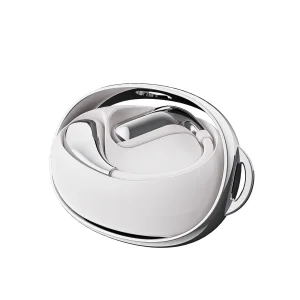
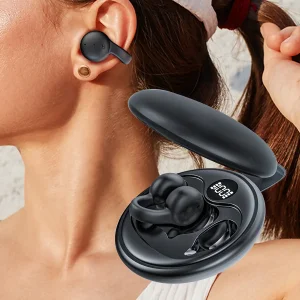
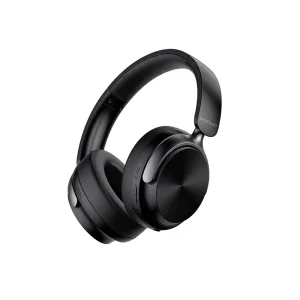
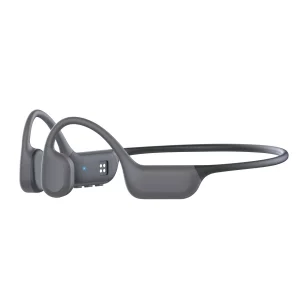
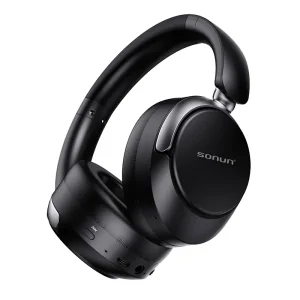
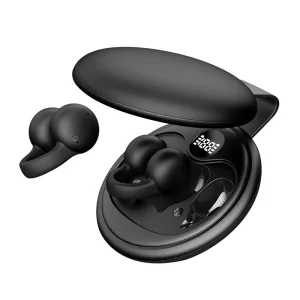
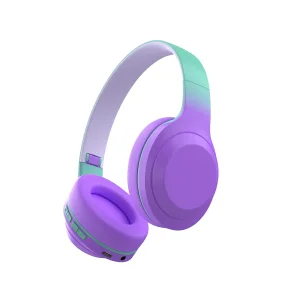
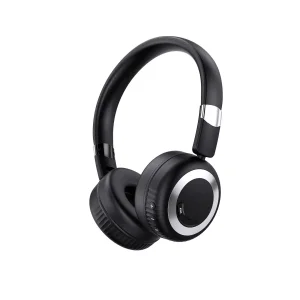
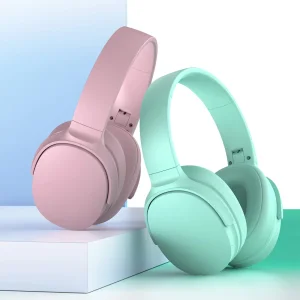
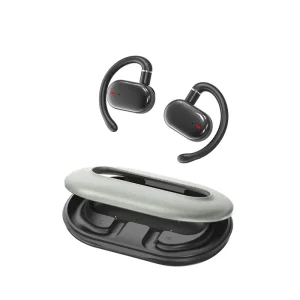
High-Performance OEM/ODM Audio Export Lineup
Explore specialized bone conduction, active noise reduction over-ear, and high-fidelity true wireless solutions direct from factory production lines.
6. Comprehensive B2B Sourcing FAQ & Technical Clarifications
Direct answers to critical operational questions regarding OEM custom projects, factory audits, and procurement terms.
What is the standard Minimum Order Quantity (MOQ) for custom private-label branding?
Standard OEM private-label customization (custom logo silk-printing, custom color matching via Pantone codes, custom gift box packaging) typically requires an MOQ of 1,000 units per model colorway. For fully custom ODM projects involving new structural plastic injection molds, the base MOQ is typically 3,000 to 5,000 units depending on chip platform commitments.
How do OEM earphone factories verify and enforce IP (Intellectual Property) protection?
Professional exporters safeguard client IP by executing binding NNN (Non-Disclosure, Non-Use, Non-Circumvention) agreements under jurisdiction-enforceable legal frameworks prior to CAD file exchange. Furthermore, proprietary custom tooling molds are registered exclusively under the client's corporate name and locked down with physically segregated mold storage vaults.
What is the technical difference between Feedforward, Feedback, and Hybrid ANC?
Feedforward ANC utilizes an external-facing microphone to detect external ambient noise before it reaches the ear (ideal for high frequencies up to 2kHz). Feedback ANC places an internal microphone inside the ear cup to measure what the listener actually hears (ideal for lower frequencies under 500Hz). Hybrid ANC combines both internal and external microphones, utilizing dual DSP processing to attenuate up to -45dB across a broad acoustic frequency bandwidth (20Hz - 2.5kHz).
How long does the complete OEM/ODM production cycle take from sample approval?
Once the Golden Sample is approved and production deposit is received: Standard OEM order mass production takes 25 to 30 calendar days. First-run ODM orders involving custom tooling require 45 days for mold fabrication and T1 samples, followed by 25 days for trial and mass assembly.
Can the factory assist with regional regulatory compliance certification testing?
Yes. OEM factories maintain direct strategic partnerships with accredited international testing laboratories (SGS, TUV, Intertek, Bureau Veritas). The factory provides golden test samples, pre-scanned EMC shielding test reports, schematics, and BOM engineering files to expedite FCC, CE-RED, TELEC, and RoHS certification approvals in target markets.
What quality warranty terms and RMA policies apply to bulk B2B audio shipments?
Standard B2B export contracts include a 12-month quality warranty period from ship date. Exporters generally provide 0.5% to 1% free spare units (FOC) with every mass order shipment to cover potential transit or field defectives, or offer credit replacement against future orders based on verified RMA analysis reports.