Top Tier OEM/ODM Headset Solutions (Part I)
Directly evaluate our high-volume production models, complete with turnkey OEM customization, modular acoustic tuning, and instant RFQ capabilities.
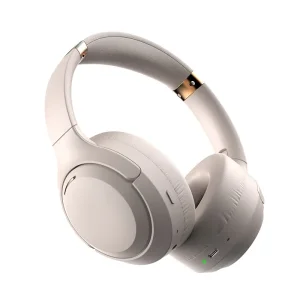
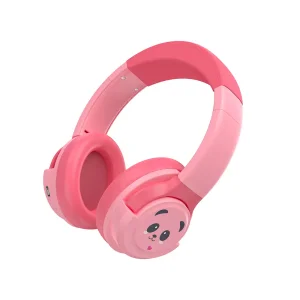
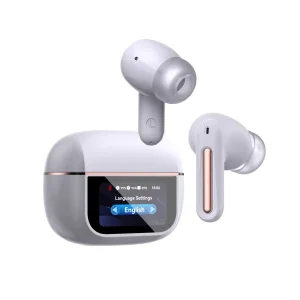
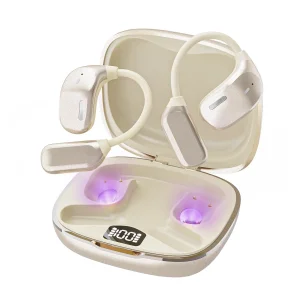
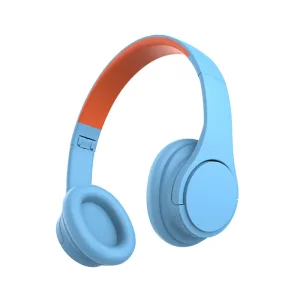
The Macro Infrastructure of Modern Headset OEM Procurement
Understanding the shift from commoditized assembly to high-margin, software-defined acoustic hardware in the 2025–2030 OEM ecosystem.
The global wireless headset and personal audio market is undergoing a fundamental structural transition. Brands and global sourcing directors are no longer seeking simple contract assembly lines; they demand specialized Original Equipment Manufacturers (OEM) and Original Design Manufacturers (ODM) capable of mastering multi-layered acoustic engineering, complex RF (Radio Frequency) antenna optimization, hybrid Active Noise Cancellation (ANC) algorithms, and strict international regulatory compliance.
In this high-velocity commercial environment, securing accurate, competitive headset quotes requires a deep understanding of the underlying Bill of Materials (BOM) components, tooling amortization schedules, NPI (New Product Introduction) workflows, and chip architecture choices. Shenzhen Sonun Technology Co., Ltd. (established in 2006) operates at the nexus of this ecosystem, providing top 10 headset OEM capabilities designed to reduce total cost of ownership (TCO) while guaranteeing uncompromised acoustic acoustic benchmark performance.
A primary pitfall for enterprise procurement is evaluating OEM suppliers based solely on initial unit quote price. A true BOM breakdown for premium wireless headphones allocates approximately 35% to the SoC Bluetooth/ANC chipset, 20% to high-compliance lithium-polymer battery cells & PMIC, 18% to acoustic transducers (drivers & acoustic chambers), 15% to mechanical tooling/housing materials (ABS+PC, memory foam, PVD coating), and 12% to SMT assembly, SQA testing, and compliance certification overhead.
Top 10 Headset Manufacturing & Sourcing Trends (2025–2030)
Key technological inflections shaping global enterprise procurement demands across consumer, enterprise, and niche acoustics.
1. OWS & Open-Ear Ergonomics
Open Wearable Stereo (OWS), Air Conduction, and Bone Conduction are capturing massive market share from traditional in-ear buds due to ear canal health, situational awareness, and outdoor safety demand.
2. Dual-Mic ENC & AI Beamforming
Enterprise contact centers and hybrid office environments require Environmental Noise Cancellation (ENC) with Deep Neural Network (DNN) voice separation to eliminate 99.2% of ambient background noise.
3. Ultra-Dense Battery Efficiency
Advanced PMICs and low-power Bluetooth 5.4 LE Audio chipsets allow over-ear headsets to reach 60 to 100 hours of continuous playback, reducing charging cycles and improving battery lifespan.
4. Pediatric Safe-Volume Standards
Strict global health mandates require kids' headphones to integrate hardwired 85dB / 94dB volume limiters, bio-compatible anti-microbial plastics, and flexible headband mechanics.
5. Smart Case & Touch Controls
Integration of high-resolution touch screens, UV-C sterilization chambers, and real-time battery monitoring directly into charging cases for TWS and OWS products.
6. Ultra-Low Latency Gaming Audio
Dual-mode 2.4GHz wireless dongles paired with Bluetooth 5.4 reduce audio latency to under 20 milliseconds, providing frame-accurate acoustic positioning for esports.
Acoustic Engineering Roadmap & SoC Architecture Matrix
Selecting the right Bluetooth system-on-chip (SoC) architecture determines power budget, ANC depth, codec support, and total OEM manufacturing costs.
| Chipset Platform Tier | Primary Target Category | Bluetooth & Codec Support | ANC / ENC Performance | Target BOM Battery Life |
|---|---|---|---|---|
| Qualcomm QCC Series | High-End Executive & Audiophile Over-Ear | BT 5.4, aptX Lossless, LDAC, LE Audio | Hybrid Digital ANC (-42dB), Dual-Mic DNN | 50 - 70 Hours (ANC On) |
| Bestechnic (BES) High-Tier | Enterprise Office & Smart OWS Wearables | BT 5.4, AAC, SBC, LC3 | Feedforward/Feedback ANC (-38dB), ENC | 35 - 55 Hours (Case extension) |
| Realtek / Actions Semi | Mass Market Sports & Helmet Headsets | BT 5.3 / 5.4, AAC, Low-Latency Mode | Hardware ENC, DSP Wind-Noise Suppressor | 25 - 40 Hours Direct Playback |
| Jieli (JL) Cost-Optimized | Educational Kids & Promo Wired/BT Headsets | BT 5.3, Basic Audio DSP, AUX Bypass | Single Mic Noise Reduction, Passive Isolation | 15 - 30 Hours / Safe 85dB Limit |
Our engineering team in Longhua District, Shenzhen conducts continuous acoustic driver simulation (using Finite Element Analysis) and RF LDS (Laser Direct Structuring) antenna tuning. This ensures that when private-label brands specify complex requirements—such as hybrid active noise cancelling combined with sweat-proof IPX7 structural sealing—the golden samples translate directly into stable mass production runs with zero acoustic degradation.
Tailored OEM/ODM Architectures for Industry Verticals
Custom hardware and acoustic configurations engineered to address targeted commercial environments.
Contact Centers & Enterprise UC
Custom-built with ultra-lightweight structural frames, quick-swappable ear cushions, dual-mode USB-A/C wireless dongles, and UC software certification-ready firmware for seamless Teams/Zoom integration.
- Integrated Busy-Light LED indicator
- Acoustic shock protection (EN60950-1)
- Flexible 270-degree rotating boom mic
Extreme Sports & Cycling Helmets
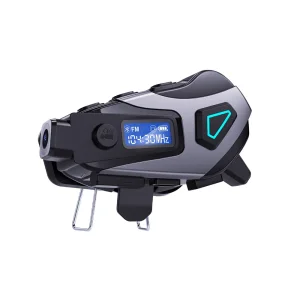
Aerodynamically engineered earcups and helmet-clip communication modules featuring glove-friendly physical controls, integrated FM radio tuners, and high-speed wind noise suppression algorithms up to 80 km/h.
- IP67 dust and water resistance
- Voice-assistant single-touch trigger
- Intercom passthrough compatibility
K-12 Education & Institutional Supply
Indestructible headband structures constructed from non-toxic, bendable TPU materials. Features dual-listening audio share ports and multi-tiered hardware volume limiters (85dB/94dB).
- Tangle-free braided nylon armor cables
- REACH & RoHS eco-compliant materials
- Custom laser-etched school branding
Localization, Certification & Mass Production Testing Protocols
Guaranteeing global market clearance and frictionless customs clearance across Europe, North America, and Asia-Pacific regions.
Rigorous Laboratory Test Regimens
Every headset manufacturing lot undergoes 100% inline functional testing and statistical Quality Assurance auditing. Our internal reliability laboratory subjects random units from every batch to rigorous environmental and mechanical stress testing:
- Hinge & Headband Flexing: 10,000+ continuous expansion cycles under extreme tension.
- Drop Endurance: 1.5-meter multi-angle impact tests onto solid concrete.
- Thermal Shock & Humidity: 48 hours in chamber cycles from -20°C to +60°C at 95% RH.
- Acoustic Sweep Testing: Total Harmonic Distortion (THD) kept strictly below 1% at 1kHz 94dB SPL.
- Sweat & Corrosion: 24-hour salt spray exposure on exposed metallic meshes and connectors.
Global Compliance Shield
*Our engineering management coordinates directly with third-party testing agencies (SGS, TUV, Intertek) to issue formal certificates under your brand’s corporate name.
Top Tier OEM/ODM Headset Solutions (Part II)
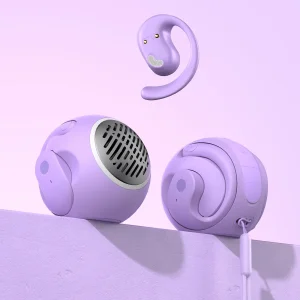
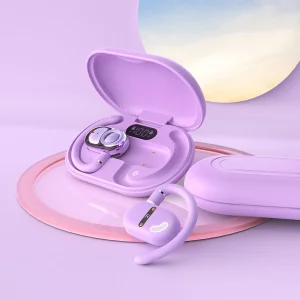
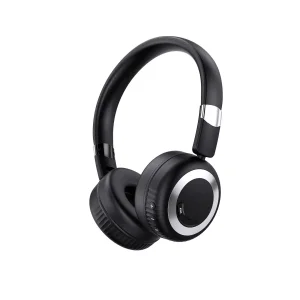
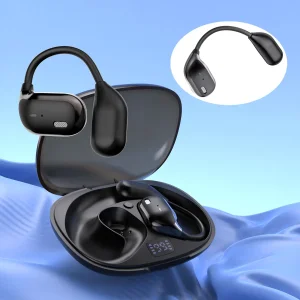
Browse specialized headset form-factors including ENC over-ear models, OWS silicone hooks, and multi-functional 2-in-1 hybrid speakers.
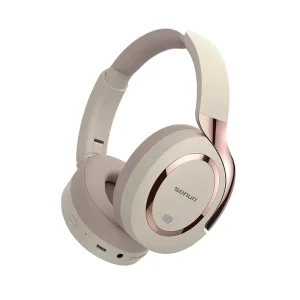
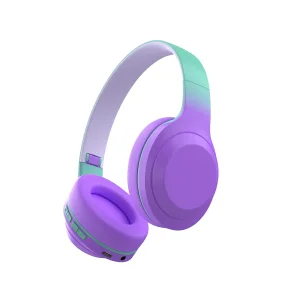
Frequently Asked Questions (FAQ) for OEM Sourcing & Quotes
Direct technical and commercial answers to facilitate contract evaluation, RFQ processing, and supply agreement execution.
What is the typical minimum order quantity (MOQ) for custom private-label headphones?
For standard OEM customization (laser-etched logo, custom silk screening, customized Bluetooth pairing name, and customized gift-box packaging) on our existing production tooling, the minimum order quantity starts at 1,000 units per colorway. For fully custom ODM projects requiring unique mechanical plastic injection molds, custom acoustic cavity design, and proprietary PCB layouts, the initial tooling run typically targets 3,000 to 5,000 units.
How are OEM headset quotes calculated and what variables influence final unit costs?
Our tier-based RFQ quote matrix incorporates five primary variables: (1) SoC selection (e.g., Qualcomm vs. Bestechnic vs. Jieli), (2) Battery cell capacity and safety certification level (KC, PSE, UL), (3) Active Noise Cancellation specifications (Passive isolation vs. Feedforward vs. Hybrid Dual-Mic ANC), (4) Surface finishing (standard spray paint vs. UV coating vs. PVD metallic plating), and (5) Shipment packaging architecture.
What is the lead time from sample approval to mass production shipment?
Once a golden sample is audited and approved by the buyer: rapid customized OEM prototyping takes 7 to 10 working days. Mass production material procurement, SMT assembly, acoustic testing, and packaging assembly typically take 25 to 35 calendar days depending on raw material availability and component order schedules.
Can Sonun customize EQ frequency response profiles and localized firmware voice prompts?
Yes. Our acoustic engineers tune DSP frequency curves according to your target acoustic curve (e.g., Harman Target Curve, Bass-Enhanced, or Vocal-Neutral UC curves). Additionally, we program custom localized voice prompt audio files (English, German, French, Spanish, Japanese, etc.) directly into the flash memory during SMT chip programming.
How does Sonun guarantee intellectual property (IP) protection for custom ODM molds?
We execute legally binding Non-Disclosure Agreements (NDA) and Exclusive Tooling Agreements prior to receiving CAD designs or opening tooling steel. Molds developed under ODM agreements are registered strictly under your enterprise account, with zero unauthorized production or cross-selling to third-party distributors.