Top OEM Wireless Gaming & High-Performance Audio Hardware
Turnkey private-label solutions with customizable low-latency 2.4GHz RF chipsets, hybrid active noise cancellation, and ergonomic acoustics engineered for global compliance.

Global Commercial & Industrial Landscape of Gaming Audio
An authoritative evaluation of market trajectories, shifting consumer intents, and acoustic manufacturing innovations for corporate buyers and audio brand executives.
The global gaming headset market has transitioned from a specialized peripheral niche into a mainstream driver of high-margin consumer electronics, projected to exceed USD 4.8 Billion by 2028 with a CAGR of 7.4%. This commercial surge is propelled by three macro forces: the explosion of cross-platform esports tournaments, the rapid adoption of low-latency cloud gaming platforms, and the widespread requirement for high-fidelity hybrid work-and-play audio gear.
Modern gaming consumers no longer tolerate single-purpose headsets. Strategic OEM procurement now requires "Dual-Engine Convergence"—simultaneous 2.4GHz ultra-low latency wireless connectivity for competitive PC/Console play alongside Bluetooth 5.4 multipoint for mobile communication and casual lifestyle listening.
From an industrial standpoint, manufacturing paradigms have evolved beyond simple plastic assembly. Tier-1 gaming headphone factories must now integrate specialized acoustic engineering labs, automated Surface Mount Technology (SMT) lines for RF motherboards, precision injection molding with acoustic anti-resonance dampening, and automated Anechoic Chamber testing equipment (such as SoundCheck and Audio Precision APx525).
Top 10 OEM Gaming Headphone Factories & Sourcing Matrix
How leading OEM audio manufacturers are evaluated during technical audits, RF performance testing, and Bill-of-Materials (BOM) cost allocations.
When selecting a top-tier OEM partner for gaming headphones, brand owners must look past superficial factory size and scrutinize engineering capabilities. Below is the industry-standard evaluation framework used by international procurement directors to audit Top 10 audio factories in China:
1. RF Antenna Alignment
Proprietary 2.4GHz dongles require optimized LDS (Laser Direct Structuring) or ceramic patch antenna designs to prevent packet dropouts in dense multi-device wireless environments.
2. Acoustic Chamber Tuning
Separate physical sound chambers for bass and mid-high frequencies prevent driver muddiness. OEM acoustic engineers must provide frequency curve matching within ±1.5dB tolerance.
3. AI ENC Beamforming Mics
Integration of dual-mic Environmental Noise Cancellation algorithms to isolate player voice chatter from mechanical keyboard clacks and ambient room noise.
Standard BOM Cost Structure Benchmark (High-End Wireless Gaming Headset)
Understanding cost allocation ensures procurement executives negotiate fair factory quotes while maintaining product stability and acoustic excellence.
| BOM Component Category | Technical Specification Benchmark | Cost Share (%) | Quality & Sourcing Risk Impact |
|---|---|---|---|
| Wireless SoC & RF Chipsets | Airoha / PixArt / Nordic Dual-Mode 2.4G + BT5.4 | 25% - 30% | High: Dictates wireless latency, connection range, and stability. |
| Acoustic Transducers | 50mm Neodymium Magnet with Titanium Coated Diaphragms | 18% - 22% | High: Determines soundstage width, spatial resolution, and bass response. |
| Ergonomics & Materials | Memory Foam, Protein Leather / Breathable Fabric, Aluminum Yoke | 20% - 25% | Medium: Directly impacts long-duration gaming comfort and wear resistance. |
| Battery & Power Management | 1000mAh - 1200mAh Li-Po with UN38.3 & KC Safety Circuitry | 10% - 12% | High: Safety critical; governs battery lifecycle and play time. |
| Tooling & Housing Plastics | ABS + PC Anti-Vibration Injection Mold with Matte UV Finish | 10% - 15% | Medium: Structural integrity, headband drop-test survival rate. |
Localized Application Scenarios & Channel Customization
Adapting OEM headset configurations for specific retail channels, geographic environments, and specialized user demographics.
Different commercial channels require distinct product feature priorities. Tier-1 China factories assist global brand partners by customizing acoustic profiles, packaging, and hardware accessories to suit specific localized scenarios:
Esports Arenas & Tournaments
Primary Focus: Zero Interference & Passive Isolation.
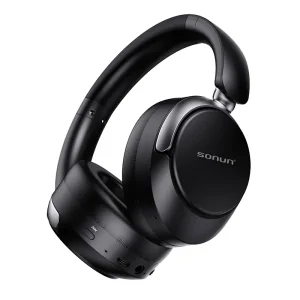
In crowded tournament environments, 2.4GHz band congestion is severe. Factory solutions include dynamic frequency-hopping algorithms and high-density memory foam ear cushions that deliver up to -22dB passive noise isolation without enabling battery-draining electronic ANC.
Commuter & Mobile Cloud Gaming
Primary Focus: Open-Wear & Compact Portability.
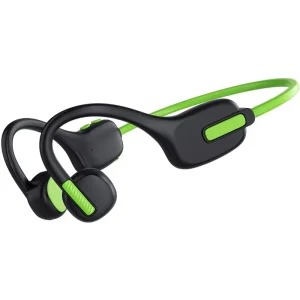
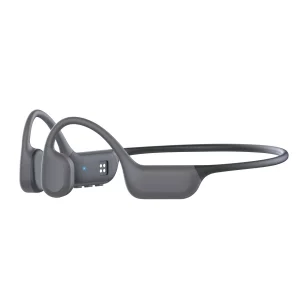
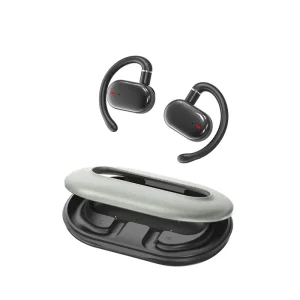
For gamers on the go (Steam Deck, Nintendo Switch, Mobile FPS), OEM designs incorporate lightweight foldable frames or low-latency Open-Ear/Bone Conduction styles with IPX5 water resistance to seamlessly transition from subways to gaming sessions.
Education & Safe-Volume Youth Gaming
Primary Focus: Hearing Protection & Durability.
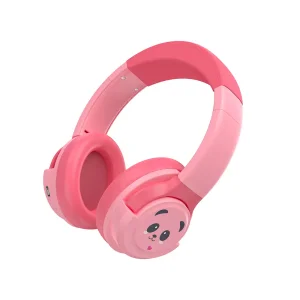
For younger gamers, custom OEM firmware enforces strict 85dB volume limiting compliant with WHO guidelines, paired with food-grade flexible TPE headbands that withstand twisting, drop impact, and heavy classroom or home abuse.
Technology Roadmap & Next-Gen Gaming Audio Innovations
The upcoming hardware standards, chipset breakthroughs, and AI algorithms redefining gaming headphone manufacturing over the next five years.
As wireless protocol boundaries blur, forward-thinking audio brands are co-developing next-gen feature sets with OEM engineering teams. The technology roadmap for 2026–2030 revolves around three critical pillars:
- Bluetooth LE Audio & LC3 Codec Integration: Replacing legacy SBC/AAC with LC3 (Low Complexity Communication Codec), cutting power consumption by 50% while offering pristine audio quality at under 20ms latency natively without dedicated USB dongles.
- Head-Tracking Spatial Audio DSPs: Integrating 6-axis Gyroscope/Accelerometer sensors directly onto the headset PCB, rendering real-time 3D spatial positioning (7.1 channel virtual surround) for tactical FPS game advantage.
- Silicon-Carbon Anode Batteries: Replacing standard Li-ion cells with high-density silicon-carbon batteries, extending operational time to over 100 hours per single charge while reducing total headset weight by 18%.
- AI Neural Network Noise Suppression: Edge-AI DSP chips running deep learning models to dynamically subtract over 500 types of environmental background noise in real-time with zero voice phase distortion.
China Supply Chain Resilience & Manufacturing Efficiency
Why the Greater Bay Area (Shenzhen-Dongguan Audio Cluster) remains the world’s undisputed epicenter for cost-efficient, high-yield headphone production.
The concentration of precision acoustic engineering, tooling fabricators, chip distributors, and assembly lines within a 50-kilometer radius in Guangdong Province provides global audio brands with unmatched structural advantages:
Rapid NPI Prototype Cycle
New Product Introduction (NPI) lead times are compressed from months to days. 3D-printed acoustic prototyping, rapid CNC aluminum tooling, and golden sample sound tuning occur within a single cohesive workflow.
Cost Elasticity & Scale
Economies of scale across shared raw material purchasing (neodymium magnets, copper voice coils, protein leathers) allow China OEM factories to deliver uncompromised audio quality at highly competitive unit pricing.
Rigorous In-Line Quality Control
100% automated acoustic sweep testing, headband stress endurance machines, micro-drop testing, and climate chamber aging prevent field failure rates, keeping RMA rates strictly below 0.3%.
International Compliance, RF Certification & QA Guarantees
Navigating regulatory certifications and material safety standards for frictionless entry into North American, EU, and Asia-Pacific retail markets.
Exporting wireless gaming hardware demands strict adherence to international electromagnetic compatibility (EMC), radio frequency (RF), and chemical safety regulations. Professional OEM suppliers provide complete certification support documentation prior to shipment:
| Target Region | Mandatory Compliance Certifications | Testing & Material Requirements |
|---|---|---|
| North America (USA & Canada) | FCC ID (Part 15C/15E), IC (Industry Canada), CA Prop 65 | SAR (Specific Absorption Rate) tests, RF spurious emissions, Lead/Phthalate material safety limits. |
| European Union (EU/EEA) | CE-RED (Radio Equipment Directive), RoHS 2.0, REACH, WEEE | EN 62368-1 audio safety standards, EN 50332 sound pressure safety limits, non-toxic eco-recycling compliance. |
| Japan & South Korea | TELEC / MIC Radio Certification, KC Safety & EMC | Giteki mark registration, Bluetooth frequency hopping spectrum analysis, lithium battery drop-safety certificates. |
Frequently Asked Questions for OEM/ODM Buyers
Clear, direct answers regarding factory lead times, custom tooling, MOQ requirements, and branding options.
What is the standard Minimum Order Quantity (MOQ) for custom OEM gaming headphones?
How do OEM factories guarantee sub-20ms wireless latency for competitive gaming?
What is the typical lead time from prototype approval to mass production shipment?
Can we customize EQ sound signatures and ANC noise cancellation levels?
Are factory audits and third-party QA inspections supported?
Specialized OEM Audio Solutions & Wireless Wearables
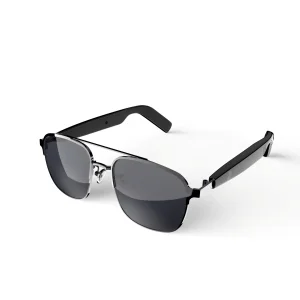
Explore additional private-label models covering bone conduction, air conduction, sport open-ear designs, and ultra-long battery life gaming audio.