
High-Performance Headset Configurations
Direct factory supply catalog featuring customized Bluetooth 5.4, Active Noise Cancellation (ANC), Open-Ear Wearables (OWS), and industrial safety headsets engineered for global brand compliance.

1. Global Wireless Headset Market Shifts & Technical Trends (2025–2030)
Analyzing the paradigm shifts in wireless acoustics, chip architectures, active noise attenuation protocols, and enterprise procurement patterns worldwide.
The global wireless headset landscape is undergoing a structural evolution driven by breakthroughs in System-on-Chip (SoC) integration, low-power RF protocols, advanced digital signal processing (DSP), and hybrid active noise cancellation algorithms. According to market intelligence data, the wireless audio device ecosystem is projected to surpass $65 Billion globally by 2030, expanding at a compound annual growth rate (CAGR) of over 9.8%. Procurement executives, brand managers, and channel distributors no longer evaluate OEM suppliers solely on unit price; technical capability, RF stability, battery safety credentials, and firmware customization have become the core benchmarks of supplier evaluation.
Bluetooth 5.4 & LE Audio Convergence
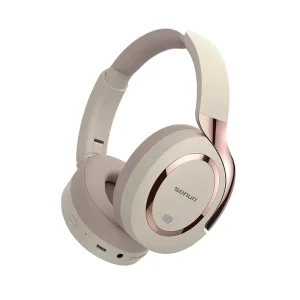
The transition from legacy Bluetooth Classic to Bluetooth 5.4 with Low Energy (LE) Audio and the LC3 (Low Complexity Communication Codec) is redefining audio transmission efficiency. LC3 enables superior sound quality at half the bitrate compared to SBC, dramatically lowering energy consumption and enabling extended playback times up to 50 hours in over-ear form factors.
Multi-Microphone Hybrid ANC & AI-ENC
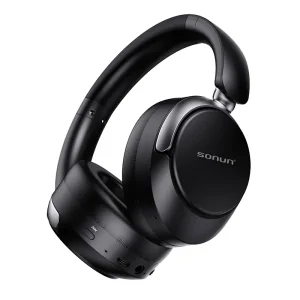
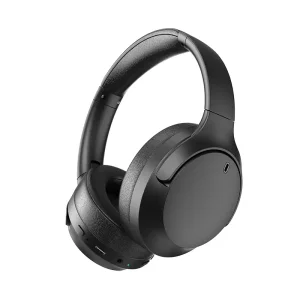
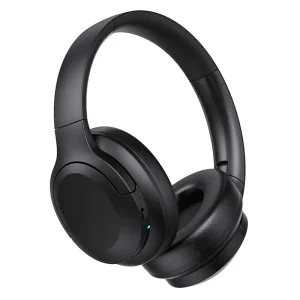
Modern noise isolation relies on Feedforward + Feedback dual-microphone active noise cancellation coupled with Environmental Noise Cancellation (ENC) for voice uplinks. Utilizing deep neural network (DNN) noise reduction algorithms, OEM headsets can isolate human vocal frequencies from background wind, street, or industrial noise with precision.
Open-Ear Wearables (OWS) Growth
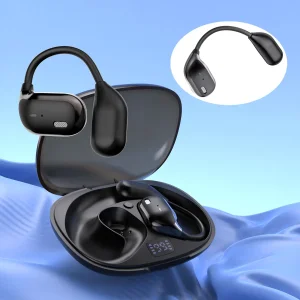
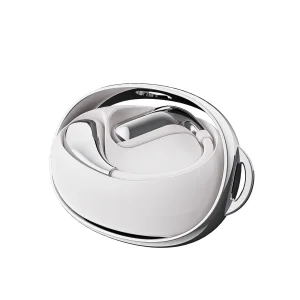
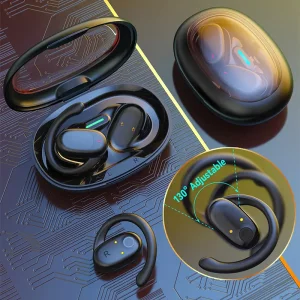
Open Wearable Stereo (OWS) and directional air conduction headphones are capturing significant market share from traditional in-ear designs. Driven by ergonomics, ambient awareness, and long-session ear-canal health, OWS platforms require custom dynamic drivers (16mm to 20mm) and spatial sound tuning to deliver rich bass without acoustic leakage.
2. Global Enterprise Procurement & Supplier Evaluation Matrix
A rigorous framework for procurement heads, product managers, and brand owners seeking to mitigate supply chain risk and optimize margin structures.
Selecting an OEM/ODM partner in China requires a deep multi-tier evaluation process that extends beyond simple price-per-unit metrics. Sourcing managers must assess engineering capability, quality management systems (QMS), component traceabilities, and regulatory compliance frameworks. The table below outlines the core parameters enterprise buyers use to evaluate wireless headset factories.
| Evaluation Pillar | Technical / Operational Metric | Critical Baseline Requirement | Enterprise Value Impact |
|---|---|---|---|
| Acoustic Engineering | Dynamic Driver THD+N & Frequency Curve | THD < 1% @ 1kHz, 20Hz-20kHz response | Ensures high-fidelity audio reproduction and minimal field return rate due to sound distortion. |
| RF & Chipset Performance | RF Output Power & Sensitivity | +8dBm TX power, -94dBm RX sensitivity | Guarantees signal stability across 10-15 meter distance without cutout in high-interference environments. |
| Battery Safety & Management | UN38.3, MSDS, IEC62133 Certification | Precision Protection IC, >800 cycles @ 80% capacity | Prevents thermal runaway risks, ensuring global customs clearance and consumer product safety. |
| Active Noise Isolation | Hybrid ANC Attenuation Depth & Bandwidth | -35dB to -45dB attenuation across 50Hz-1.5kHz | Delivers true premium silence in aircraft, office, and commute environments. |
| Manufacturing Reliability | ISO9001, BSCI, In-line Automated Testing | Full Audio Precision (AP) sweep test on 100% of units | Eliminates acoustic mismatch between left and right earcups and ensures zero DOA (Dead On Arrival) shipments. |
Pro Sourcing Insight: Leading global audio brands mandate that OEM factories maintain in-house Anechoic Chambers and Head & Torso Simulators (HATS) such as B&K or Gras. Verification of acoustic response curves under simulated wind and ambient conditions before mass tooling drastically reduces pre-production iteration cycles by up to 40%.
3. China Manufacturing Ecosystem: Supply Chain Resilience & Efficiency
How Shenzhen and Greater Bay Area acoustic clusters combine component density, automated SMT lines, and dynamic tooling capabilities to deliver global supply resilience.
The Pearl River Delta—specifically Shenzhen, Dongguan, and Huizhou—remains the epicenter of global wireless audio manufacturing. This dense industrial cluster allows top-tier OEM factories to source chipsets (Qualcomm, Bestechnic, Realtek, Airoha), precision dynamic drivers, polymer lithium-ion battery cells, and custom silicon ear-tips within a 30-kilometer radius. This geographic concentration drastically shortens prototyping cycles from months to days.
Automated SMT & Acoustic Testing Precision
Industry 4.0 integrated headphone factories deploy Surface Mount Technology (SMT) lines equipped with 3D Automated Optical Inspection (AOI) and electroacoustic testing stations. Every Bluetooth mainboard undergoes automated frequency sweep, RF power output, battery charge-discharge management verification, and microphone sensitivity calibration before housing assembly.
Sustainable Manufacturing & Eco-Compliance
Global retailers and enterprise buyers increasingly require strict adherence to environmental regulations. Leading Chinese OEM factories maintain full compliance with EU RoHS, REACH, WEEE, and California Proposition 65 standards. Furthermore, factories are integrating Recycled Claim Standard (RCS) certified Post-Consumer Recycled (PCR) plastics into headphone housings and headband structures.
4. Specialized Application Scenarios & Tailored Headset Architecture
From extreme sports and industrial safety to enterprise unified communications and pediatric ear health—exploring customized OEM feature sets.
Industrial & Helmet Audio
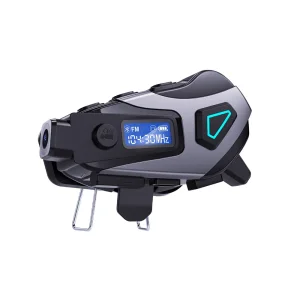
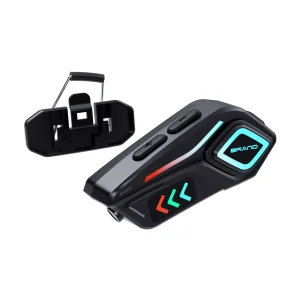
Custom Bluetooth 5.4 helmet headsets feature integrated FM radio, voice assistant activation, glove-friendly mechanical dials, and IP67 weatherproofing for motorcycle, cycling, and construction environments.
Low-Latency Gaming
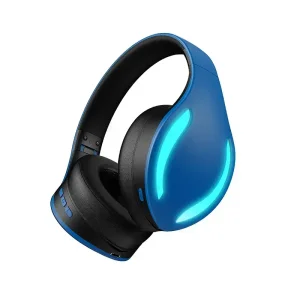
Dedicated 2.4GHz wireless dongle plus Bluetooth dual-mode gaming headsets deliver under 20ms audio latency, customizable RGB light engines, virtual 7.1 surround sound, and detachable boom microphones.
Pediatric Audio Protection
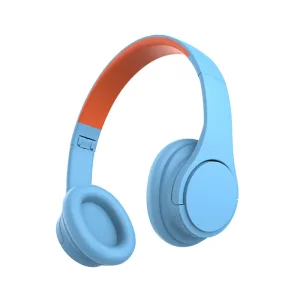
Children's headphones incorporate hardware-limited 85dB volume ceilings, hypo-allergenic food-grade materials, ultra-flexible headband construction, and audio sharing daisy-chain ports for classroom settings.
Sports & Open Earwear
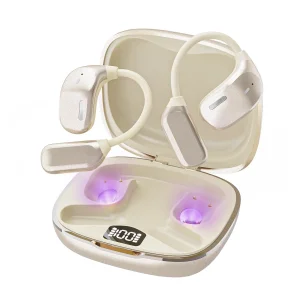
Ergonomic OWS sports earbuds incorporate 360-degree adjustable earhooks, UV sterilization charging cases, and IPX7 sweat-proofing engineered to withstand continuous vigorous activity.
5. End-to-End OEM/ODM Product Engineering Roadmap
From conceptual industrial design (ID) to tooling, acoustic tuning, and mass shipment—how top factories execute private-label audio projects.
Phase 1: Architecture & ID/MD
Requirement analysis, 3D industrial design rendering, mechanical engineering (MD) layout, mold flow analysis, component vendor selection, and initial cost calculation.
Phase 2: Prototyping & Acoustics
3D soft-tool prototyping, PCB layout design, dynamic driver acoustic matching, ANC firmware coefficient injection, sound profile EQ tuning, and initial RF testing.
Phase 3: Tooling & Certification
Precision steel mold tooling, T1 sample evaluation, environmental stress testing, drop/hinge life-cycle tests, and submission for CE, FCC, RoHS, and BQB certifications.
Additional Factory-Direct Headset Platforms
Explore specialized true wireless earbuds, active noise canceling headphones, pediatric volume-limited solutions, and open wearable audio platforms.

Frequently Asked Questions (FAQ) for OEM Headset Sourcing
Essential guidance for international buyers, retail buyers, and audio brand executives navigating headphone manufacturing in China.