
Bangkok Market Flagship Helmet Headsets
Enterprise-grade riding communications optimized for tropical humidity, heavy rainfall, and high-noise urban transport channels across Bangkok metropolitan areas.
Market Intelligence & Intent Analysis
The Micro-Mobility Landscape & Urban Riding Ecosystem in Bangkok
A comprehensive examination of weather resilience, acoustic noise challenges, and logistics fleet integration in Southeast Asia's primary urban corridor.
Bangkok's Commercial & Cyclist Landscape
Bangkok's transportation infrastructure is undergoing a historic structural pivot toward electrified micro-mobility, high-density bicycle commuting, and Last-Mile Delivery (LMD) networks. With over 250,000 active delivery riders working across networks like Grab, Line Man, Foodpanda, and ShopeeFood alongside recreational cyclists navigating Sukhumvit, Rattanakosin, and Green Lane routes, the demand for safe, resilient hands-free communications has reached an all-time high.
Operating a two-wheeled vehicle in Bangkok presents extreme physical and acoustic demands. Ambient noise levels along major arteries such as Rama IV and Sukhumvit Road consistently exceed 82–88 dB SPL due to dense diesel, tuk-tuk, and motorcycle traffic. OEM audio manufacturers supplying the Bangkok market must engineering headsets that filter extreme low-frequency engine rumbles while elevating voice intelligibility.
- High-Ambient Humidity Resilience: Operating in year-round relative humidity exceeding 80% with sudden monsoon tropical downpours.
- Situational Awareness Safety Imperative: Fully occlusive audio designs violate municipal safety guidelines; open-ear air-conduction and micro-speaker recessed fits are mandatory.
- Commercial Fleet Rigor: Shift durations exceeding 10–12 hours daily require low-power Bluetooth 5.4 SoCs and thermal-stable Li-Polymer cells.
Environmental & Thermal Hardware Challenges
Thailand's climate exhibits high solar irradiance, elevating surface temperatures on dark cycling helmets beyond 55°C during midday hours. Standard consumer audio components experience thermal throttling, rapid battery degradation, and housing deformation under such conditions.
Sonun’s specialized manufacturing engineering addresses these localized stressors through military-grade PCB potting, custom thermal-bypass battery management circuits (BMS), and UV-stabilized ABS-Polycarbonate housing materials engineered explicitly for tropical exposure.
Hardware Engineering Specification
Acoustic Architecture, Transducer Engineering & Thermal Resilience
A deep dive into the electro-acoustic engineering standards required to produce industrial-grade cycling helmet headphones for tropical global markets.
Directional Air Conduction & Open-Ear Drivers
Unlike conventional intra-concha earphones that completely block auditory perception, Sonun’s cycling helmet solutions utilize focused directional air-conduction acoustic tubes or open-ear high-flux neodymium dynamic drivers (16.2mm diameter).
- Phase-Cancellation Waveguides to eliminate sound leakage at high volumes.
- Preserves rider auditory detection of emergency sirens, traffic horns, and ambient city noise.
- Custom EQ profiles boosting mid-range vocal frequencies (1kHz - 4kHz) for crisp GPS prompts.
Dual-Microphone ENC & Wind Noise Filtering
Wind turbulence at cycling speeds of 25–45 km/h generates massive low-frequency air pressure fluctuations over microphone capsules, destroying speech clarity. Our engineering team incorporates proprietary hardware wind-deflection baffles combined with Neural Network (NN) Environmental Noise Cancellation (ENC).
- Dual Beamforming MEMS Microphones placed at calibrated acoustic angles.
- Real-time suppression of wind velocity noise up to 50 km/h wind shear vectors.
- Voice-activity detection algorithms tuned to eliminate background tuk-tuk and two-stroke exhaust pops.
High-Temperature Battery Safety & Protection
Li-ion batteries under direct tropical solar exposure present significant thermal runaway risks if unmanaged. Sonun integrates industrial-grade 500mAh to 850mAh Lithium-Polymer cells equipped with dual NTC thermistors.
- Automatic high-temperature charging cut-off at 45°C ambient.
- UL1642 and IEC62133 certified battery architectures.
- Ultra-low self-discharge rates guaranteeing 33+ hours of active voice call operation on a single 1.5-hour Type-C charge.
Master Technical Specification Matrix (Bangkok OEM/ODM Baseline)
| Technical Parameter | Standard Commercial Specification | Industrial Fleet / Premium Specification |
|---|---|---|
| Bluetooth Chipset & Version | Bluetooth 5.4 Dual-Mode (JL / Actions Chipset) | Qualcomm QCC3084 / Nordic nRF5340 (LE Audio, LC3) |
| Water Ingress Protection | IPX6 (High-Pressure Water Jets) | IPX8 (Submersible Hydrophobic Nano-Coated PCB) |
| Acoustic Transducer Type | 30mm Mylar Helmet Recess Speaker / Air Conduction | 16.2mm Bone Conduction / Directional Air-Conduction Array |
| Microphone System | Single Omnidirectional MEMS with Foam Windscreen | Dual-MEMS Beamforming Array + AI ENC DSP Chipset |
| Battery Capacity & Playtime | 400mAh Li-Po (22 Hours Playtime) | 850mAh Wide-Temp Li-Po (38 Hours Playtime) |
| Operative Temperature Range | -10°C to +50°C | -20°C to +60°C (Tropical Solar Reinforced) |
| Regulatory Certifications | CE, RoHS, FCC | NBTC Thailand, TISI Helmet Safety Compliance, UN38.3 |
Supply Chain & Compliance
Global Procurement, Thai NBTC Approval & Factory Sourcing
Streamlining import protocols, local telecommunication licensing, and strict quality control for enterprise buyers, distributors, and brands.
Thai NBTC Certification & TISI Compliance Support
Exporting wireless communication equipment to Thailand requires strict compliance with local regulatory bodies. Wireless cycling helmet headphones operate within the 2.4GHz ISM band and must be properly certified before entering customs channels at Laem Chabang Port or Suvarnabhumi Airport (BKK).
- NBTC (National Broadcasting and Telecommunications Commission): Sonun provides full RF test reports (SDoC - Supplier’s Declaration of Conformity) and RED/FCC test documentation to streamline your NBTC Class A/B type approval.
- TISI (Thai Industrial Standards Institute): Helmet accessories must not compromise structural shell integrity. Our ultra-thin clip designs and flexible inner padding recess speakers comply with TISI helmet physical safety standards.
- RoHS & REACH Hazardous Substance Elimination: Guaranteeing zero heavy-metal contamination or skin-irritant phthalates in ear cushions and silicone straps under continuous sweating conditions.
OEM/ODM Customization & Logistics Framework
For brands and enterprise buyers based in Bangkok, Sonun provides complete end-to-end private labeling services designed to accelerate market entry and build brand equity.
- Custom Firmware & Voice Prompts: Multi-lingual system voice prompts available in Thai, English, Chinese, and ASEAN localized languages.
- Laser-Engraved Branding & Packaging: Custom silk-screen logos, custom Pantone color matching for helmet shells, and retail-ready packaging designs.
- Factory-Direct Shipping Routes: Express air shipping to Bangkok within 5–7 days; bulk sea freight directly to Laem Chabang deep-sea port in 12–15 days from our Shenzhen facility.
R&D Technology Roadmap
Architectural Innovations for Next-Gen Helmet Audio (2025–2030)
How Sonun is incorporating Artificial Intelligence, Solar Harvesting, and V2X Hazard Warnings into future cycling headphone platforms.
Edge-AI Acoustic Hazard Detection
Integrating tiny edge-AI neural processors on the earphone circuit board that monitor surrounding traffic in real time. The headset automatically attenuates music volume upon detecting approaching high-speed vehicles, emergency sirens, or horn alerts from blind spots.
Perovskite Solar Film Integration
Leveraging flexible, paper-thin flexible solar film overlays integrated seamlessly into the top curve of helmet surfaces. Converts high tropical sunlight directly into continuous trickle charging, extending battery autonomy infinitely during daylight riding.
Dynamic Mesh Intercom Protocols
Decentralized, self-healing wireless mesh networking operating at 2.4GHz allowing cycling peloton groups or delivery rider fleets up to 16 members to communicate seamlessly without requiring cellular network coverage.
Complete Enterprise OEM/ODM Audio Catalog
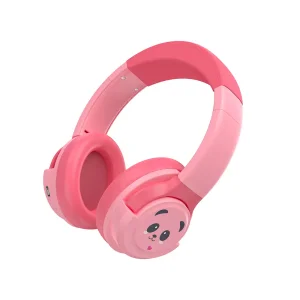
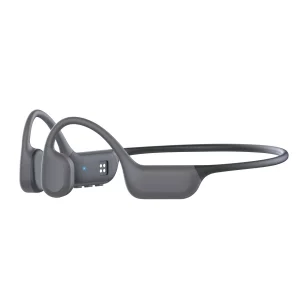
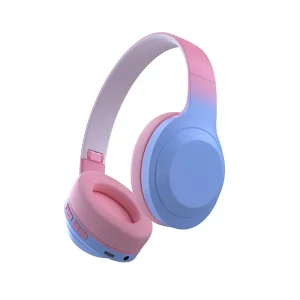
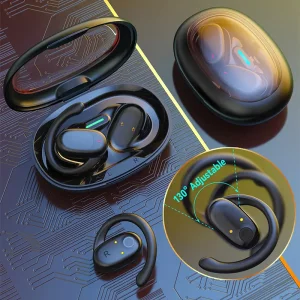
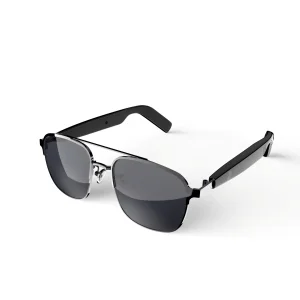
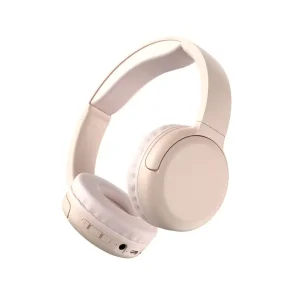
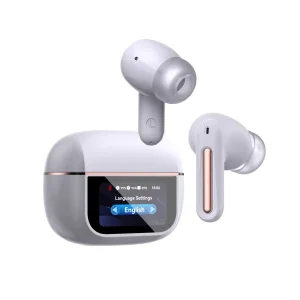
Explore our full range of customizable audio gear available for global brand private labeling, school supply contracts, swimming/sports lines, and specialized riding applications.
Procurement Guidance
Frequently Asked Questions (FAQ) for Bangkok Buyers & Importers
Comprehensive answers covering manufacturing processes, local compliance, sample evaluations, and technical customization options.
Is Sonun a direct headphone manufacturing factory or a trading company?
Shenzhen Sonun Technology Co., Ltd. is a direct, fully certified audio equipment manufacturer established in 2006. We operate our own production lines, tooling facilities, and acoustic testing labs in Longhua District, Shenzhen, China. We directly manage all SMT assembly, plastic injection molding, wire bonding, acoustic tuning, and quality control. Global importers and Bangkok regional buyers are welcome to conduct third-party factory audits (SGS, TÜV, Bureau Veritas) or visit our facility in person.
How do Sonun’s cycling helmet headphones handle Bangkok’s severe rain and humidity?
Our helmet headsets designed for tropical export incorporate IPX7 and IPX8 water-ingress protection. We utilize internal hydrophobic nano-coatings on the entire printed circuit board assembly (PCBA), ultrasonic housing sealing, and silicone-gasketed Type-C charging ports. These measures prevent short circuits caused by heavy tropical monsoons, high atmospheric humidity, and acidic human sweat accumulation.
Can Sonun assist our company with Thai NBTC wireless certification?
Yes. Importing wireless Bluetooth devices into Thailand requires certification by the National Broadcasting and Telecommunications Commission (NBTC). Sonun provides full RF test reports generated by accredited laboratories (CE RED, FCC ID), construction diagrams, and Supplier’s Declaration of Conformity (SDoC) documents to enable your local shipping agent or customs broker to clear NBTC licensing smoothly.
What is the Minimum Order Quantity (MOQ) for custom OEM helmet headphones?
For standard custom logo printing and customized retail packaging on our existing tooling models, the Minimum Order Quantity (MOQ) typically starts at 1,000 units. For full ODM engineering projects involving new structural plastic injection molds, custom housing shapes, or specialized PCB layouts, MOQ is generally 3,000 to 5,000 units depending on technical specifications.
How does bone-conduction / open-ear audio improve cyclist safety in heavy city traffic?
Conventional in-ear headphones block the ear canal, causing acoustic isolation that prevents riders from hearing ambient hazards like vehicle horns, approaching engines, or emergency vehicle sirens. Open-ear directional air-conduction and bone-conduction transducers transmit audio vibrations directly through temporal bones or directed directional acoustic nozzles, leaving the ear canal completely unblocked for maximum situational awareness and traffic safety.
What is the typical production and lead time for shipments to Bangkok?
Sample evaluation units with custom firmware or logos can be prepared within 7 to 10 working days. Mass production lead time is typically 25 to 30 calendar days after sample approval and deposit confirmation. Freight via air cargo to Suvarnabhumi Airport (BKK) takes 3 to 5 days, while sea freight to Laem Chabang Port takes approximately 10 to 14 days.
Ready to Launch Your Private-Label Cycling Headset Line in Bangkok?
Partner with a trusted Shenzhen OEM/ODM factory with 19+ years of acoustic engineering expertise. Contact our engineering team today to request product catalogs, unit pricing, and custom samples.
Send Inquiry Now - Contact Engineering Team